
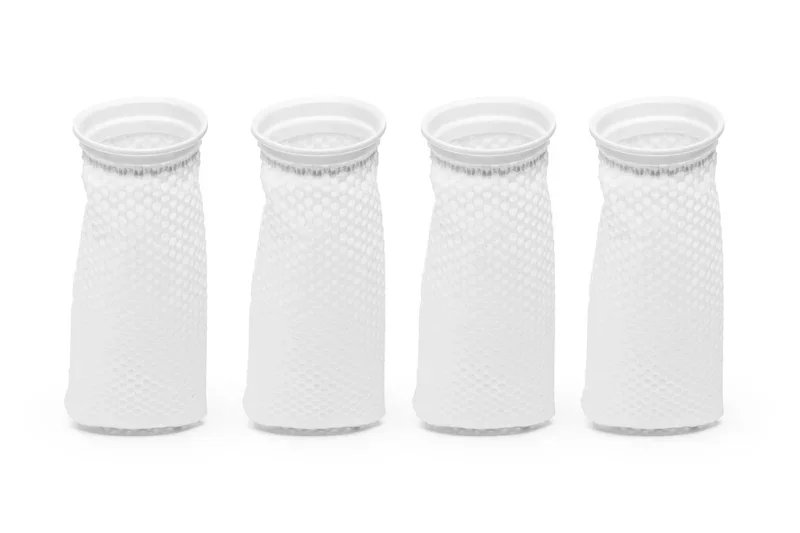
Reef Tank Mechanical Filtration: Fleece, Felt, Filter Socks & Rollers
Mechanical filtration removes suspended debris from reef tank water before it has a chance to break down further in the system.
In reef aquariums, the most common forms are filter socks, felt, fleece, filter pads, and automatic filter rollers. They all do roughly the same job: physically trap particles as water passes through them.
The biggest differences are how fine they filter, how much maintenance they require, how quickly they clog, and how aggressively they remove material from the water
-

Mechanical Filtration Guides
It all begins with an idea. Maybe you want to launch a business. Maybe you want to turn a hobby into something more.
-

Mechanical Filtration Reviews
It all begins with an idea. Maybe you want to launch a business. Maybe you want to turn a hobby into something more.
-
Mechanical Filtration FAQ
It all begins with an idea. Maybe you want to launch a business. Maybe you want to turn a hobby into something more.
Mechanical filtration removes suspended debris from reef tank water before it has a chance to break down further in the system.
In reef aquariums, the most common forms are filter socks, felt, fleece, filter pads, and automatic filter rollers. They all do roughly the same job: physically trap particles as water passes through them.
The biggest differences are how fine they filter, how much maintenance they require, how quickly they clog, and how aggressively they remove material from the water.
What Does Mechanical Filtration Remove?
Mechanical filtration can capture:
Uneaten food
Fish waste
Detritus
Sand particles
Algae fragments
Bacterial aggregates
Suspended debris
Some plankton and larger microorganisms
The finer the material, the smaller the particles it can capture.
That can make the water look noticeably cleaner, but clearer water does not necessarily mean healthier water. Mechanical filtration is only one part of reef tank filtration and should be used to support the goals of the system.
Do Reef Tanks Need Mechanical Filtration?
Not necessarily.
Many successful reef tanks use mechanical filtration continuously, while others use very little or none at all.
Mechanical filtration can be especially useful when:
The tank has a heavy fish load
Fish are fed heavily
Detritus remains suspended in the water
The aquarist wants extremely clear water
A refugium or sump collects excessive debris
The system produces large amounts of particulate waste
In lightly stocked systems or tanks designed around higher availability of suspended food, aggressive mechanical filtration may be less desirable.
The question is not simply whether mechanical filtration is good or bad.
The better question is:
What are you trying to remove, and how much of it do you actually want removed?
Filter Socks
Filter socks are one of the simplest forms of mechanical filtration.
Water enters the sock and passes through the fabric while larger particles remain trapped inside.
Common filter sock materials include felt and mesh.
Advantages
Inexpensive
Simple
Easy to install
Available in different micron ratings
Effective at removing larger debris
Disadvantages
Require frequent cleaning
Can clog quickly
Dirty socks can become a source of decomposing organic material
Cleaning multiple socks can become tedious
Filter socks tend to work best when they are changed regularly rather than left in place until they overflow.
Felt Filter Socks
Felt socks generally provide finer filtration than coarse mesh socks.
Their dense material can capture relatively small particles and produce very clear water.
The tradeoff is that felt also tends to clog faster and can require more frequent cleaning.
For reef keepers who want aggressive mechanical filtration and do not mind routine maintenance, felt can be very effective.
Mesh Filter Socks
Mesh socks are generally coarser than felt.
They allow smaller particles to pass through while capturing larger debris.
That means:
Longer time between cleaning
Less aggressive particle removal
Easier cleaning
Potentially more suspended food remaining in the system
Mesh can be a good option for reef keepers who want basic debris removal without stripping as much particulate material from the water.
Filter Fleece and Filter Pads
Filter fleece and disposable pads work on the same basic principle as filter socks.
Water passes through a sheet of material that captures suspended debris.
They are often used in:
Sump trays
Media baskets
All-in-one aquariums
Custom mechanical filtration chambers
Fleece is convenient because it can simply be removed and replaced rather than washed.
The downside is ongoing replacement cost.
Automatic Filter Rollers
Filter rollers automate mechanical filtration.
Instead of allowing dirty fleece to remain in the water, the roller slowly advances fresh fleece as the material becomes clogged.
Dirty material is pulled out of the water and collected on the used roll.
This offers several advantages:
Consistent filtration
Less manual maintenance
Rapid removal of captured waste
Cleaner sump
Very clear aquarium water
Rollers are particularly attractive for heavily stocked systems or reef keepers who want to minimize routine filter-sock maintenance.
Filter Roller vs Filter Socks
Both can work extremely well.
The main difference is automation.
A filter sock requires you to remove, clean, and replace it.
A roller does that job continuously by advancing fresh fleece.
A roller is generally more convenient, while socks are cheaper and simpler.
For many reef keepers, the decision comes down to:
Do you want lower equipment cost or lower ongoing maintenance?
Can Mechanical Filtration Remove Too Much?
Potentially.
Mechanical filtration does not know the difference between unwanted debris and useful suspended material.
Fine filtration can also capture:
Coral food
Zooplankton
Copepods
Bacterial aggregates
Other suspended organisms
Whether that matters depends heavily on the reef tank.
A heavily fed fish-dominated system may benefit enormously from aggressive mechanical filtration.
A system designed around natural plankton production may benefit from allowing more suspended material to remain in circulation.
The correct answer is rarely that mechanical filtration should always be maximized.
It should be matched to the goals of the aquarium.
Does Mechanical Filtration Reduce Nitrate and Phosphate?
It can help.
Mechanical filtration does not directly remove dissolved nitrate or phosphate.
Instead, it removes organic material before that material decomposes and eventually contributes nitrogen and phosphorus to the water.
This is why removing dirty socks or advancing dirty fleece out of the water can be important.
Capturing waste is only part of the process.
The waste also needs to be physically removed from the aquarium.
How Often Should Filter Socks Be Changed?
There is no universal schedule.
The goal is to replace or clean them before large amounts of trapped organic material begin decomposing.
In many reef tanks that means changing socks every few days.
Heavily stocked systems may require more frequent replacement, while lightly stocked tanks may go longer.
A sock overflowing or bypassing water is a clear sign it should have already been changed.
What Micron Filter Sock Should You Use?
Lower micron ratings capture smaller particles.
For example:
100 micron filtration is finer than 200 micron filtration.
Finer filtration generally produces clearer water but also clogs faster.
Coarser filtration removes larger debris while allowing more small particles to remain in circulation.
There is no universally correct micron rating.
The best choice depends on whether your priority is:
Maximum water clarity
Longer service life
Reduced maintenance
Preserving more suspended material
Are Filter Rollers Better Than Filter Socks?
They are usually more convenient, but not necessarily better for every reef tank.
Filter rollers are excellent when the goal is:
Automated mechanical filtration
Consistent waste removal
Reduced maintenance
Extremely clear water
Filter socks may make more sense when:
Budget matters
The system produces relatively little debris
You prefer less aggressive filtration
You do not mind cleaning socks
Both can produce excellent results.
Where Does Mechanical Filtration Fit Into Reef Tank Filtration?
Mechanical filtration is only one part of the filtration system.
It may be used alongside:
Protein skimming
Biological filtration
Refugiums
Activated carbon
GFO
UV sterilization
Water changes
Each solves a different problem.
Mechanical filtration primarily handles particles.
Protein skimming primarily removes certain dissolved and particulate organics.
Biological filtration processes ammonia and other nitrogen compounds.
Refugiums export nutrients biologically.
Activated carbon removes certain dissolved organic compounds.
Understanding what each filtration method actually removes makes it much easier to decide which equipment a reef tank really needs.
Related Reef Tank Mechanical Filtration Questions
Explore these topics next:
Do reef tanks need mechanical filtration?
Filter socks vs filter rollers: Which is better?
Do filter socks increase nitrate?
Do filter socks remove coral food?
Do filter socks kill copepods?
Are filter rollers worth it?
Do filter rollers remove too much food?
What micron filter sock should you use?
How often should filter socks be changed?
Can a filter roller replace a protein skimmer?
The Bottom Line
Filter socks, felt, fleece, and filter rollers all perform the same fundamental job:
They physically remove suspended particles from reef tank water.
The best choice depends less on which technology is theoretically superior and more on how aggressively you want to filter the water and how much maintenance you are willing to perform.
For reef tanks with heavy feeding and significant particulate waste, mechanical filtration can be extremely useful.
For systems where suspended food and plankton are intentionally preserved, less aggressive filtration may make more sense.
The goal is not simply to make the water as clean as possible.
The goal is to create the environment your reef actually needs.