Sicce Shark Pro | SR Unfiltered Review
Is the Sicce Shark Better Than a Media Reactor?
We explored the Sicce Shark line as a compact alternative to traditional media reactors and canister-style filtration. We won’t make you wait for the verdict, it was a win all around and something we both Terence and Ryan would recommend.
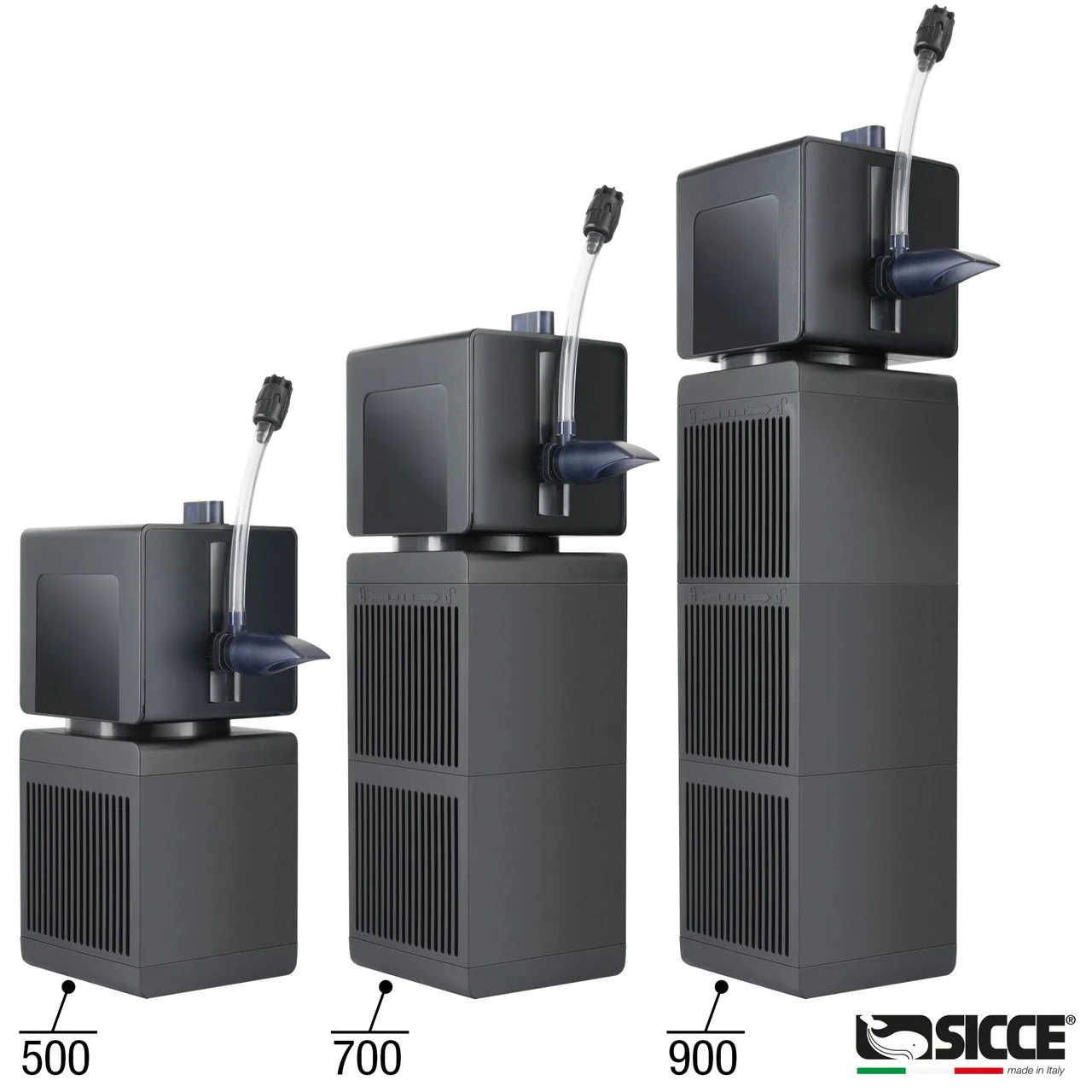
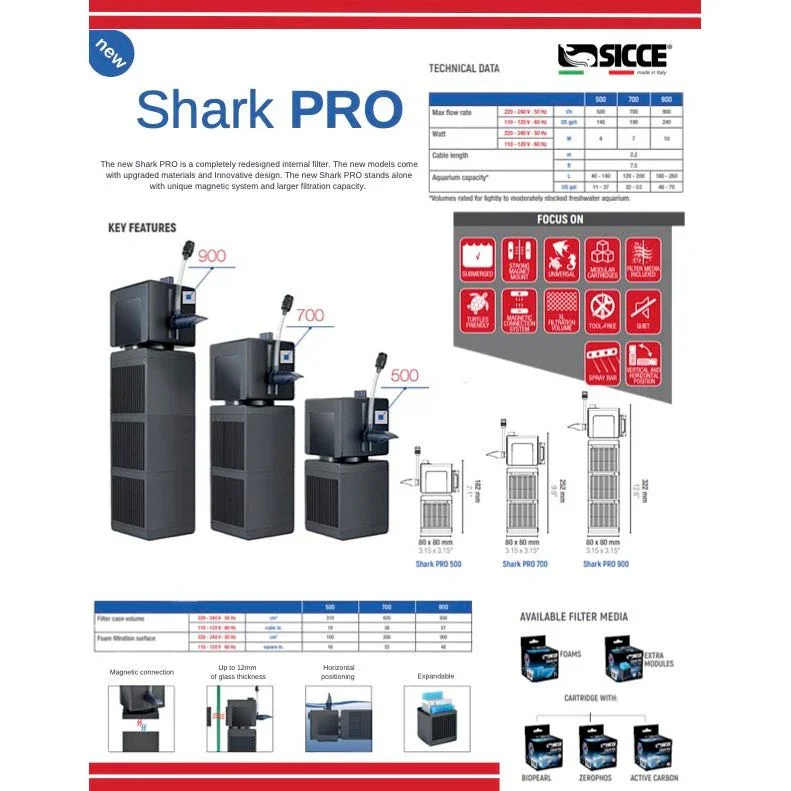
The Shark comes in two sizes, the full Pro and the Nano. Both are built around removable, stackable media canisters, magnetic mounting, and a small integrated pump. At a glance, the Shark is designed to simplify media changes, add flexibility for running carbon, GFO, or resins, and fill niche roles like sump dosing, quarantine setups, and nano tank filtration.
The article below is free for everyone. Serious Reefs YouTube Members can watch this video natively above. Native viewing requires the chrome browser..


What it is and how it works
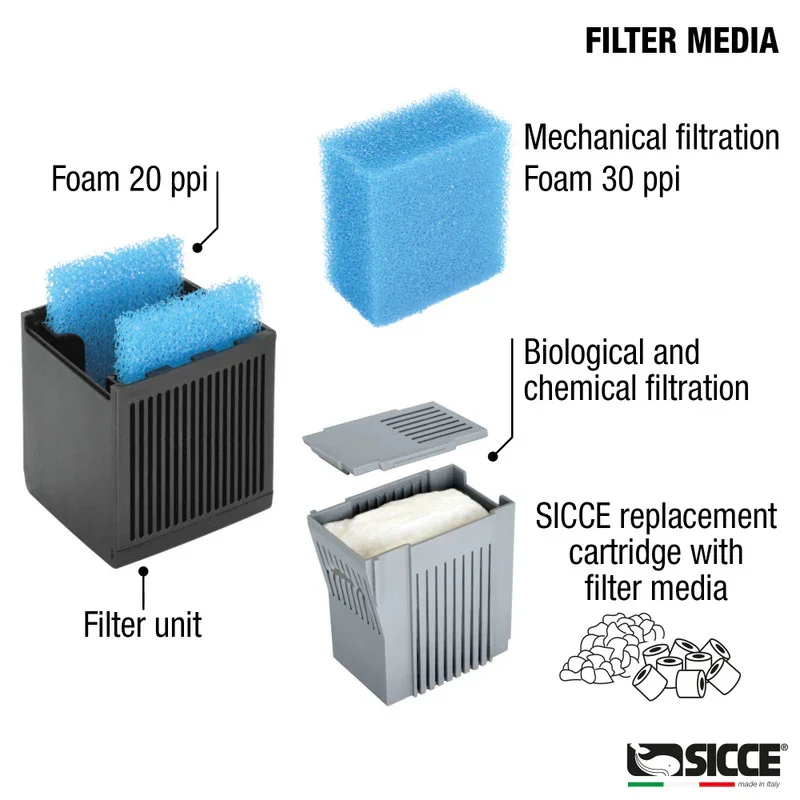
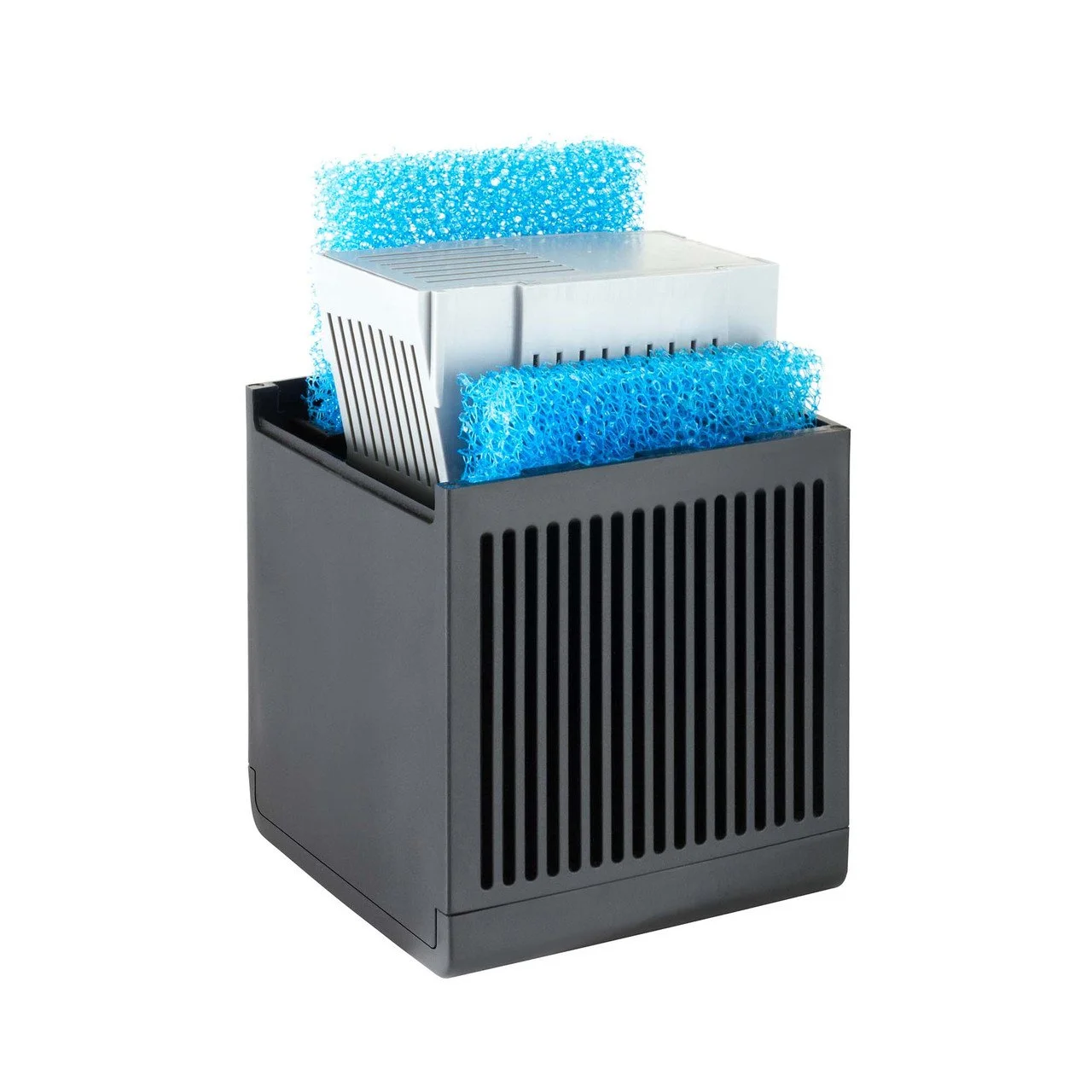
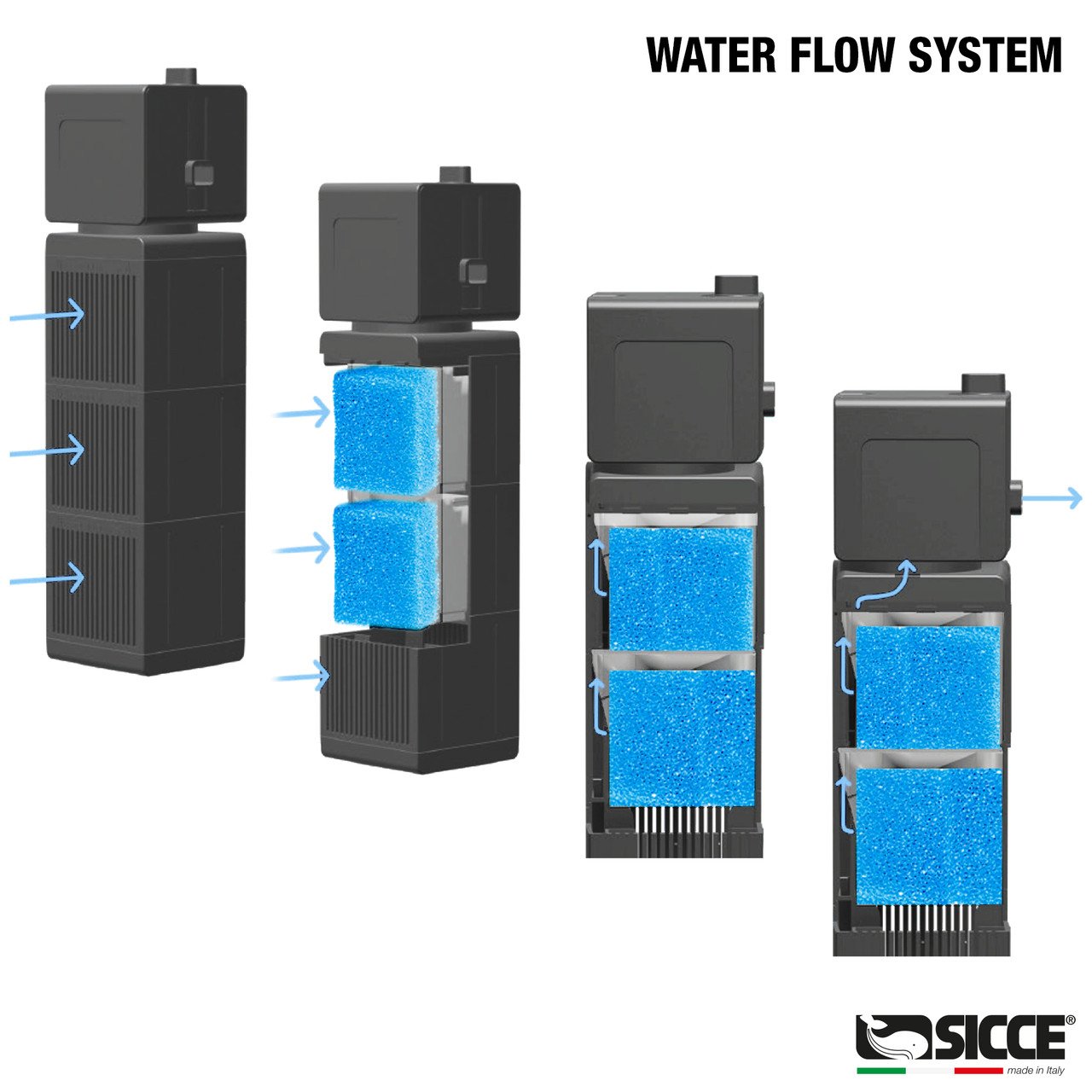
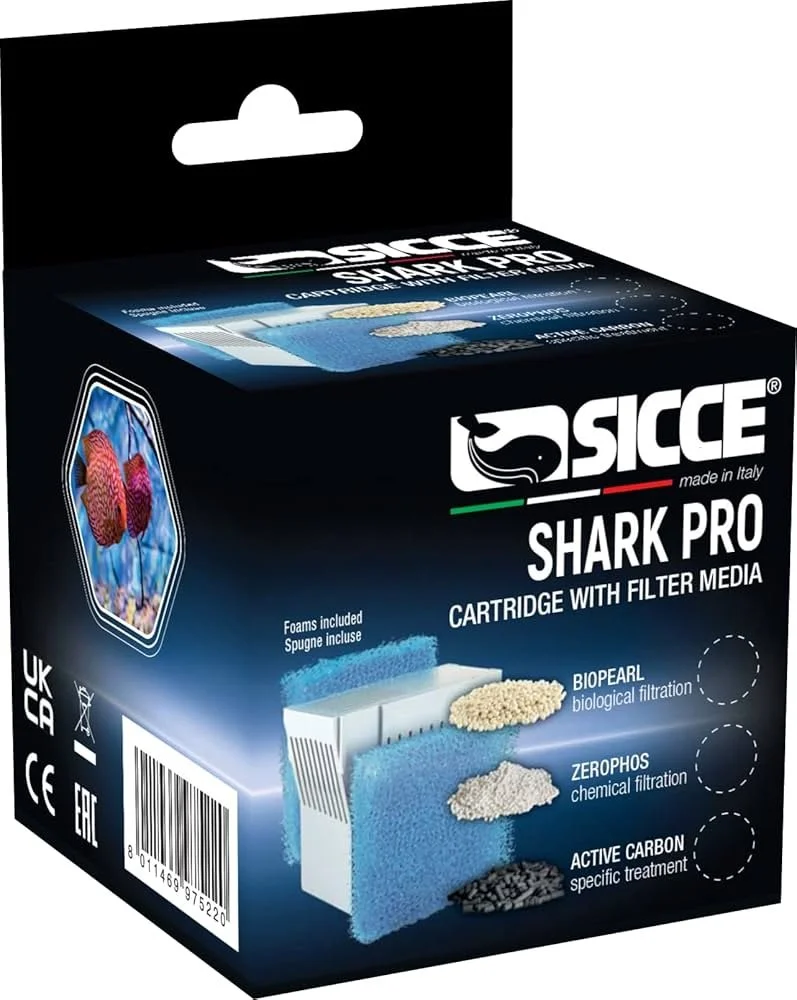
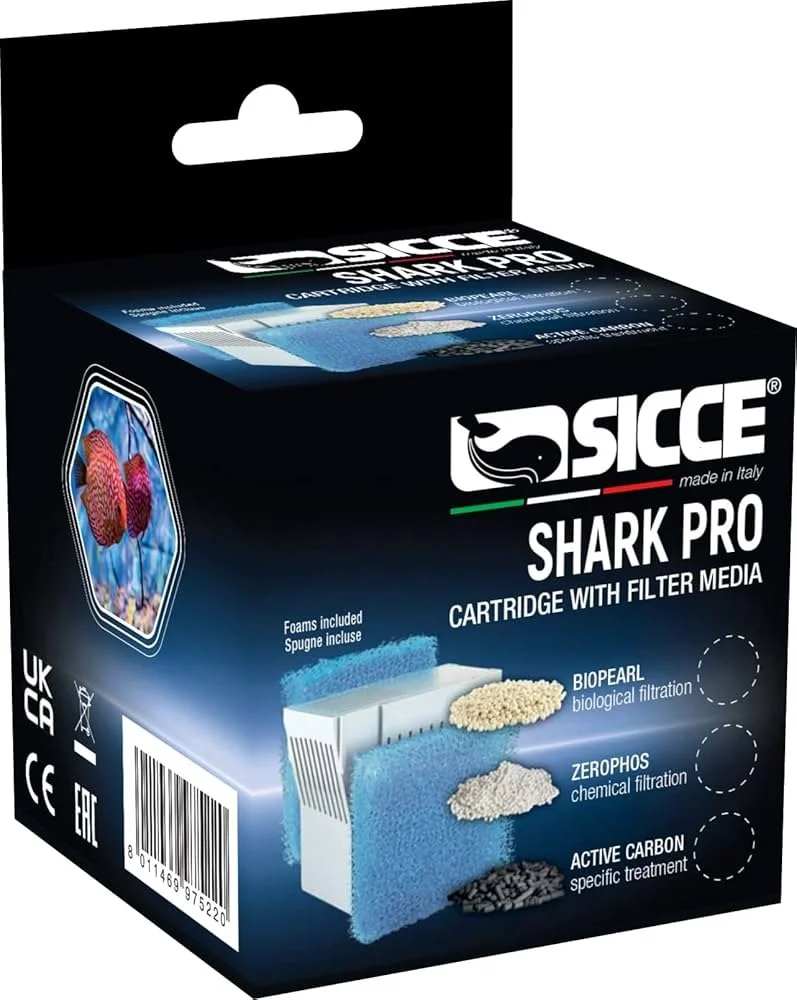
The Shark is essentially a cartridge-based media reactor. Each unit ships with multiple canisters that slide into a compact housing. The housing can be magnetically mounted in a sump or on a tank wall. Inside each canister you can place foam, carbon, GFO, phosphate resin, or small bio media. A small pump pushes water through the stack so the media gets contact with flow without the complexity or mess of an upflow reactor.
Key features
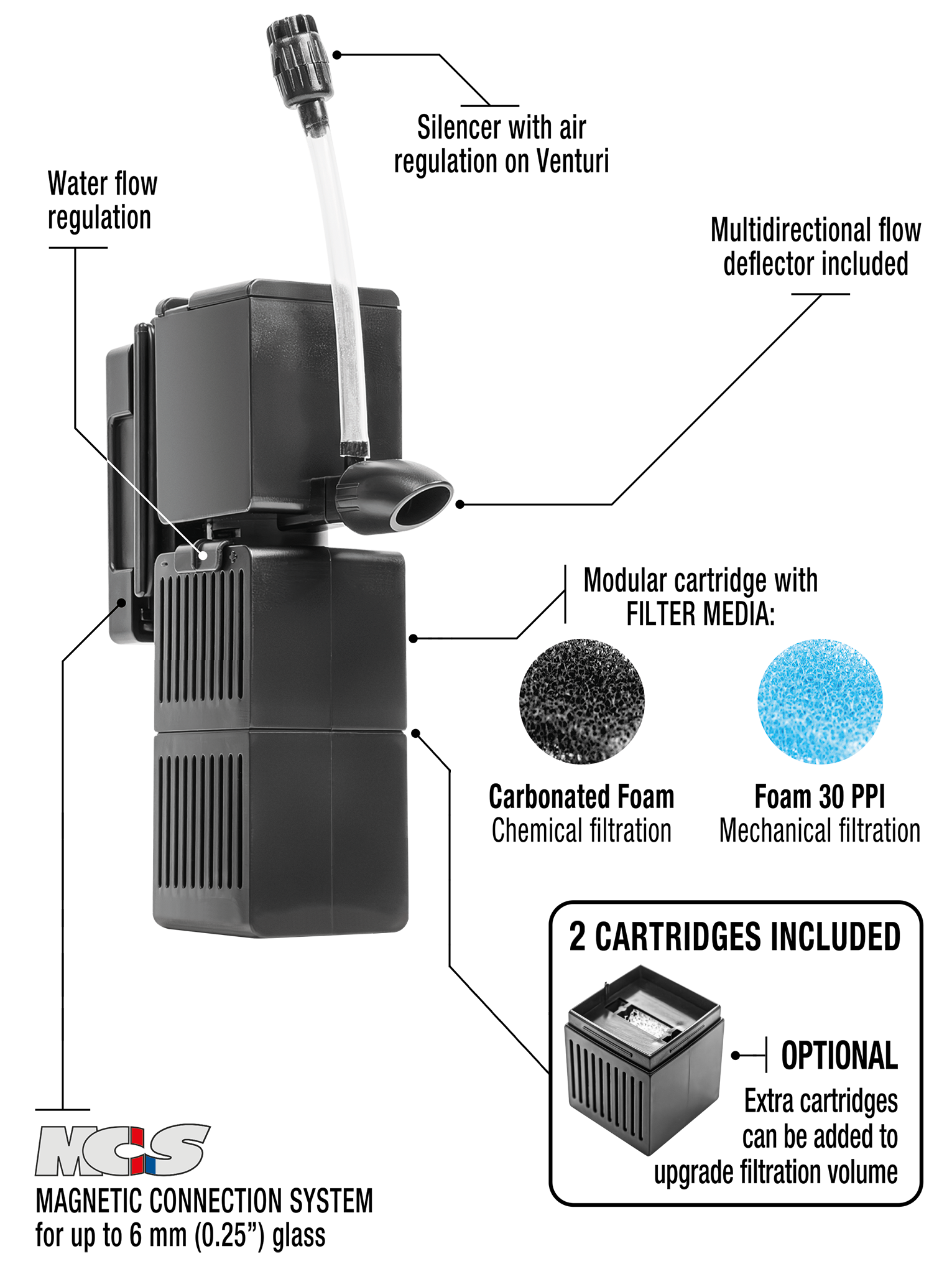
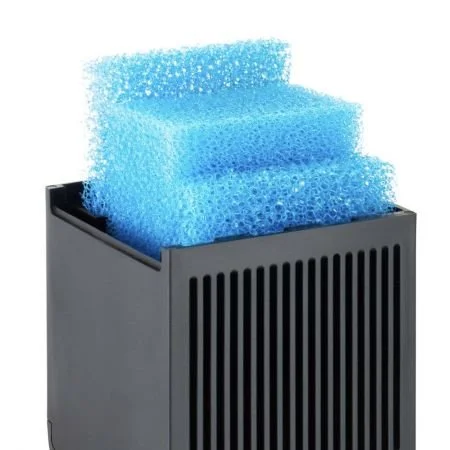
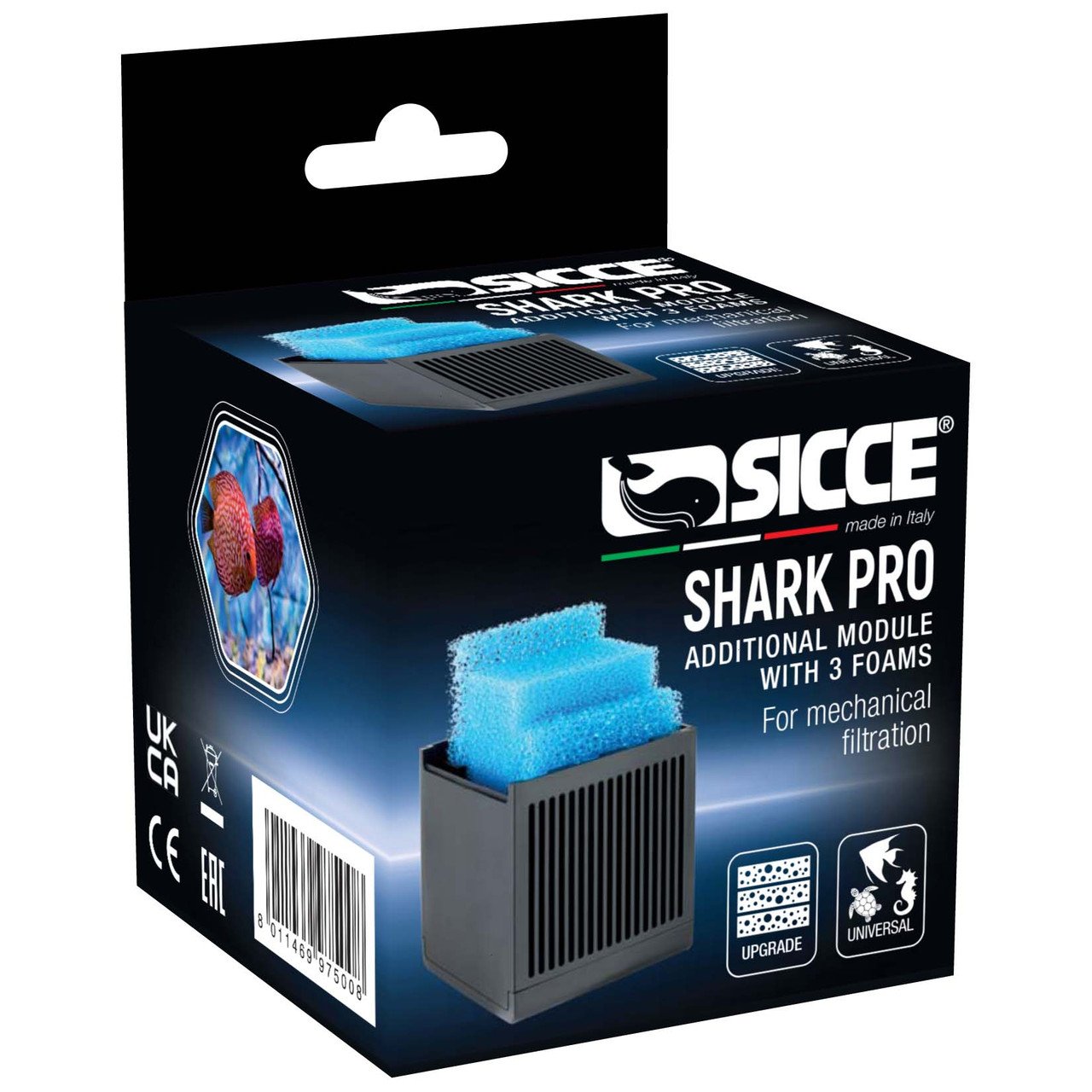
Modular canister design — slide-on cartridges make swaps quick and clean.
Magnetic mounting — a unique double-magnet system keeps a magnet in place while the cartridge comes off for cleaning.
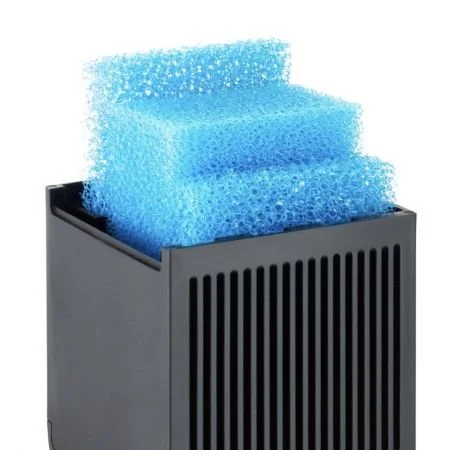
Multiple media options — foam, carbon, GFO, resins, and plastic bio beads fit the canisters.
Compact pump included — no separate external pump required for most uses.
Pricing and versions
Price varies with size and number of cartridges. The full Pro model typically ranges between $70 and $90. The Nano model is roughly $35 to $45. All of which are a great deal when you consider they come with a integrated feed pump.
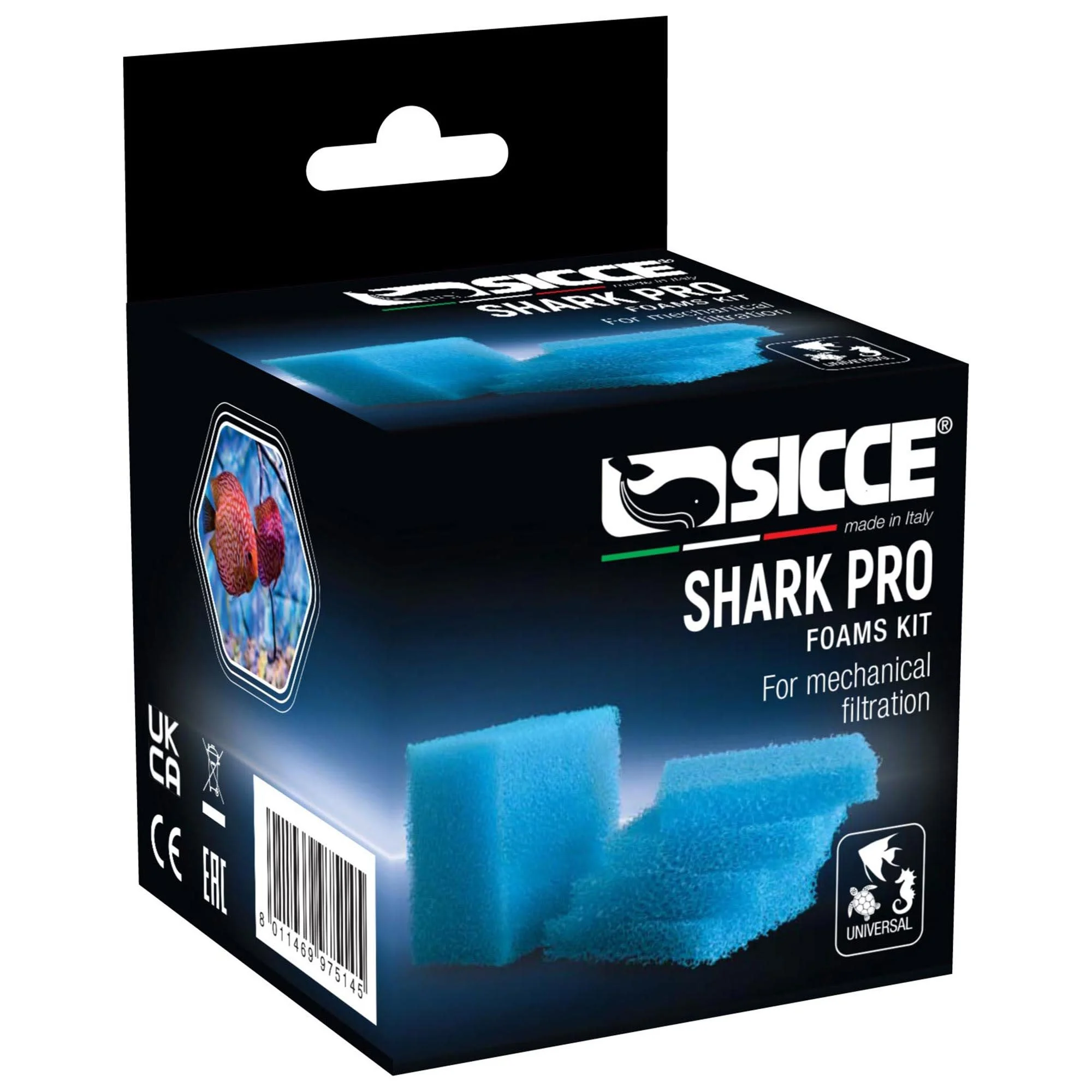
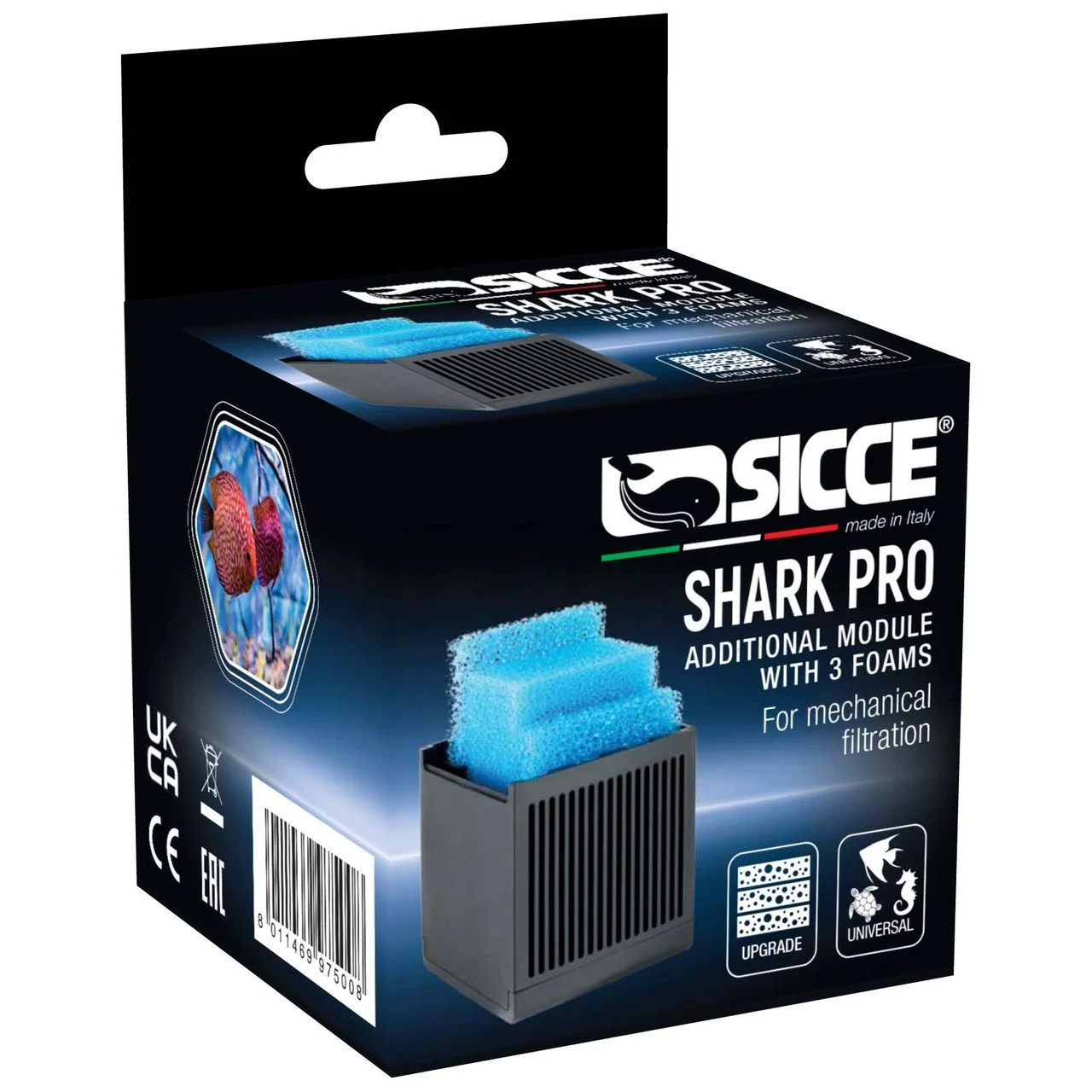
Replacement or extra preloaded cartridges are inexpensive and make rotating media easy.
Practical uses and examples
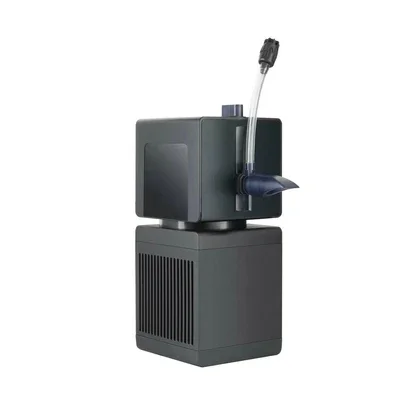
Sicce Shark Pro 500
As a sump media reactor
In many sump setups the Shark replaces bulkier media reactors or external canisters. The advantage is reduced plumbing, easier media swaps, and the ability to preload cartridges. If you buy three cartridges and prefill them, you can simply swap a fresh cartridge into the housing and take the dirty one to the sink. That convenience is the Shark’s strongest selling point.
How much carbon? Stick close to the manufacturer’s recommendation for your carbon. A good rule of thumb many of us use is about one tablespoon per 10 gallons for typical high performance carbon. In practice they likely contain around a cup when the foam is removed, which is enough carbon for fairly large reef tanks.
In nano tanks
The Nano Shark is small enough to hide in a corner of a 10 to 20 gallon tank. It makes a tidy alternative to a hang-on-back filter or a small internal power filter and gives access to carbon and GFO without an ugly HOB. It won’t match the capacity of a full reactor, but for modest loads and occasional polish or phosphate control it’s a great fit.
Quarantine and hospital tanks
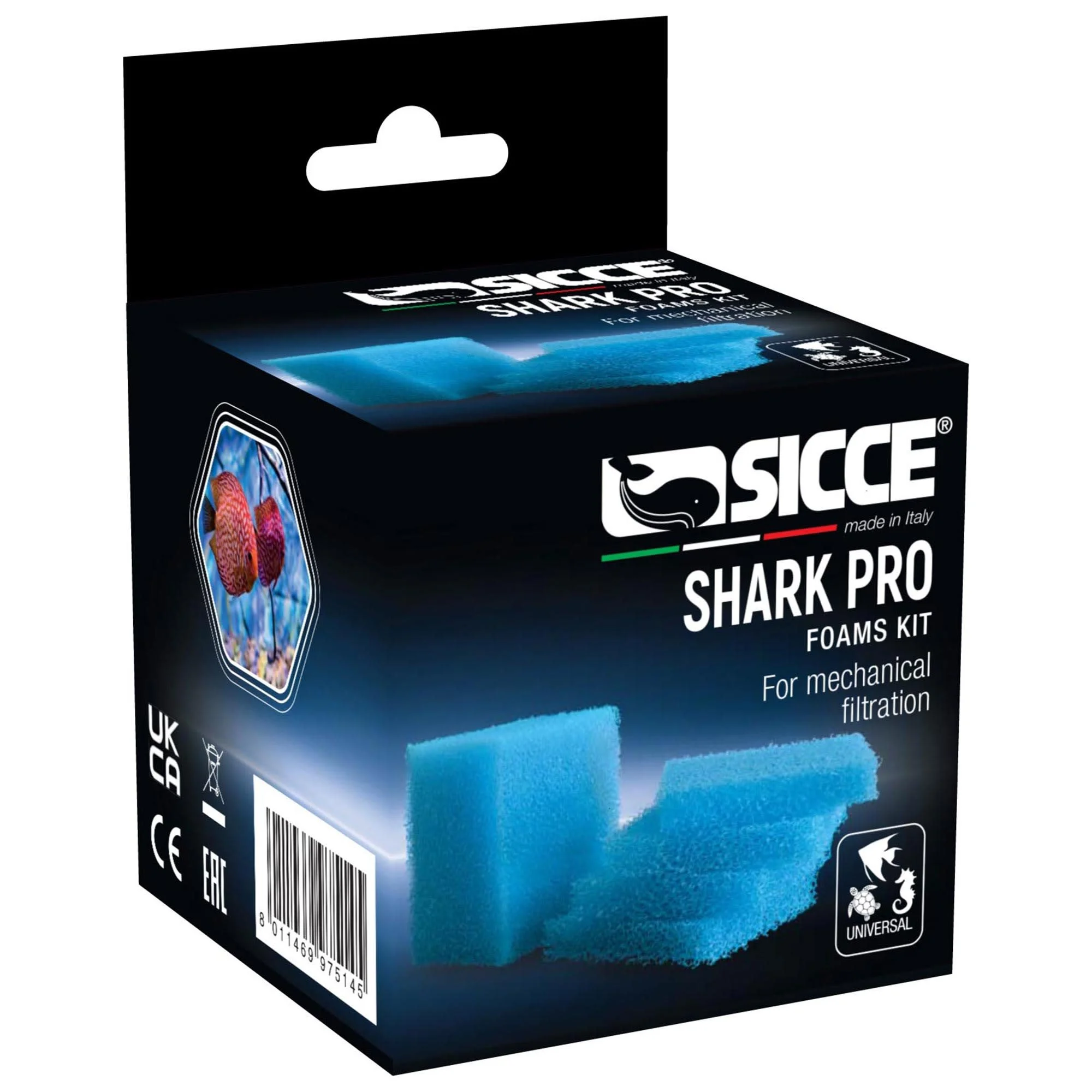
The Shark is a useful tool for quarantine setups. The included foam and plastic bio beads serve as colonizable media for beneficial bacteria during short-term holding. Because the cartridges are cheap, we can use dedicated cartridges for quarantine and discard them afterwards instead of risking cross-contamination with the display tank. The Shark can also provide gentle flow and aeration via its spray-bar-style output or venturi, which is handy in QT where quieter, gentler circulation and extra oxygen matter.
Using resins and GFO
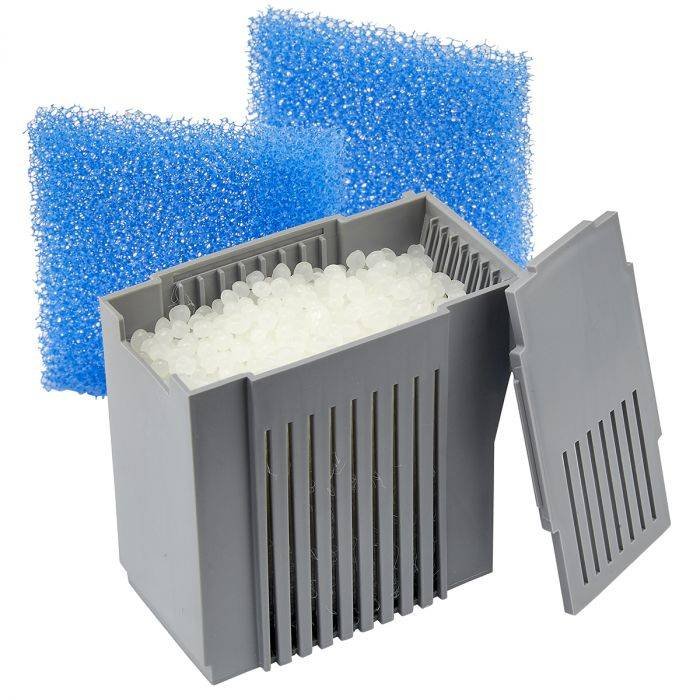
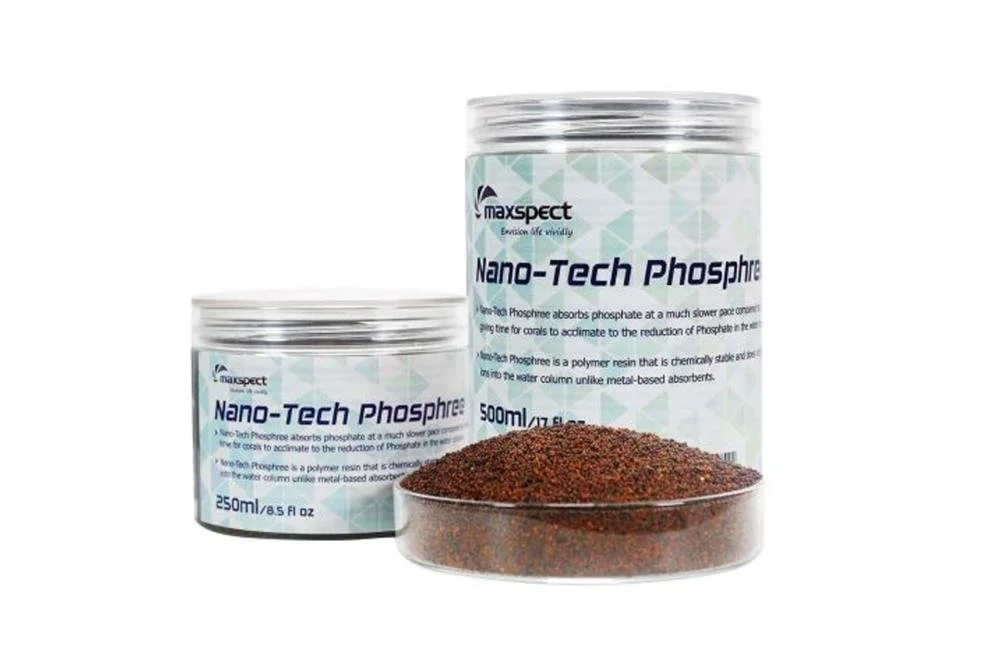
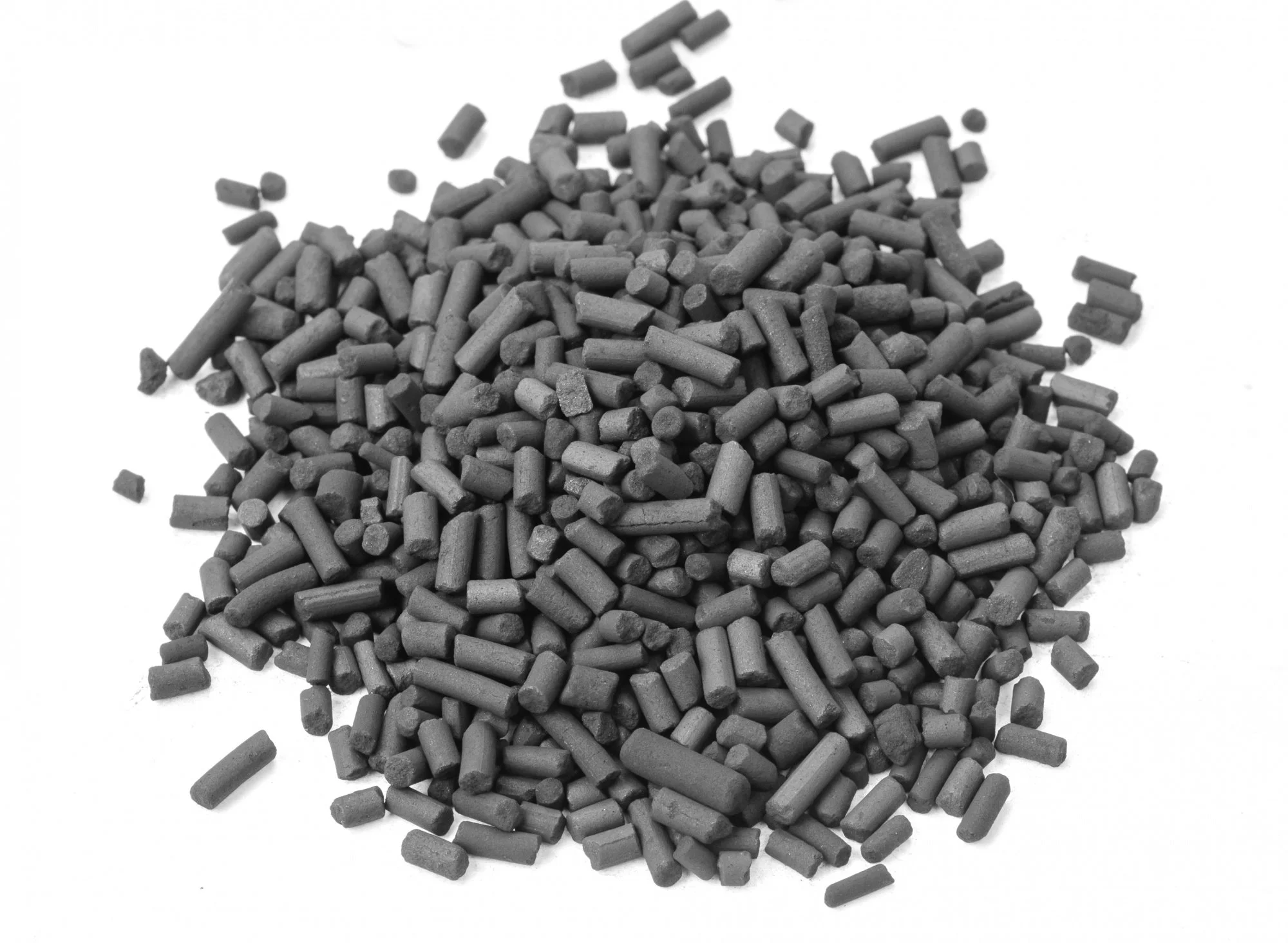
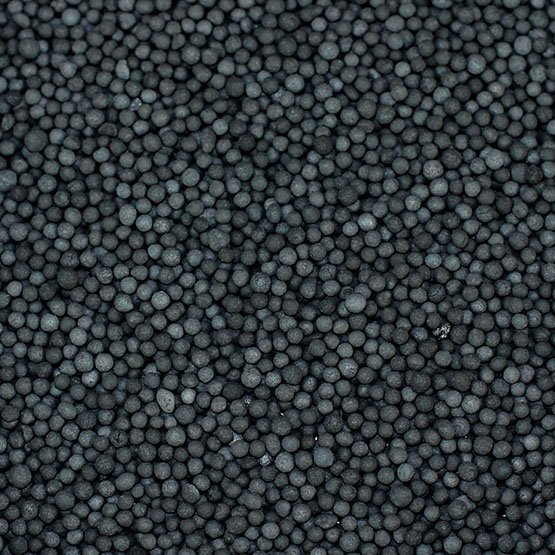
Resin-based phosphate removers should well in the canisters because they stay contained, are easy to swap and don’t solidify like GFO. Pelletized carbon or larger particle media are preferred over very fine carbon because they can be placed directly in the cartridge without falling through. Maxspect resins are marketed specifically for slow, controlled phosphate uptake; the Shark’s flow characteristics may make those a useful match when you want to avoid driving phosphate to absolute zero. Seachem’s Martix carbon spheres are a high performance carbon that should work well with the Shark Pro.

Comparison with traditional media reactors
Traditional upflow or in-sump media reactors have large capacities, good flow through, and aggressive contact time designs. The Shark trades raw capacity and long dwell time for simplicity, lower cost, and maintenance convenience. For many hobbyists this is a net win. For very large systems with high pollutant loads, a full-sized reactor remains superior.
Pros and cons
Pros
Very easy to service—magnetic coupling and simple cartridges make swaps clean.
Affordable compared with some media reactors once you factor pump and plumbing costs.
Flexible—works with carbon, GFO, resins, foam, and small bio media.
Small footprint—fits in sumps and many nano tank backs.
Preloading multiple cartridges streamlines routine maintenance.
Cons
Limited media volume compared with larger reactors—may not be ideal for heavily stocked or very large systems.
Stock aluminum-based phosphate media raises concerns for some hobbyists; alternative resins are recommended.
Who should consider the Sicce Shark
We find the Sicce Shark extremely useful and versatile. For simplicity, price, and flexibility it earns a strong recommendation. Its greatest strengths are convenience and modularity: magnetic mounting, preloaded cartridges, and compact footprint. For many of us it replaces bulkier reactors and even some canister tricks. Our practical rating lands around 9 out of 10 for the use cases covered here.
We recommend the Shark for:
Hobbyists who want a low-cost, low-hassle media reactor alternative.
Nano and pico tank owners who need discreet filtration and media flexibility.
Reef keepers who value quick, clean media swaps and preloaded cartridge workflows.
Quarantine and hospital tank users who want dedicated, inexpensive media cartridges to discard after use.
We would not recommend the Shark as the sole answer for very large, heavily stocked displays where continuous high-capacity media contact time is required. For those systems, stick with a purpose-built large reactor.
Quick tips
Preload three cartridges if your model includes them so you can swap media quickly and avoid downtime.
Use pelletized carbon or larger particles to avoid compaction and channeling.
Replace quarantine cartridges after use rather than returning them to the display system.
Follow the resin and carbon manufacturer’s dosing guidelines rather than overstuffing media—more is not always better.
FAQ
Can the Sicce Shark replace a traditional media reactor?
Yes for many hobbyists. It is a great compact alternative for sump or nano applications and for light to moderate media demands. For very large or heavily stocked systems, a full-sized reactor still provides greater capacity and contact time.
How much carbon should I put in a Shark cartridge?
Follow the carbon manufacturer’s recommendation. A conservative guideline often used is roughly one tablespoon per 10 gallons as a starting point. The Shark cartridges hold a modest volume, so use pelletized carbon and avoid overpacking which can reduce flow.
Is the Shark a good choice for quarantine tanks?
Yes. It offers colonizable foam, the ability to add media for treatment, and inexpensive cartridges you can discard after use. The Shark also provides gentle aeration and flow which helps keep fish healthy during QT.
Weigh convenience against capacity. For many tanks the Shark simplifies media management without sacrificing results.
What’s Next? Recent Additive Reviews
Acknowledgments
Thank you to the Serious Reefs community. Your membership funds the creation of articles and videos like this one.
Support Serious Reefs

Option 1: Patreon - Sign Up
Lowest cost option
Videos available on Patron App and website
Immediate notification of every release
Larger active community.
App works with phone closed
Sends a larger percentage of membership to Serious Reefs

Option 2: YouTube - Sign Up
Best for YouTube power users
Videos Available on
Youtube.com
Youtube TV App
Youtube Phone App
Seriousreefs.com (requires logged in Chrome browser)
*Note iOS users may need to sign up via desktop browser.
Disclaimer
Full Disclaimer HERE. This is the gist of it.
Content is based on personal experience, not professional advice. Do your research and reef responsibly. Serious Reefs should not be your sole source of information on any topic.
By watching, you agree that Serious Reefs and its creators aren’t liable for how you use this info. Please don’t utilize our information if you are not ok with this.
Serious Reefs has no sponsors, doesn’t accept product or payment for reviews. We do use affiliate links in articles that earn a small commission to support our work. Shop wherever you like, we won’t be offended.
