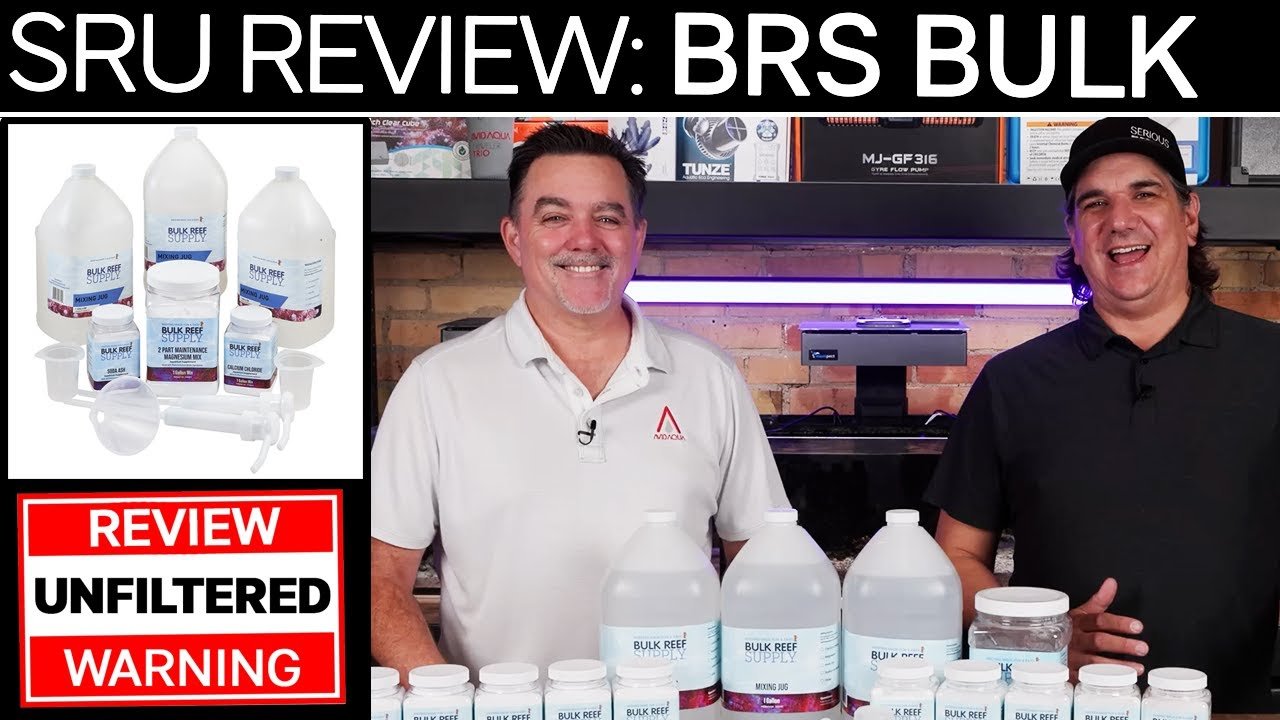
BRS Bulk Two Part | SR Unfiltered Review
Does It Hold Up To Modern Expectations?
This kit still works, and we recommend it, with context.
On its own, the lack of trace elements reflects an older approach to reefing. Paired with a common trace element supplement, however, it becomes an affordable solution that contends with the best out there.
If you want a proven, cost-effective two-part system and don’t mind mixing dry powders, this is one of the best values available. If you expect a modern, all-in-one solution with trace elements included out of the box, plan to add a simple, inexpensive supplement to bring it up to current standards.
The article below is free for everyone. Serious Reefs YouTube Members can watch this video natively above. Native viewing requires the chrome browser..


Claim to fame
This solution is grounded in the classic DIY two-part approach pioneered by Randy Holmes-Farley. The key evolution is that, instead of sourcing raw DIY minerals, the BRS recipe uses high-quality, highly predictable materials while preserving much of the original DIY value.
The core value points are now simplicity, affordability and quality of ingredients. It took a technique that used to require mixing baking soda, Dowflake and searching for the right magnesium salt and turned it into something reefers could buy and use reliably. Later the focus became sourcing USP grade chemicals to reduce impurities, a big deal for magnesium which is hard to sorce clean.
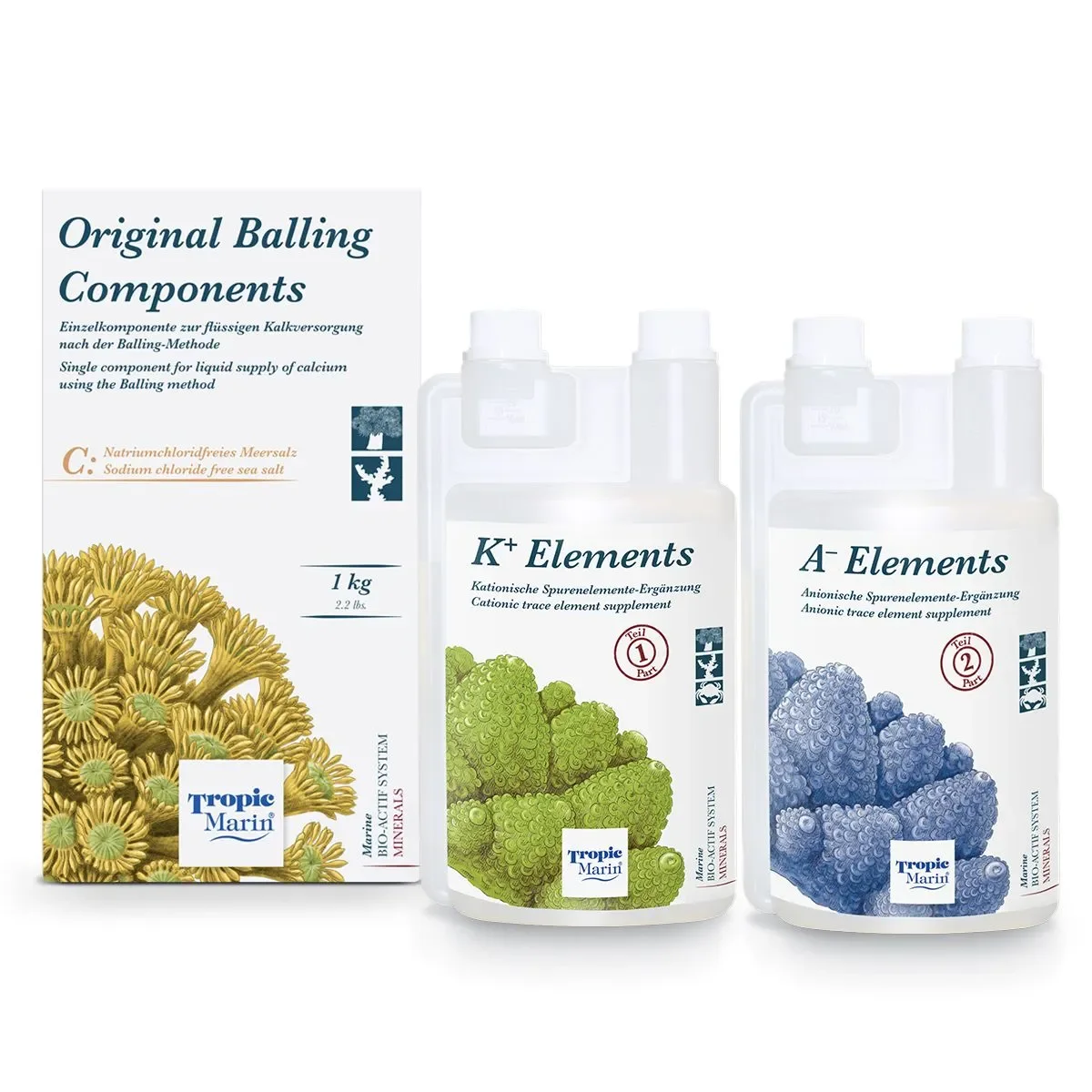
The result is an affordable dosing system built on some of the cleanest raw materials available in reefing, while still retaining the value and flexibility of the DIY approach. The historical downside was the lack of trace elements, which was addressed years ago with the BRS / Tropic Marin Hybrid Balling Method. Today, that concept evolves further with a Nyos Ion-B hybrid approach, which also incorporates potassium.
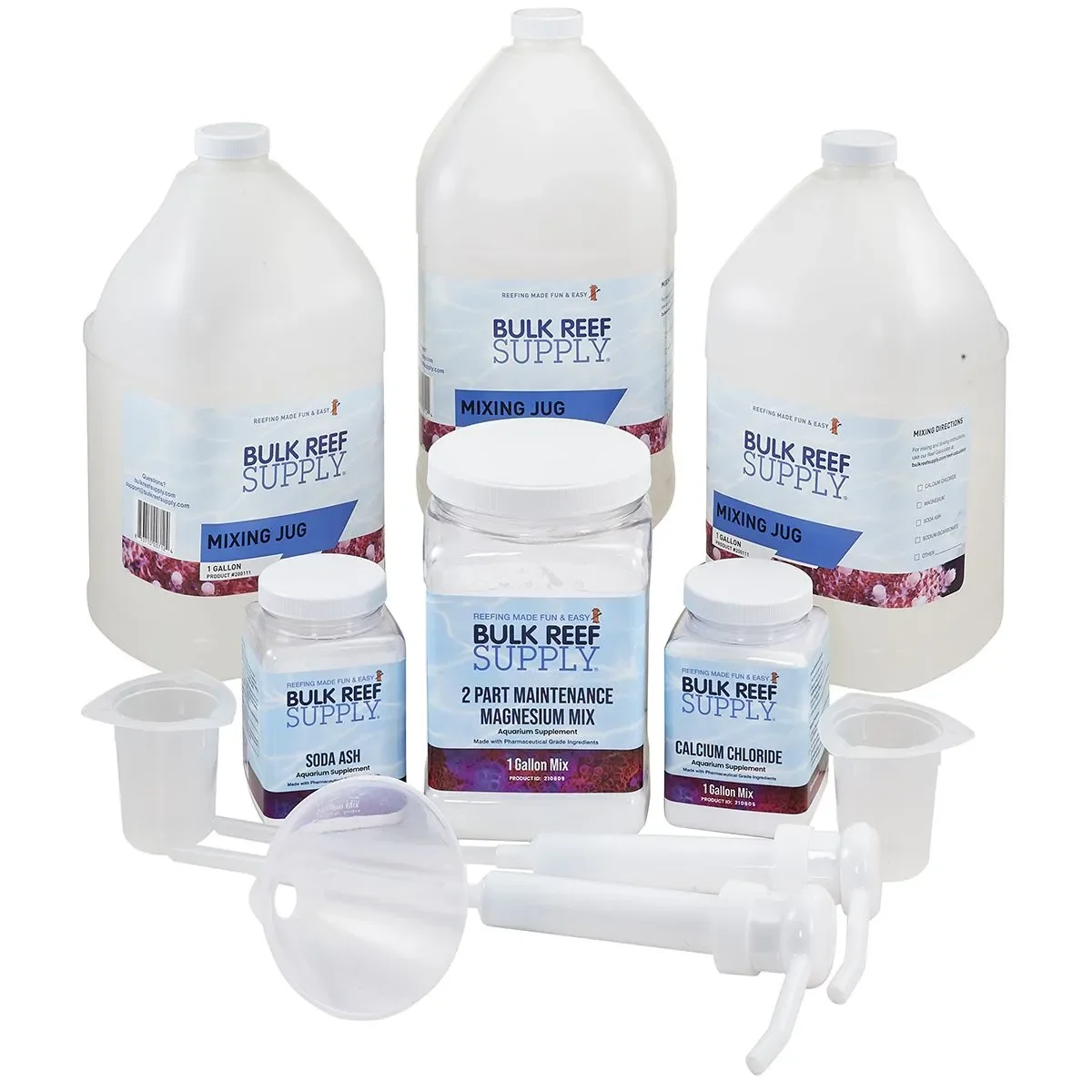
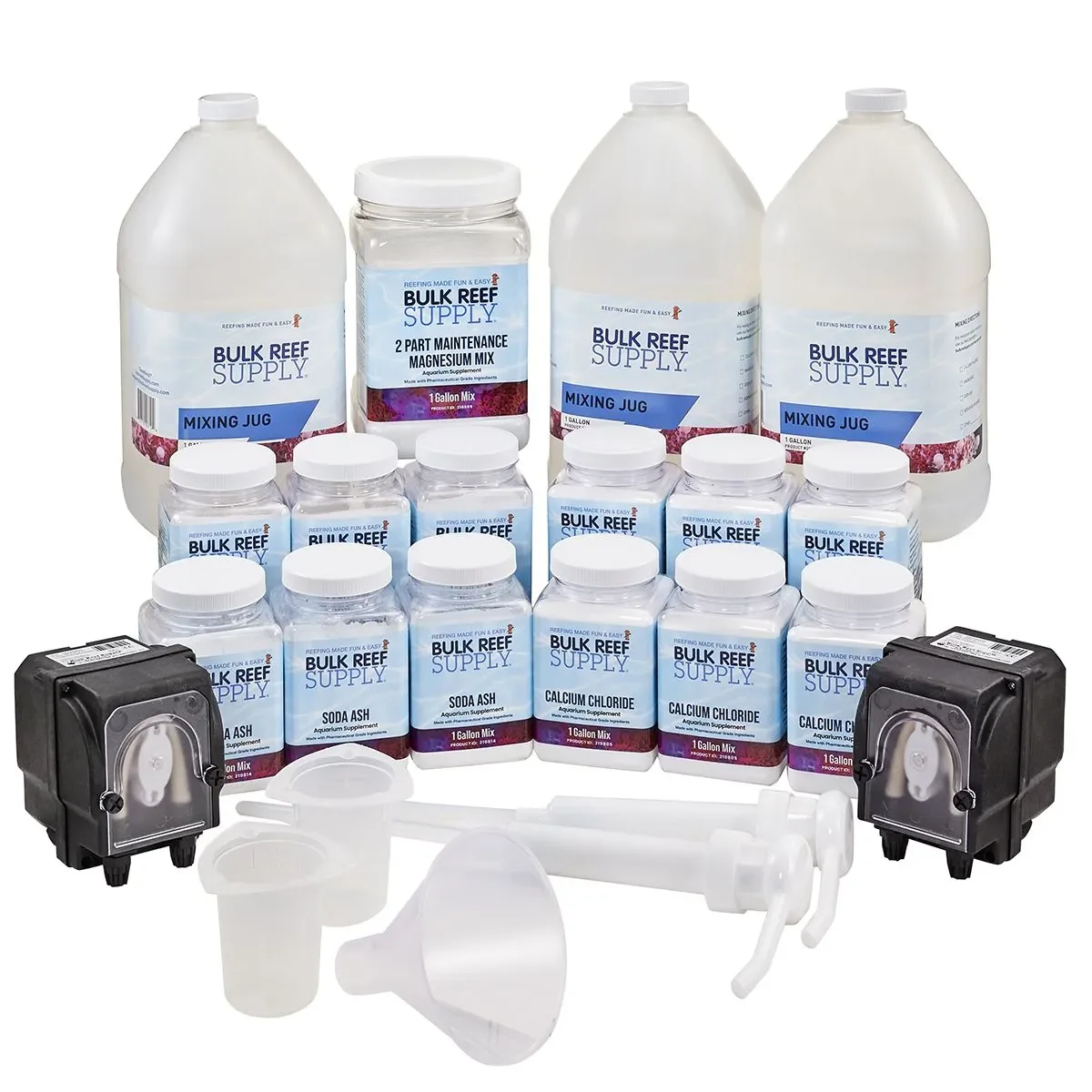

Cost — standardized comparison
On a standardized concentration basis this bulk 6-pack (including the magnesium jug) comes out to about $10.38 per standardized unit which is one of the lowest cost options we reviewed. That price assumes you buy the multi-pack. If you buy only a single jug at a time the cost per delivered alkalinity/calcium will be higher. We selected the six pack because one jug of magnesium lasts six sets of calcium and alkalinity jugs and this is a common way to purchase the bulk chems.
BRS Bulk Concentration: 5,300 dkh/L
BRS Bulk Cost: $124.899(Bulk Six Gallon Total Package)
10,000 DKH/L Standard: $10.38
*SR has developed a standardized cost for two part because You’re not paying for water, you’re paying for the salts dissolved in it. The SR Standardized Concentration Cost (SR-SCC) levels the playing field by calculating cost based on a standardized concentration of 10,000 dKH per liter. In short, SR-SCC shows how much of any reviewed additive is required to reach that same 10,000 dKH per-liter equivalent, making it easier to evaluate what you are really getting for your money.
Chemistry and formulation highlights
Form: Dry powder. None of the jugs are shipped filled with water, which keeps shipping costs low. You will dissolve them at home.
pH behavior: Soda ash based. Expect a pH lift compared to bicarbonate-based systems. For most homes that start with slightly low pH, this is a benefit.
Magnesium: The magnesium blend is formulated with both chloride and sulfate, not just chloride to maintain ionic balance.
Potassium and trace elements: The basic kit does not include potassium as a major component and it does not contain a full trace/minor element suite calibrated to coral uptake or salinity drift. That was fine historically, but modern expectations favor adding a targeted trace/major blend.
Why potassium and traces matter — and the simple fix
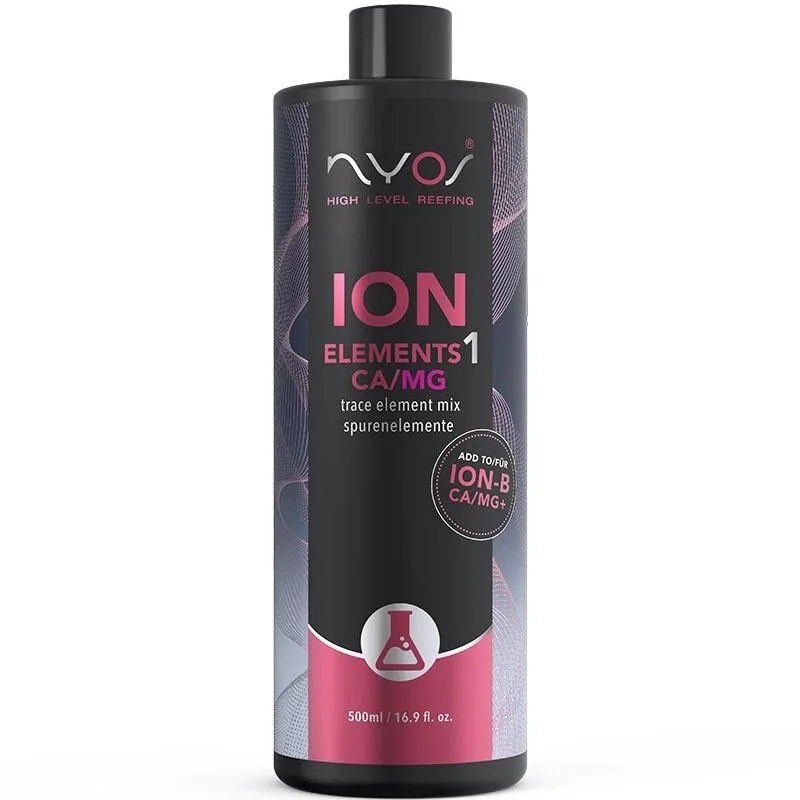
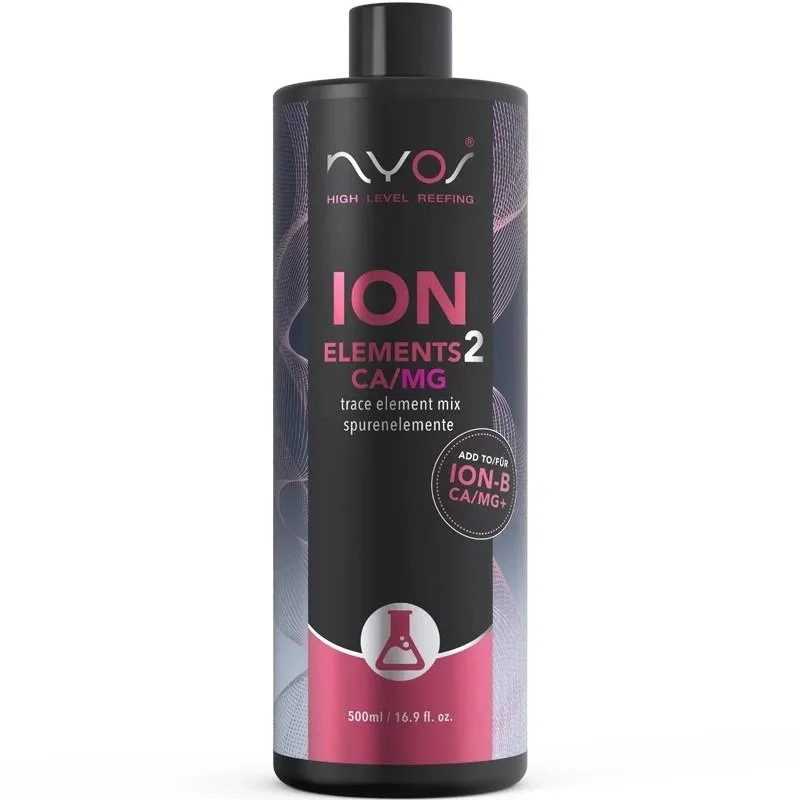
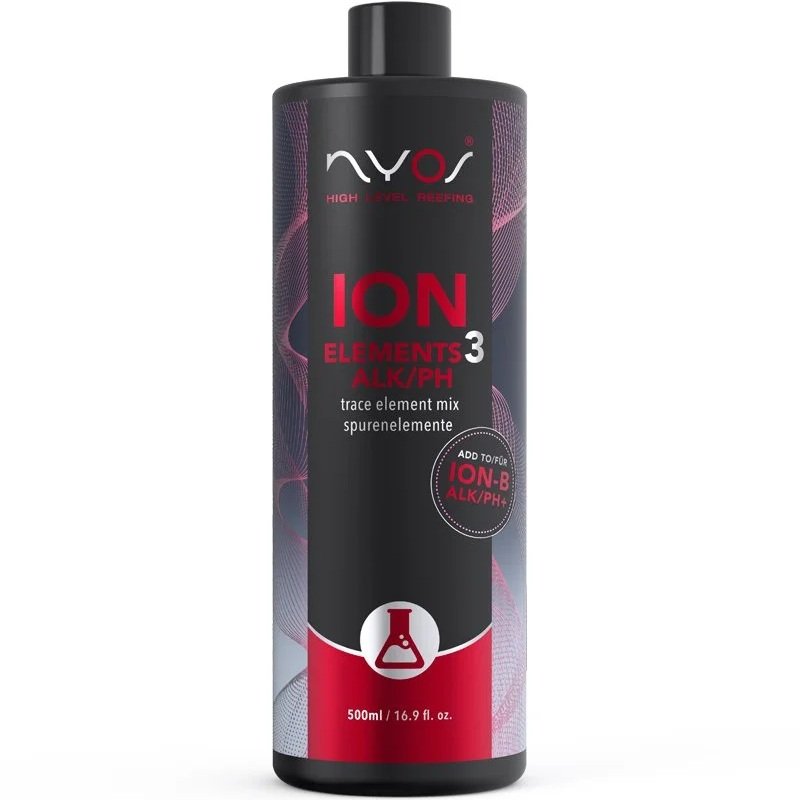
Potassium is a “sleeper” nutrient. Typical seawater potassium is around 380 ppm — similar in scale to calcium. Over time corals and livestock take potassium down, and poor test kits historically meant hobbyists under-discussed it. The practical fix is easy and affordable: add a trace/major product like the Nyos Ion line (Ion 1 / Ion 2 or Ion B variants) alongside the two-part. These supplements add potassium and other minor elements and are inexpensive relative to the kit — roughly $50 for a set that will cover two full six-pack cycles. Dosing guidance is conservative: start with about 18 milliliters and scale up only if needed.
Note: The SR team changed from Tropic Marin to Nyos Ion B to add trace elements because the Nyos contains Potassium where the Tropic Marin A/K does not.
How to add Nyos Ion with BRS two-part
Add 18 milliliters of Ion 1 in the 1 gallon BRS calcium jug. Add 18 milliliters of Ion 2 and ion 3 to the 1 gallon BRS alkalinity jug. We recommend starting at about 18 milliliters but this can be scaled up to 36 milliliters. Changes are best done with ICP testing guiding that decision.
Mixing — what to expect and practical tips
Mixing is the tradeoff for the savings. If you do not mind dissolving powders, the chemistry and price are excellent. If you refuse to touch powders, buy a premixed solution which will cost two to three times as much.
Calcium powder: Very easy. Granular, dissolves quickly. No complaints.
Magnesium powder: Large jug, dusty fines when pouring. It dissolves quickly once water is added, but use a funnel and expect a little dust.
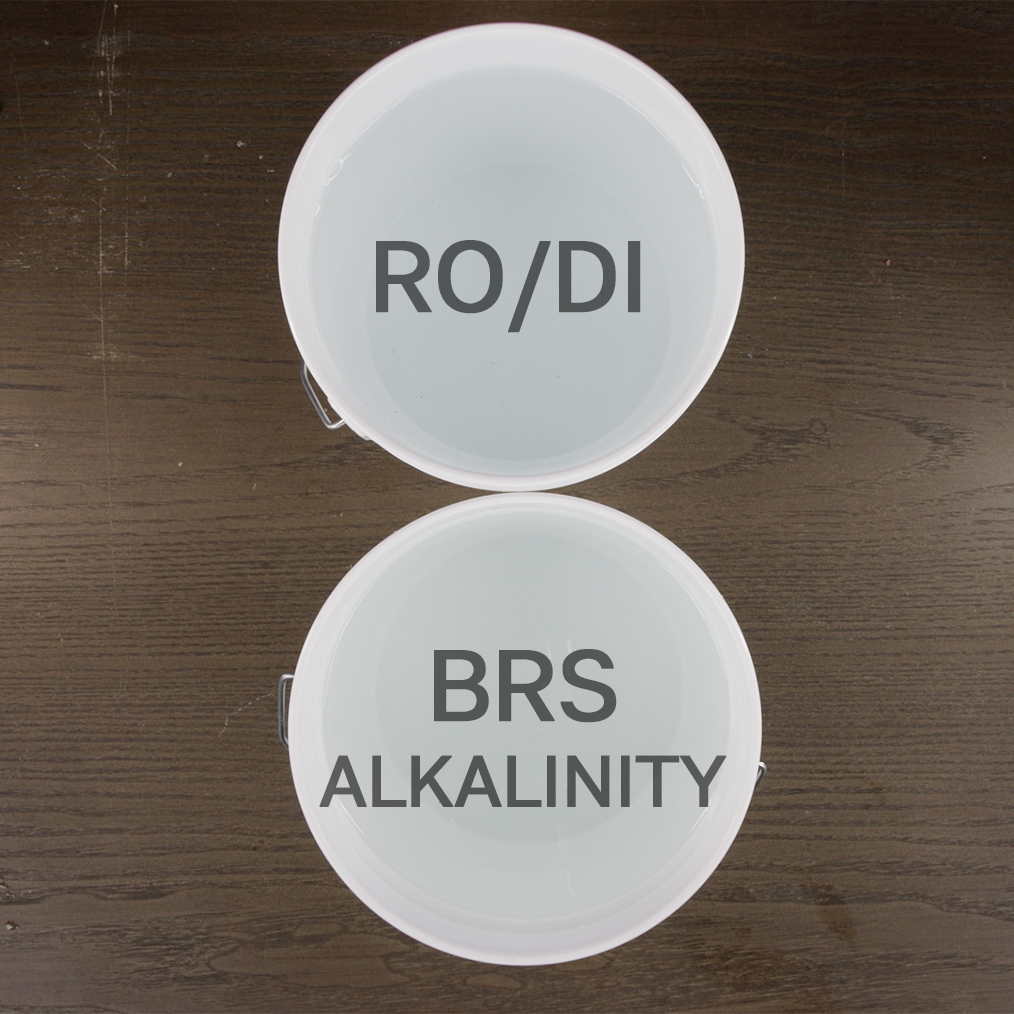
Alkalinity powder: The hardest to dissolve. If you pour it straight into still water it tends to sink and clump. Our tip: start a swirl of water in the jug or bucket first, then pour the powder into the moving water. That prevents immediate clumping and yields a faster, more complete dissolve.
Subjective purity and testing
Visually the dissolved solutions are very clear. Because the kit sources higher-purity, USP raw materials, the solutions avoid the brown tints we have seen from tech-grade products that pick up impurities during manufacturing. BRS did an independent LAB ICP-MS test of the calcium, magnesium and alkalinity purity. Check out those links for how they compared against other options. The USP-grade sourcing is a real advantage here.
BRS Calculator
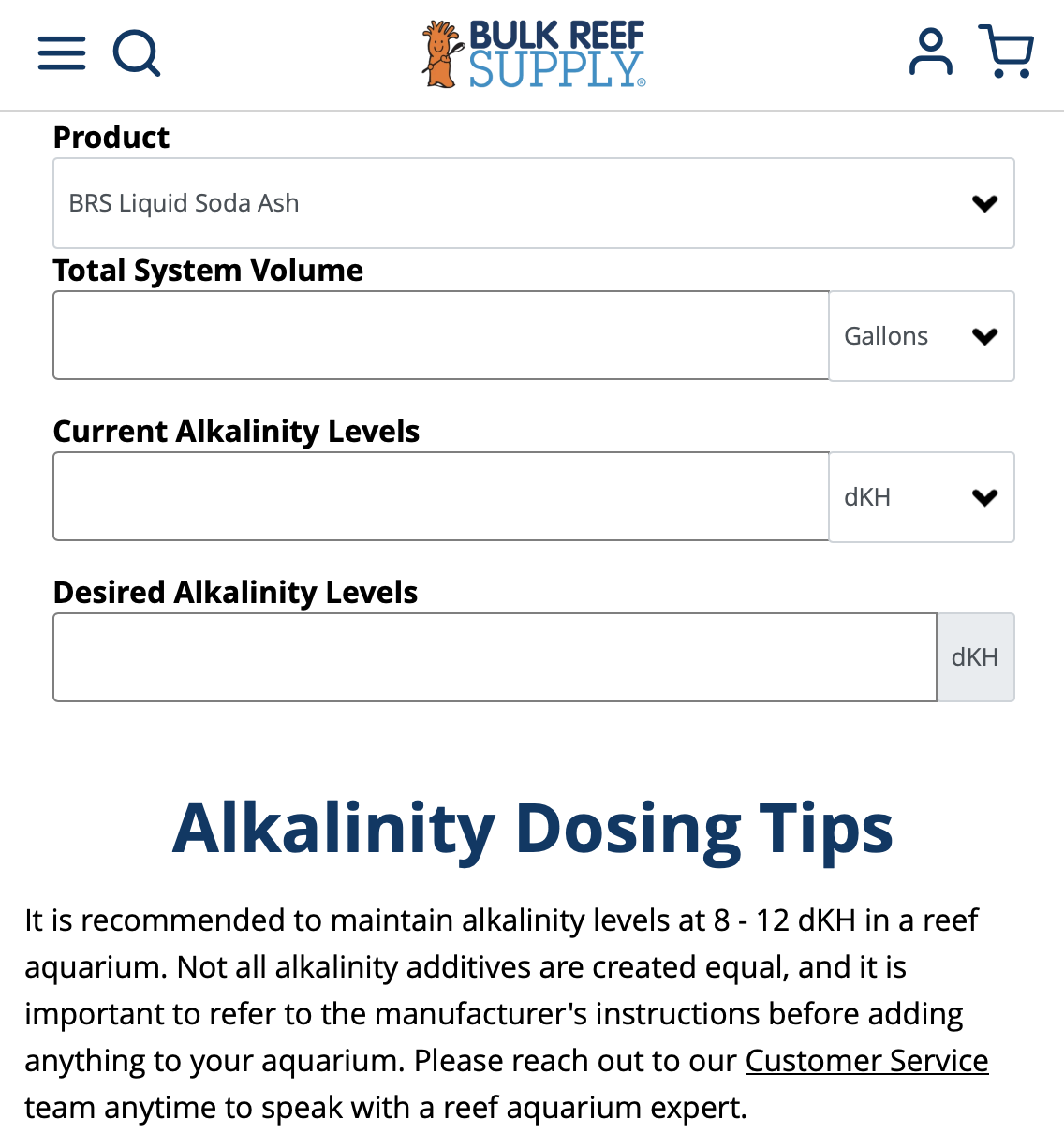
Use the BRS reef calculator (or the BRS app) to determine daily dosing volumes. The calculator remains one of the best shortcuts in reefing: tell it your tank size, current alkalinity and target and it gives you the exact milliliters to dose. The equal-volume pairing of the calcium and alkalinity jugs is a usability win — daily dosing is straightforward and consistent.
Daily dosing, magnesium steps and occasional adjustments
Daily dosing is simple: equal amounts of calcium and alkalinity every day. Magnesium is handled differently. The kit is designed so calcium and alkalinity jugs drain to zero together; when both are empty you add a measured portion of magnesium solution (roughly 20 ounces or 2.5 cups for the kit).
Some hobbyists choose to dose magnesium daily with a dedicated pump by doing the math and splitting the magnesium into a daily volume. That works, but in our experience it’s unnecessary; magnesium does not drop fast enough to require daily micro-doses for most aquaria.
Because calcium, alkalinity and magnesium are kept in separate bottles rather than chemically locked together, making occasional corrections is easy. Need more calcium but not magnesium? Top up the calcium jug independently.
Who should use BRS Bulk Two Part
This is ideal for:
Hobbyists with moderate to high consumption who want to save money.
People who do not mind dissolving powders or who can batch-mix at intervals.
Anyone who wants USP-grade raw materials and clean solutions.
This might not be ideal for:
Hobbyists who prioritize absolute convenience and refuse any powder mixing; premixed liquid alternatives exist.
People who expect an all-in-one trace/major solution directly packaged in the jugs.
Bottom line: proven, economical and flexible. Add the Ion supplements if you want a fully modern trace profile and potassium coverage.
Frequently Asked Questions (FAQ)
Is potassium included in the BRS Bulk Two Part?
No. The base kit does not include a dedicated potassium supplement or a full trace element suite. We recommend adding a Nyos Ion-b, Tropic Marin A/K, or similar trace/major supplement to cover other trace and minor elements.
Does the BRS two-part raise aquarium pH?
Yes. The system uses soda ash, which will raise the tank’s pH compared to bicarbonate-based alkalinity systems. For most home aquaria that start with slightly low pH, this is usually a benefit.
How often do I need to mix the powders?
Frequency depends on tank size and consumption. Many hobbyists mix in bulk and only prepare new jugs every few months. If you batch-mix 5 gallon buckets, you can reduce mixing to once or twice a year.. The kit itself is designed so the calcium and alkalinity jugs drain together, and magnesium is added when those jugs are replaced.
How do I dose Nyos Ion products with the BRS kit?
Start conservatively: add roughly 18 milliliters of the appropriate Ion bottle into the calcium jug and about 18 milliliters into the alkalinity jug. One set of Nyos Ion bottles will typically cover two (2) full BRS six-pack cycles.
Is mixing the alkalinity powder difficult?
Alkalinity powder is the most prone to clumping if poured into still water. Our tip: create a swirl or move the water first, then pour the powder into the moving liquid so it stays in suspension and dissolves quickly. Mixing in a bucket or using a 5 gallon batch also makes it trivial.
Should I buy premixed liquid instead of dry powders?
If convenience outweighs cost for you, buy premixed liquids — they are ready to dose and eliminate mixing. If you prefer lower cost and don’t mind dissolving powders or batching, the BRS dry kit delivers equivalent chemistry for much less money.
What’s Next? Recent Additive Reviews
Support Serious Reefs

Option 1: Patreon - Sign Up
Lowest cost option
Videos available on Patron App and website
Immediate notification of every release
Larger active community.
App works with phone closed
Sends a larger percentage of membership to Serious Reefs

Option 2: YouTube - Sign Up
Best for YouTube power users
Videos Available on
Youtube.com
Youtube TV App
Youtube Phone App
Seriousreefs.com (requires logged in Chrome browser)
*Note iOS users may need to sign up via desktop browser.
Acknowledgments
Thank you to the Serious Reefs community. Your membership funds the creation of articles and videos like this one.
Thank you to Terence Fugazzi for coming out and sharing his expertise.
Disclaimer
Full Disclaimer HERE. This is the gist of it.
Content is based on personal experience, not professional advice. Do your research and reef responsibly. Serious Reefs should not be your sole source of information on any topic.
By watching, you agree that Serious Reefs and its creators aren’t liable for how you use this info. Please don’t utilize our information if you are not ok with this.
Serious Reefs has no sponsors, doesn’t accept product or payment for reviews. We do use affiliate links in articles that earn a small commission to support our work. Shop wherever you like, we won’t be offended.
