Toxicity of Freshly Mixed Aquarium Salt Mix? What If This Was Done Today?
ICP vs Biology What Really Matters Most
We are about to explore one of the most interesting and most taboo experiments in the reefing hobby. Many people will debate the conclusions, but far fewer have taken the time to produce compelling evidence of their own.
Ronald L. Shimek Ph.D. set out to explore the best salt question by starting with some of the most sensitive organisms in a reef tank, marine embryos. He measured survival rates in freshly mixed saltwater, repeating the experiment ten times for each salt mix and counting how many embryos survived.
Before diving into the results, ask yourself a few questions.
If one salt produced 1,000 percent higher survival rates for these extremely sensitive marine animals, would that matter more than ICP results?
If another salt showed the highest mortality and killed nearly all embryos in ten out of ten experiments, would it be worth understanding why?
How much of our salt choice is driven by hearsay, brand loyalty, or packaging and what does best really mean?
The article below is free for everyone. Serious Reefs YouTube Members can watch this video natively above. Native viewing requires the chrome browser..


Toxicity of Freshly Mixed Aquarium Salt Mix. Ronald L. Shimek Ph.D.
Every so often a simple experiment forces us to ask uncomfortable questions about conventions we take for granted. One such experiment compared freshly mixed artificial seawater from several commercial salts to natural seawater using the most sensitive measure a marine aquarium test can offer: early-stage larvae survival. The results were stark. Some salts produced larval survival nearly identical to natural seawater. Others left almost nothing alive after 48 hours. Full Article can be found on Reefkeeping magazine HERE. If you have trouble getting that link to work you can find the archived version HERE.
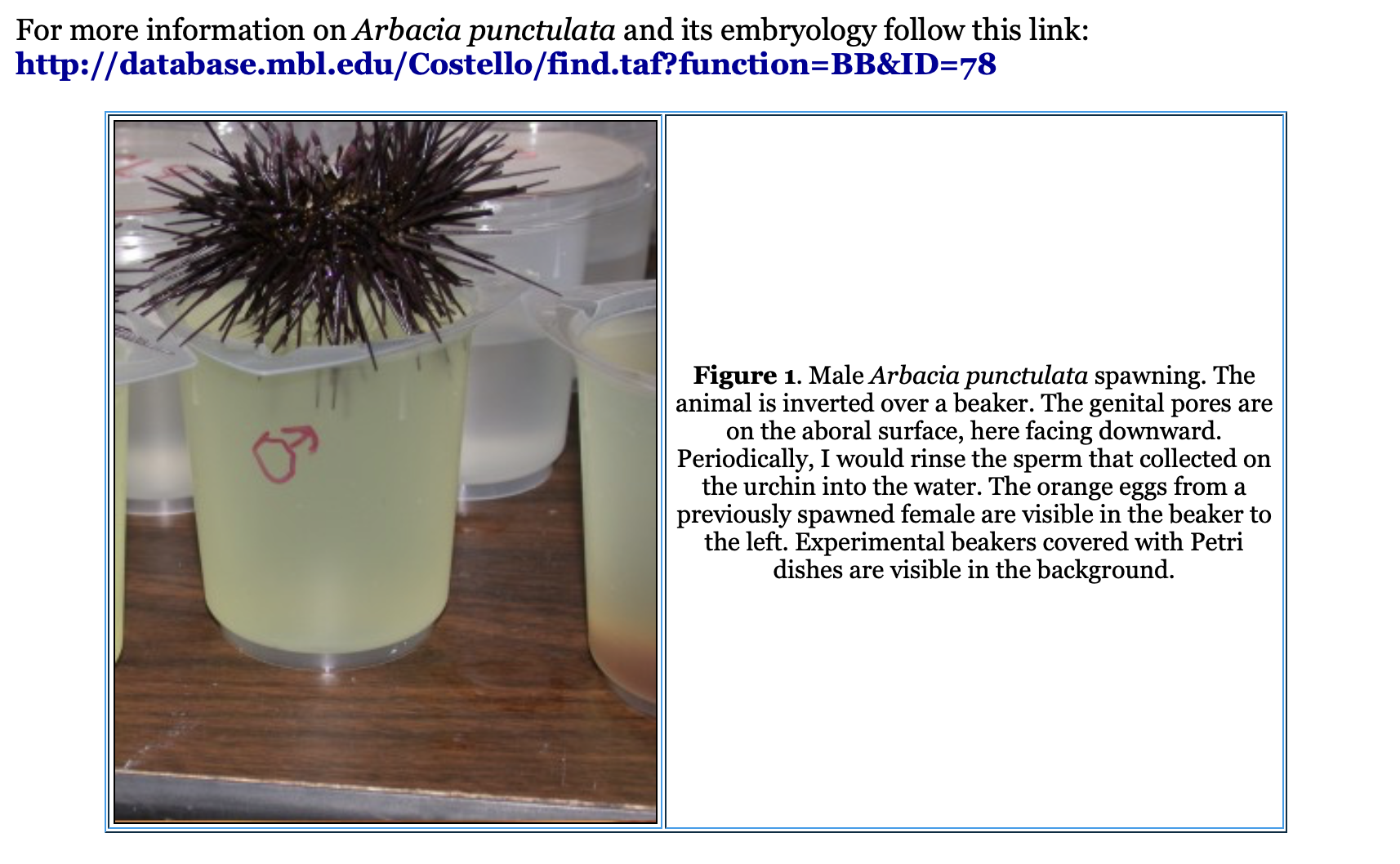
Photo credit: Reefkeeping Magazine & Ronald L. Shimek
Why test salt mixes with larvae?
When we evaluate salts we often look at ICP reports and label chemistry: calcium, alkalinity, magnesium, trace elements. Those figures are important, but they are only measurements. They do not tell us how a living, developing organism responds to the final mix. Corals and fish in our tanks look alive and healthy most of the time, so it is tempting to assume that any salt that keeps corals alive is safe or good enough. That assumption ignores how common unexplained moralities are in reef tanks as well as the most vulnerable life stages.
Embryos and larvae are biologically demanding and far more sensitive than adult corals or fish. If a salt formulation reduces survival of a sea urchin embryo by a large factor, that is a red flag. It does not prove corals will perish, but it demands follow up. The question becomes: if this kills embryos, what else might it affect quietly—spawning success, larval settlement, or subtle long-term health?
Many experiments start this way, test broad with the most sensitive organisms and use that data to narrow down to more specific organisms.
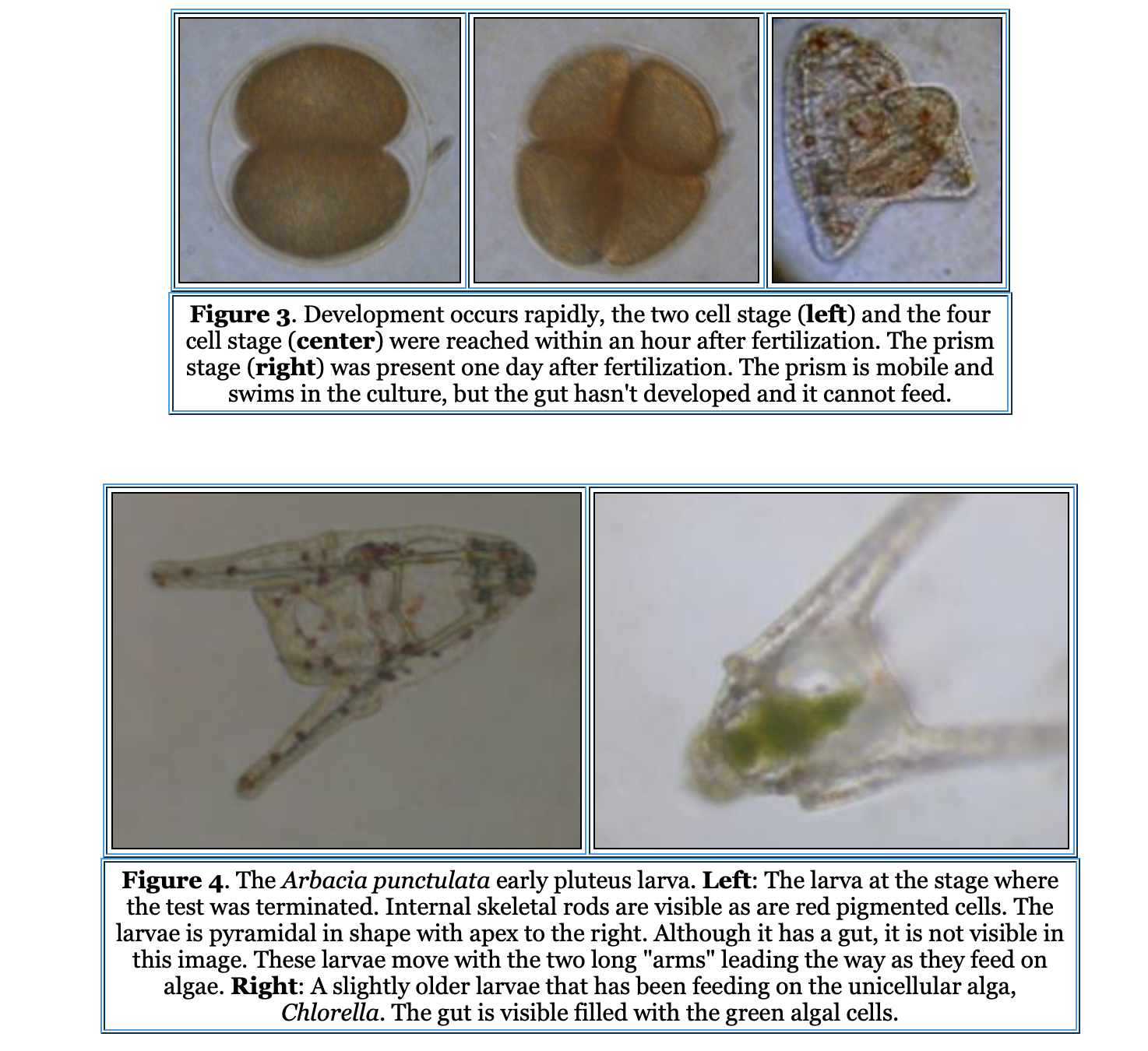
Photo credit: Reefkeeping Magazine & Ronald L. Shimek
What the experiment found
In the experiment, ten replicates of each salt were tested for survival of sea urchin embryos after 48 hours. Natural seawater produced a healthy average survival of 37 embryos. A couple of commercial salts performed similarly or even better than natural seawater. Two commercially popular products, however, produced an average survival drop into the single digits across ten replicates. To go from an average of roughly thirty-some survivors in natural seawater down to around four with a commercially available salt is not a trivial difference. It is biologically meaningful.
That outcome should have triggered questions and replication. Instead, the initial reception in hobby circles was polarized. Some dismissed the result outright because they did not spawn larvae in their aquariums and therefore did not care about embryo survival. Others treated the experiment as if it had no merit because it did not produce a comprehensive chemical analysis and peer-reviewed replication. Both reactions missed the point: this was a signal worth investigating further.
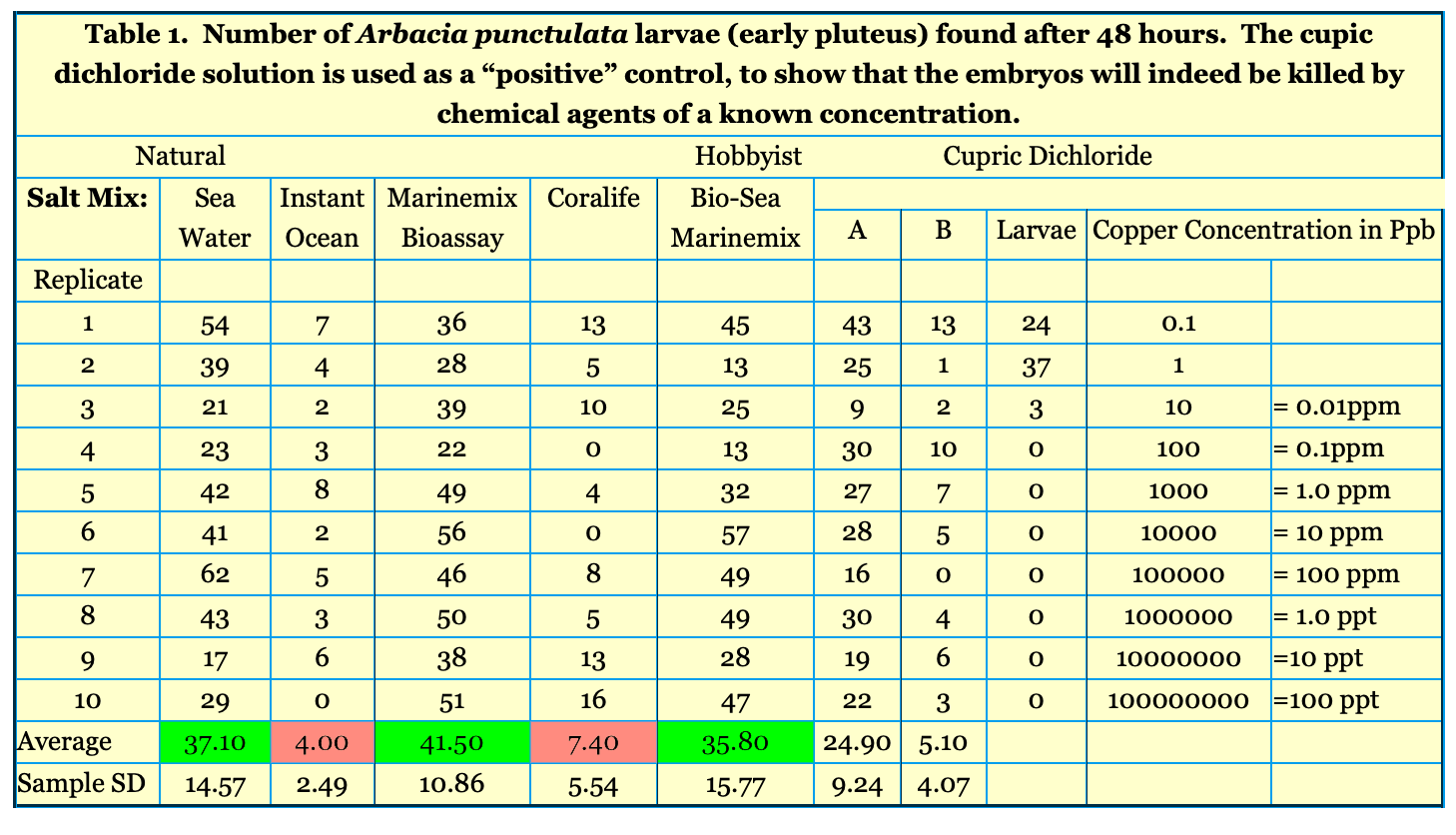
Photo credit: Reefkeeping Magazine & Ronald L. Shimek
ICP numbers tell a story; biology tells us what that story means
Inductively coupled plasma (ICP) analysis is a powerful tool. It quantifies elements down to trace levels and helps us compare product formulations. But ICP cannot predict biological outcomes with certainty. Two salts with similar ICP profiles might have just one other two different element levels that yield different biological responses due to impurities, manufacturing processes, differences between batches, or even how the salts dissolve and interact with trace organics.
A complete approach should pair ICP chemistry with biological assays. We want to know not only what is in the water, but how organisms respond. That means running controlled biological tests—larval survival, coral spawning, settlement success, growth rate—alongside rigorous chemical profiling for the same batches used in the tests. Only then can we begin to link chemistry to biological effect and form useful guidance for hobbyists and aquaculture practitioners.
What may have gone wrong in the first study
The original experiment we are discussing went to great lengths to count embryos and run replicates. It was careful in its biological methodology. Where it fell short was not measuring the exact chemistry of each freshly prepared batch using modern ICP at the time of the biological test. Instead, the chemical data came from manufacturer reports or earlier analyses. Salt formulations can change over time, and manufacturer data are not a substitute for fresh chemical verification of the exact water used in the assay.
Given the expense of ICP testing in the early 2000s, that was understandable, but it limits our ability to draw specific causal links. If the same experiment were repeated today with matched ICP data for each tested batch, we would have far more to act on.
Why the hobby reacted so strongly
When an established choice in the hobby is questioned, reactions often become defensive. Many people used and trusted the salt(s) that performed poorly in the experiment. Suggesting that a ubiquitous product might compromise larval survival felt personal. That triggered attacks and dismissal rather than curiosity.
A better response would have been: replicate the test with modern controls; run ICP on the same mixes used for the biological trial; and then, if the result holds, figure out what component or contaminant is responsible. We should praise those willing to run bold, difficult experiments because discovery requires risk.
“primary goal is learn something new”
Does this matter to hobbyists who are not breeding?
It does. Even if we are not actively raising larvae, our tanks are ecosystems that can experience spawning events. Corals spawn in captivity; fish spawn; invertebrates may reproduce. Even if offspring fail to reach maturity, subtle impacts on early life stages could influence genetic lines, recruitment, color expression, or resilience. A salt that suppresses embryonic development could suppress natural reproduction in our tanks.
Those who actively breed fish know firsthand how few embryos ever make it to adulthood. Most acknowledge that success rates are typically much higher when using filtered natural seawater. Experiments like this suggest it may be possible to achieve similar results using synthetic sea salt as well. Progress is what experiments are all about.
There are parallels elsewhere in the hobby as well. For example, certain magnesium additives are known to contain impurities that have targeted toxic effects on nuisance algae, illustrating how unintended contaminants can produce strong biological outcomes. This is where ICP and biology intersect.
If impurities in a magnesium additive can kill nuisance algae, is it rational to assume they have no effect on other life in the tank, including corals that rely on symbiotic algae to survive? Should we treat biological effects with serious interest, or dismiss them simply because they do not align with what we can easily see?
Practical takeaways for hobbyists right now
We cannot make definitive claims about salt brands based on an old experiment, but we can adopt sensible precautions:
Prioritize transparency. Choose salts that provide lot-specific ICP certificates or are willing to share batch testing data.
Know your goals. If your aim includes breeding, spawning, or rearing larvae, the standards are higher.
Store and mix consistently. Manufacturing and dissolution practices can influence final chemistry. Follow mixing directions precisely and avoid using old or improperly stored product.
Think like an experimenter. Unexplained mortalities have causes; we just haven’t identified them yet. Death is often a cumulative process. If you experience frequent losses or notice something unusual after switching salts, consider the salt change as a variable worth testing.
Support community science. Share observations, keep records of batches, and collaborate on replicable tests rather than trashing unconventional results out of hand.
Why community-based experiments matter
Industry-level peer review and rigor are valuable, but they are not the only paths to learning. Hobbyists can run meaningful experiments that point the way. When results are shared transparently, others can reproduce them and either corroborate or refute the findings. That is how progress happens.
Discouraging experiments because they are imperfect is counterproductive. Instead we should treat early attempts as pilot studies. If an experiment suggests a signal, the community should rally to replicate it under stricter controls and with matched chemical analysis. Repetition and open data create confidence, not ad hominem attacks.
Final thoughts
Salt is more than a label. It is chemistry that interacts with living systems. ICP data are a necessary part of the picture, but biology supplies the validation we ultimately care about. When a simple biological assay reveals a large difference in embryonic survival among salts, that is an alarm bell worth investigating, not a rhetorical cudgel to silence the messenger.
Serious Reefs wants to nurture a culture that rewards curiosity and replication rather than dismissing inconvenient findings. If a salt performs poorly in a assay, let's find out why. If a salt performs well, let's understand which aspects of its chemistry promote survival. Either way, the hobby wins because we learn to match tools to goals rather than assume one-size-fits-all.
“If you find that it actually harms these sensitive creatures, the question then is where does that stop?”
That question should guide our next steps. We can debate endlessly about spec sheets or marketing claims, or we can run experiments that show what actually matters to living organisms. Science in the hobby does not require a prestigious lab; it requires curiosity, humility, and a willingness to repeat, refine, and share results. Let's do that together.
What’s Next? Recent Additive Reviews
Acknowledgments
Thank you, Ronald L. Shimek, Ph.D., for pushing the hobby forward and helping uncover something new.
Thank you to the Serious Reefs community. Your membership funds the creation of articles and videos like this one.
Support Serious Reefs
Option 1: Patreon - Sign Up
Lowest cost option
Videos available on Patron App and website
Immediate notification of every release
Larger active community.
App works with phone closed
Sends a larger percentage of membership to Serious Reefs
Option 2: YouTube - Sign Up
Best for YouTube power users
Videos Available on
Youtube.com
Youtube TV App
Youtube Phone App
Seriousreefs.com (requires logged in Chrome browser)
*Note iOS users may need to sign up via desktop browser.
Disclaimer
Full Disclaimer HERE. This is the gist of it.
Content is based on personal experience, not professional advice. Do your research and reef responsibly. Serious Reefs should not be your sole source of information on any topic.
By watching, you agree that Serious Reefs and its creators aren’t liable for how you use this info. Please don’t utilize our information if you are not ok with this.
Serious Reefs has no sponsors, doesn’t accept product or payment for reviews. We do use affiliate links in articles that earn a small commission to support our work. Shop wherever you like, we won’t be offended.
