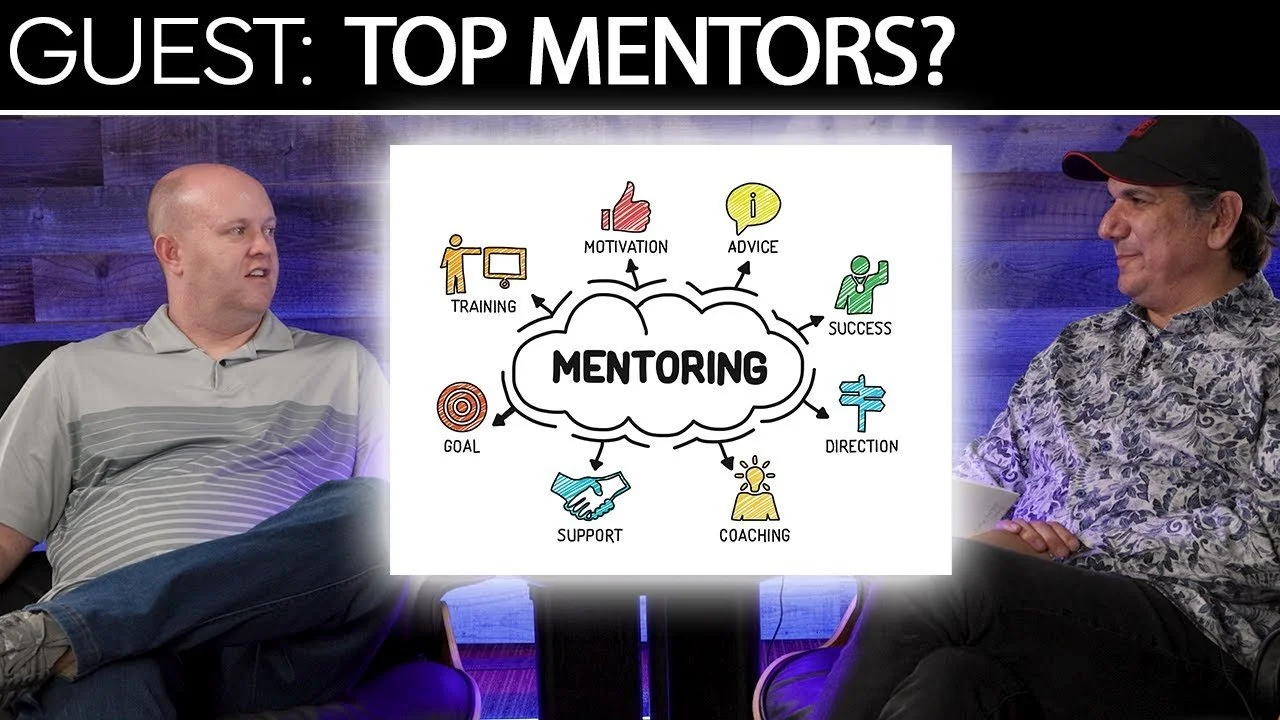
Who Are Our Reef Mentors? Lessons We Lean On from the People Who Know
Every hobby has a handful of people who shape how the rest of us think, build, and troubleshoot. In reefing, those people are the ones we call when something behaves strangely, the forum posts we re-read, the build threads we bookmarked, and the phone calls that turn into two-hour strategy sessions. They are not infallible, but they help us stop spinning our wheels and move forward with confidence.
We all benefit when we identify mentors who match what we want to do. Some specialize in chemistry, others in biology, a few obsess over equipment, and others quietly demonstrate what steady, consistent care looks like. Below we map out the mentors who have guided us, why they matter, and how to make the most of that wisdom.
The article below is free for everyone. Serious Reefs YouTube Members can watch this video natively above. Native viewing requires the chrome browser..


Why mentors matter more than random advice
Advice is everywhere. Forums, groups, and social media flood us with tips, opinions, and hot takes. The problem is not the volume of information; it is the noise. Mentors filter that noise into practical, repeatable guidance. They have done the experiments, seen multiple failures, and learned how to connect the dots.
A good mentor answers three things for us: are we on the right track, what step solves the current problem, and why the solution works. We value people who tell it straight—no coddling, just the clearest path forward.
Categories of reef mentors and the people we look to
Mentors tend to fall into categories. Knowing which type of mentor to consult for each problem saves time and keeps our systems healthy.
System design and troubleshooting — Those who think in plumbing diagrams and pump curves and have rebuilt tanks enough to predict failures before they occur.
Chemistry and analytics — Scientists who can explain why elements and molecules behave the way they do in aquaria.
Biology and animal care — Experts who connect lab studies with practical husbandry and explain what animals actually need.
Technique innovators — Hobbyists who try new dosing regimes, filtration tricks, or lighting strategies and document outcomes rigorously.
Local, hands-on rescuers — People who will drive across town with live water in a bucket and a dehumidifier to fix a crashed tank.
Quiet curators — Those who keep small, beautiful displays but rarely seek the spotlight; if you find their threads or tanks, pay attention.
Industry connectors — People who operate where hobby, business, and science intersect and help translate ideas into usable products or best practices.
Mentors We Keep Returning To
Below are the names and practical lessons we’ve taken from them. This is not an exhaustive list; it’s a set of people who repeatedly give straightforward answers and have had a demonstrable impact on how we manage aquaria.

Thomas Burton — system design, skimmers, and the eye for detail
Thomas built a reputation by designing systems that actually work. His threads and build photos helped many of us transition from tiny nano tanks to more ambitious builds. Early on, the Herbie-style overflow and aggressive but practical lighting choices were part of his signature approach. Beyond the hardware, Thomas’s skill is in connecting disparate pieces: drilling tank backs, designing plumbing that doesn’t panic us, and choosing equipment with real-world trade-offs in mind.
Practical takeaway: when planning a new tank, favor system simplicity and redundancy over flashy, complicated setups. Learn the plumbing and overflow concepts Thomas teaches before adding complexity.
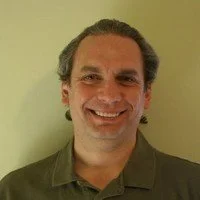
Randy Holmes-Farley — chemistry and the why behind the numbers
Randy’s contribution is the chemistry backbone to the hobby. He does not simply tell us what numbers matter; he explains the molecular reasons behind them. That level of clarity is invaluable when troubleshooting odd behavior or questioning whether a dosing strategy makes scientific sense.
Practical takeaway: if you have a chemistry question, start with the core concepts Randy lays out. Understand the why so you can design experiments in your own tank and interpret results rather than just copying someone else’s routine.
What makes Mr Homes-Farley unique is that he is the most available mentor on the list. You can ask him questions directly on his Reef2Reef forum
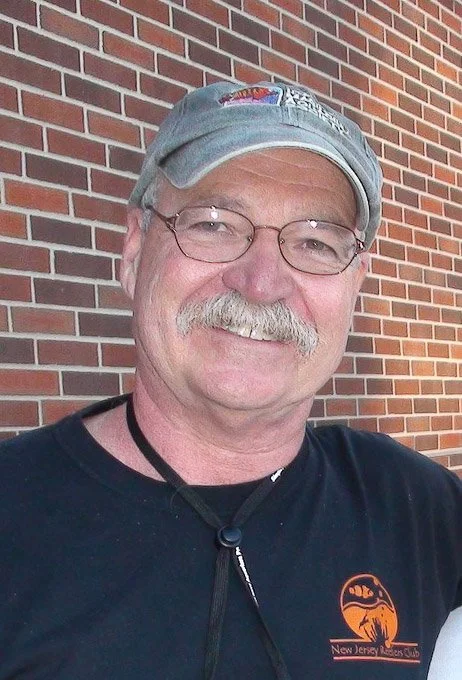
Dana Riddle — biology applied to the animals
Dana brings lab-tested biology to our hobby. His work translates controlled experiments into guidance that helps us understand what corals and other reef animals really require. Dana’s writing tends to assume the rigor of a scientist while staying mindful of hobby realities, so we can apply his lessons directly.
Practical takeaway: read biology-first pieces when trying to optimize coral growth and coloration. The right nutrients, flow patterns, and light are all biological levers—Dana helps explain which ones to pull.
Best place to start with Dana is his Macna Talk Turbocharge Photosynthesis! Alkalinity, Light, & Water Motion . If you are ready for a deep dive, check out his coral nutrition series.
Sunny X — practical carbon dosing and bacterial approaches
Sunny X helped popularize simple, highly effective approaches to shifting bacterial populations in reef tanks. Vodka dosing and using carbon additives like MB7 are examples of strategies he refined and documented in a way that resonated with hobbyists chasing colorful SPS.
Practical takeaway: if nutrient control is your bottleneck, investigate carbon dosing strategies—but do so methodically. Start small, track changes, and combine with good flow and light practices.
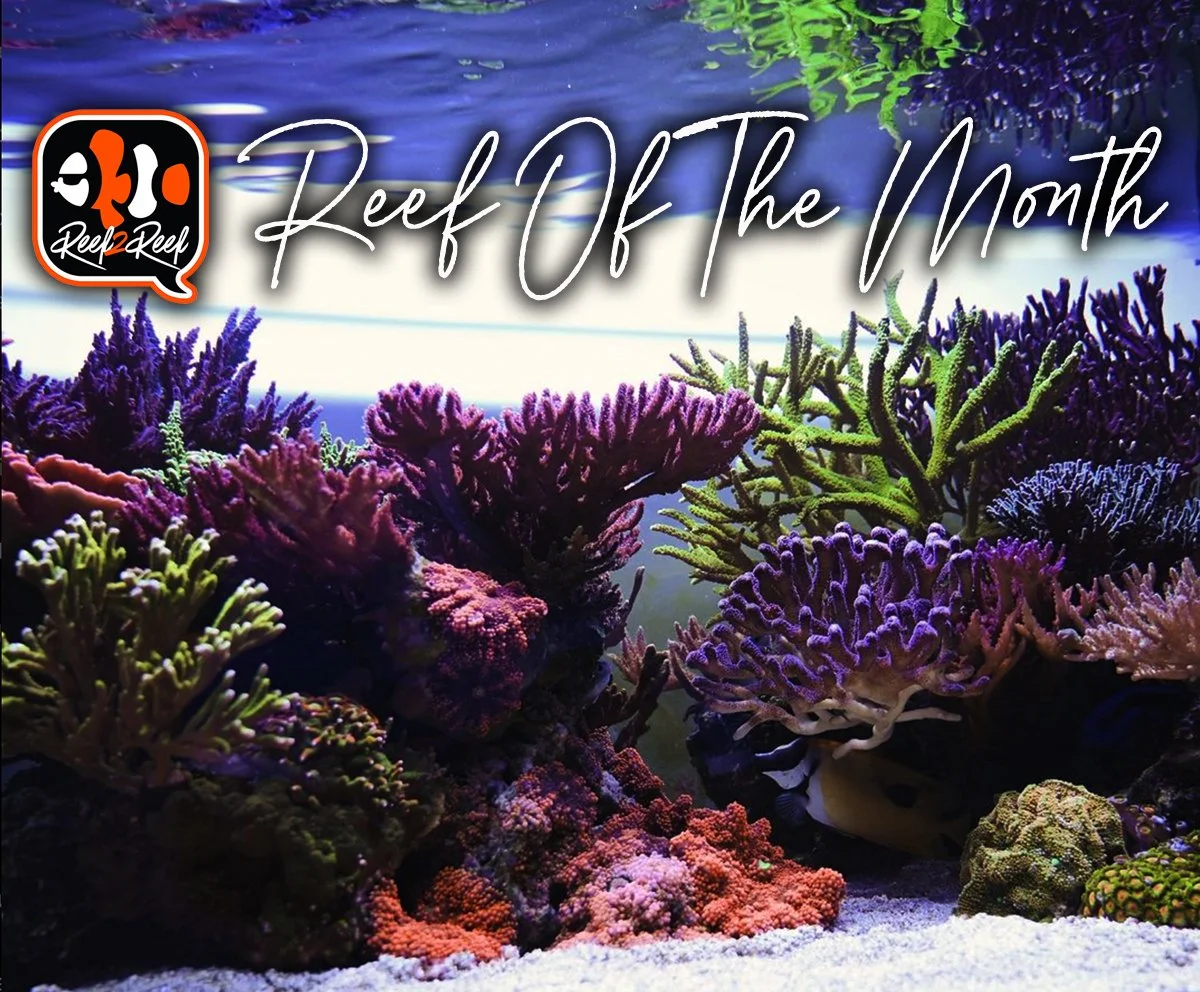
Better yet, Sunny X has the receipts, check out the reef tank of the month thread.
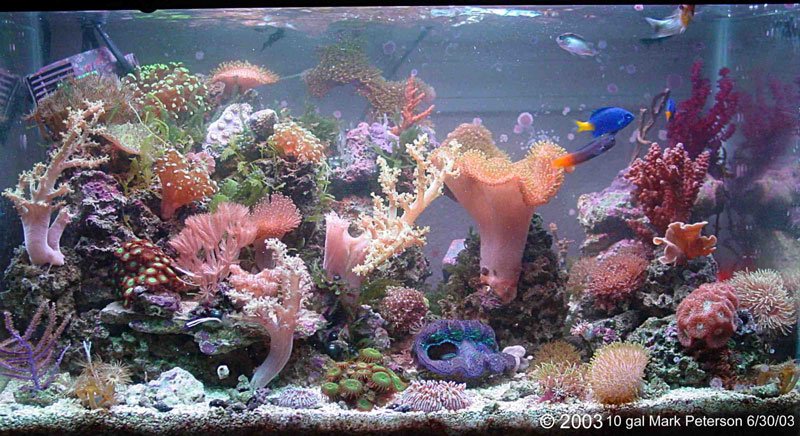
Mark Peterson and grassroots local mentors — live water and hands-on rescue
Local mentors are the unsung heroes. One story we remember is of a hobbyist who crashed their first tank and was saved when someone drove an hour and a half with a bucket of live water, live sand, and the knowledge to solve the problem. That kind of hands-on help is invaluable, and it’s why local clubs and experienced hobbyists remain essential.
Practical takeaway: cultivate a local mentor or club. There is a limit to remote advice—sometimes you need live water, a dehumidifier, or someone to set up a hang-on filter in an emergency.
Check out details behind Mark’s Tank Of The Month.

Adam Monte — moderation, pattern recognition, and quiet expertise
Adam is an example of someone who quietly answers complex questions with consistently accurate guidance. He demonstrates that you don’t have to be loud to be a thought leader. Watching how he threads pieces of information together teaches us how to synthesize multiple small clues into a correct diagnosis.
Practical takeaway: learn to recognize patterns. If multiple independent sources consistently point toward the same solution, trust that pattern and test it carefully in your system.
Adam was a lead moderator on the AskBRS Facebook group but was promoted. You can still tag him to get those constantly accurate answers. Check out Adam’s beautiful tank here
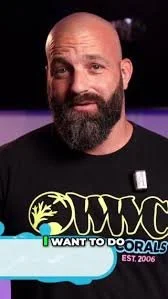
Josh (WWC) — coral ID, frag handling, and morphology
When the question is about coral species, growth forms, or how a frag will behave over time, Josh is the person to call. His coral expertise helps us choose specimens that fit our goals, whether we want plates, branching colonies, or massive growth forms.
Practical takeaway: match corals to your long-term vision. If you want large colonies, select parent colonies known to plate or grow encrusting forms; do not over-frag everything into tiny pieces that never achieve nature-like structure.
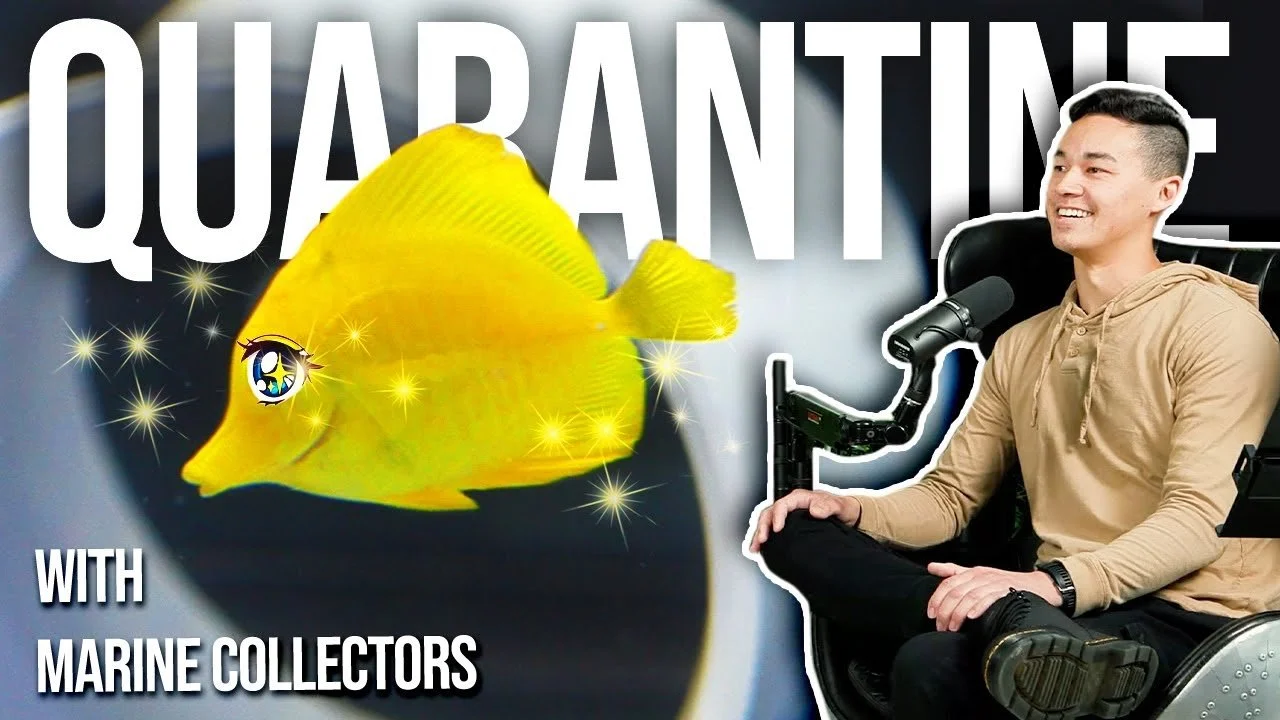
Fish experts — Elliot
Fish husbandry and quarantine are separate disciplines that require both commercial-scale knowledge and home-scale pragmatism. Elliot brings that expertise to us all
“I stopped researching and started only listening to Elliot and my success rates with challenging fish skyrocketed” - Ryan Batcheller
Practical takeaway: quarantine, diet, introduction and habitat are not optional. Use practical procedures adapted to your setup—observe, treat if necessary, and ensure new animals are healthy before introducing them to the main tank.
Elliot’s experience can be found on SR’s Fish 101 Series as well as Marine Collectors.
QT Experts — Bobby Miller (Humblefish)
Bobby translates scientific quarantine protocols for practical home use. Combined, they help us bring fish into systems responsibly and keep them healthy.
What’s unique about Bobby is that he has spent decades learning about fish diseases, parasites, and treatments — and for most of that time has been readily accessible to reefers as an active participant in the community. You can even ask him questions directly on the Humblefish forum.

Jeremy Howell — industry perspective and connecting the dots
Someone who can straddle hobby, business, and science helps push the entire hobby forward. Jeremy learns from manufacturers, scientists, and hobbyists, then helps translate and filter that into approaches we can try. In short, we rely on people who understand how product design, biology, and business realities intersect.
Jeremy is one of Ryan Batcheller’s first calls for “what if” questions. Those ideas that challenge the status quo. Having a mentor like this sharpens the steel and pushes progress forward.
Practical takeaway: when evaluating a new product or approach, consider not only the claims but how it fits into system-level needs. Industry-informed mentors help with that translation.
How to find and work with a reef mentor
Finding a mentor is as much about alignment as expertise. We want someone who understands our goals—whether that is big, colorful SPS, natural aquascapes, sustainable fish care, or efficient quarantine. Here are practical steps to get started.
Define the problem you need solved. Are you struggling with flow, nutrient control, coral growth, or fish health? Narrow the question before asking for help.
Match the mentor to the domain. Chemistry questions go to the chemists. Flow problems go to the system designers. Live animal issues go to the biologists or experienced fish keepers.
Start with public threads and build trust. Read their posts, watch their build photos, and see how they respond to others’ problems before sending a direct question.
Ask specific questions and share data. Good mentors will ask for numbers—salinity, alkalinity, nitrate, phosphate, flow rates, heads on pumps, photosynthetically active radiation (PAR) levels—so gather what you can first.
Be ready to test suggestions. Mentors often give straightforward advice. Implement it, measure the results, and report back. Iteration is how progress happens.
Pay it forward. When a mentor helps you, pass along the knowledge. Local clubs thrive when members turn around and support new hobbyists.
Common approaches mentors encourage
Several recurring themes come up regardless of which mentor we consult. These are the lessons that often distinguish success from struggle.
Simplify where you can. Complicated systems with many single points of failure tend to cause stress. Favor redundancies that are easy to understand.
Measure before you change. Record a baseline. Then change one variable at a time so cause and effect are clear.
Respect biology. Corals are animals with metabolic needs. Light, flow, and nutrition must line up with species requirements.
Use live water and live sand wisely. In crisis, live source water and established sand can stabilize a tank, but they are not a cure-all. They buy time and biological capacity.
Let colonies tell you the story. If you let certain corals grow out, you learn natural behaviors and will better understand how your system supports long-term health.
Stop listening to everybody. Start listening to somebody.
How mentors change our hobby culture
Mentors shape culture by reducing trial and error. When one person documents a reliable approach and others replicate it, the hobby advances faster. Mentors also humanize knowledge—reminding us that people who have gone before are often reachable and willing to help.
The most powerful mentors are not always the loudest. Often they are quiet people who quietly practice excellent husbandry and share results. They answer complex questions with simple, repeatable solutions. Those are the relationships we should cultivate.
Keeping a healthy mentor relationship
Mentorship is a two-way street. We get help, but we also show appreciation and respect boundaries. Mentors are usually busy; they value focused questions, measured feedback, and the willingness to test and report results rather than asking for off-the-cuff opinions forever.
If a mentor invests time in you, try to pay it forward. Help others in your local club. Share what worked and what did not. Even small acts—volunteering at a frag swap, bringing over a spare pump in a pinch, or passing along a dehumidifier—keep the community strong.
FAQ
When we ask a mentor a question, what data should we have?
Bring specifics: tank size, plumbing diagram or photos, pump models and head curves, lighting type and schedule, recent water test results (alkalinity, calcium, magnesium, nitrate, phosphate), and a clear description of the problem and recent changes. The clearer the data, the better the advice.
How do we validate a mentor’s advice?
Test recommendations methodically. Change one variable at a time, measure baseline and outcomes, and run controls where possible. Cross-check with trusted sources in that domain (a chemist for chemical claims, a biologist for animal behavior). Reliable mentors will encourage measured testing.
Are local mentors more valuable than online ones?
Both have strengths. Local mentors provide hands-on help in emergencies and tangible resources like live water or equipment loans. Online mentors can provide depth of knowledge across many tanks and experiments. Ideally, cultivate both: local support for emergencies and community, and online experts for deep domain knowledge.
How can we become mentors ourselves?
Share what you know candidly and document your work. Answer specific questions with data and be willing to say when you don’t know something. Volunteer in local clubs, participate in forum discussions, and host small workshops or tank tours. Mentorship is built on consistent, practical help.
What should we do when mentors disagree?
Treat disagreements as experiments. Note the different recommendations, pick one that aligns with your risk tolerance, test it carefully, and measure outcomes. Often the truth lies in understanding the context behind each opinion—system differences, goals, and constraints.
Final thoughts
Choosing the right mentors accelerates learning and makes the hobby more enjoyable. We save time, reduce losses, and learn how to ask better questions. The people who have transformed our approach to reefing are not all celebrities—they are the quiet problem solvers, the chemists who explain reactions, the biologists who tie experiments back to animal needs, and the local folks who show up when everything goes sideways.
Invest time in finding mentors who align with your objectives. Read their writings, follow their build threads, and when you can, meet them in person or at local events. Once you have been helped, pass the knowledge along. That cycle of shared expertise is how the hobby improves.
What’s Next? Recent Additive Reviews
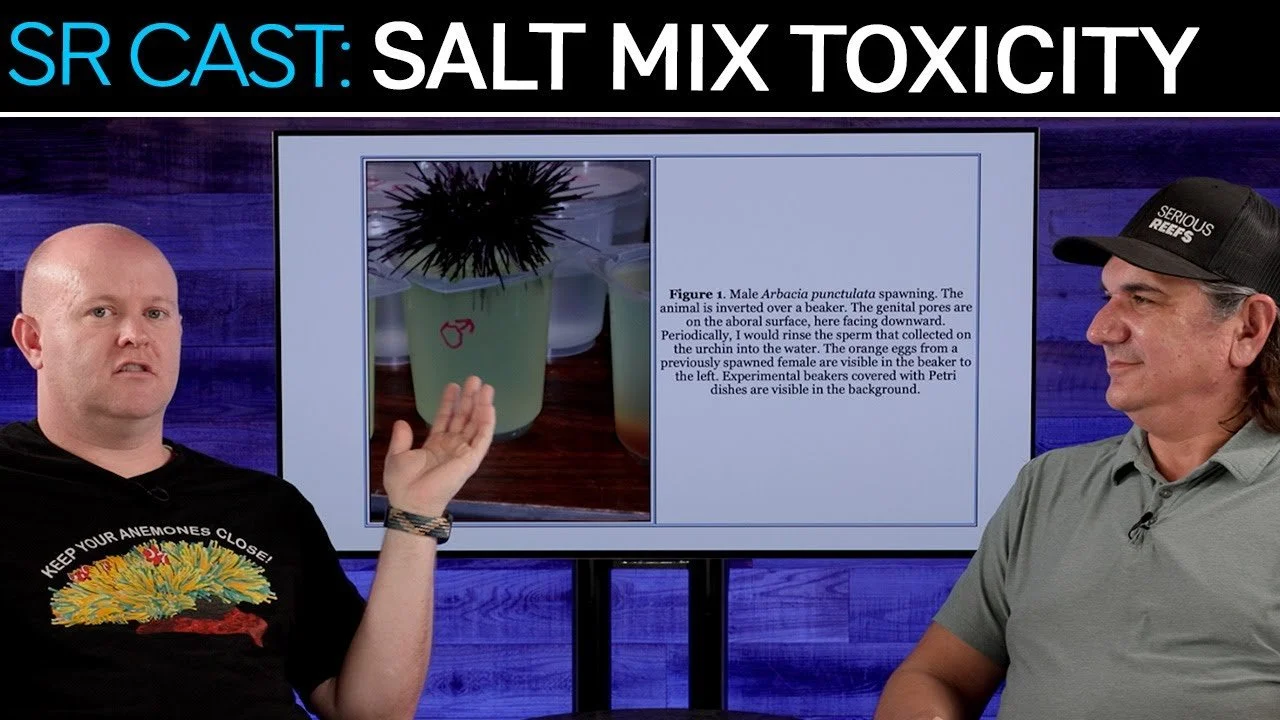
Acknowledgments
Thank you to the Serious Reefs community. Your membership funds the creation of articles and videos like this one.
Support Serious Reefs

Option 1: Patreon - Sign Up
Lowest cost option
Videos available on Patron App and website
Immediate notification of every release
Larger active community.
App works with phone closed
Sends a larger percentage of membership to Serious Reefs
Option 2: YouTube - Sign Up
Best for YouTube power users
Videos Available on
Youtube.com
Youtube TV App
Youtube Phone App
Seriousreefs.com (requires logged in Chrome browser)
*Note iOS users may need to sign up via desktop browser.
Disclaimer
Full Disclaimer HERE. This is the gist of it.
Content is based on personal experience, not professional advice. Do your research and reef responsibly. Serious Reefs should not be your sole source of information on any topic.
By watching, you agree that Serious Reefs and its creators aren’t liable for how you use this info. Please don’t utilize our information if you are not ok with this.
Serious Reefs has no sponsors, doesn’t accept product or payment for reviews. We do use affiliate links in articles that earn a small commission to support our work. Shop wherever you like, we won’t be offended.
