SR Insider: The AvidAqua Insight
The Insight, explained
We sat down with Terrence from AvidAqua to get to the heart of one product: the Insight. Our goal was simple — understand the problem it solves, how it works, and how a few people can get their hands on an early unit. The conversation landed on concrete problems reef hobbyists already feel: information that is hard to glance at, missing local environmental context, and the desire for a clean, simple display that actually helps prevent problems instead of adding complexity.
Note: Paid YouTube SR Members Using A Chrome Browser can watch videos natively above on Seriousreefs.com. Sign up HERE
SR videos are a community funded member only resource. Serious Reefs buys everything we review, accepts no sponsorships, and your memberships make it possible to keep every review truly unfiltered.
What is the Insight and what challenge does it solve?
Insight is a small, dedicated display device for people who run an Apex controller. AvidAqua built it because the Apex gathers a lot of useful aquarium data, but that information is not always easy to get at a glance. Phones are great, but we do not pull them out every time we walk by the tank. Apex display modules work, but they feel outdated and limited. Insight brings big, curated numbers and useful room sensors into a neat package so we can see temperature, pH, salinity and other key values from across the room without digging for a phone.
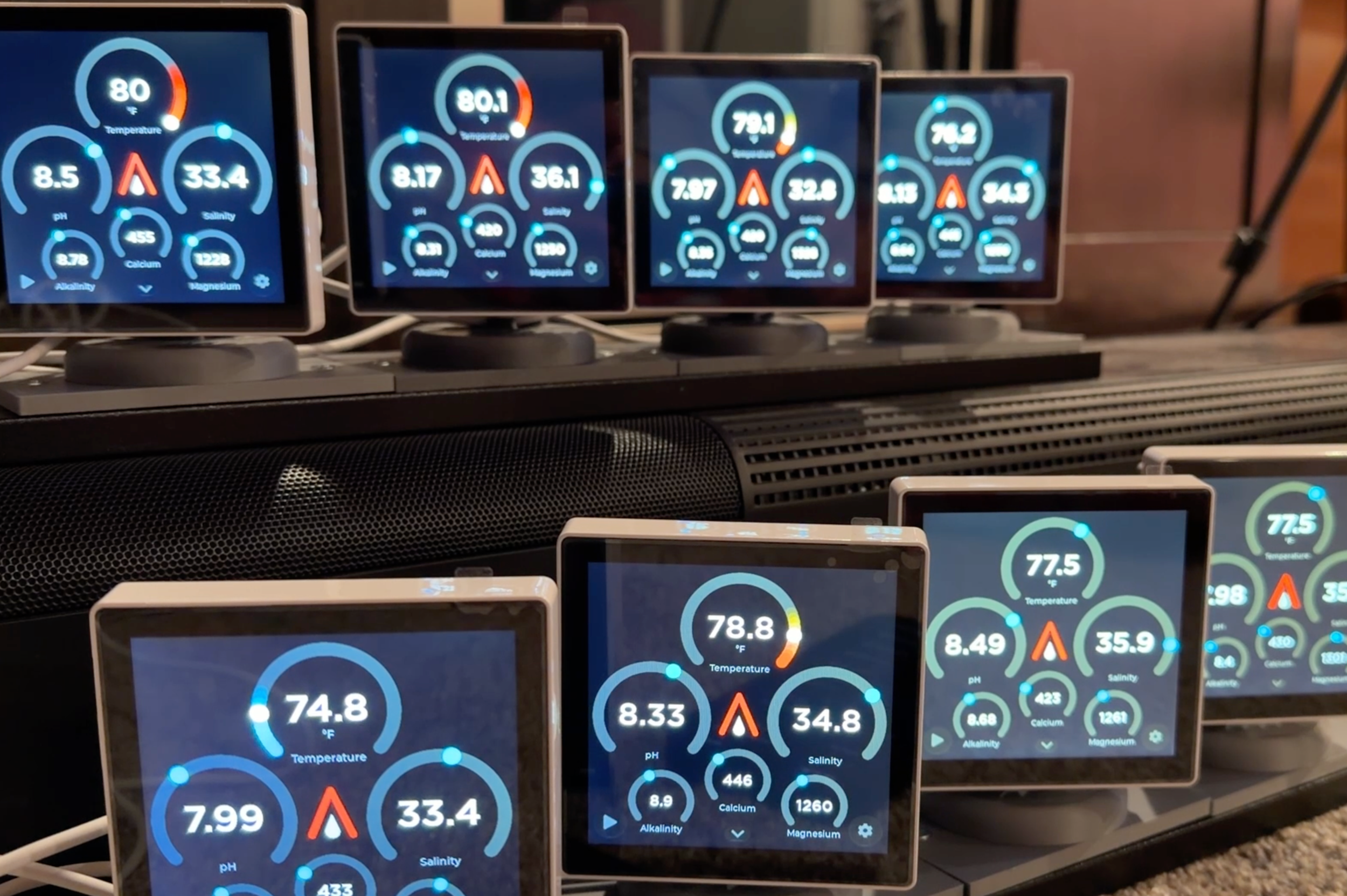
AvidAqua Insight
How is Insight different from the Apex display module and from mounting a tablet?
Insight is wireless and purpose-built rather than a hacked tablet or a tethered display. Compared with the older Apex display module, it offers larger, clearer readouts, variable alarms, additional environmental sensors, and a user interface focused on the most important data. A tablet can be powerful in a fish room, but tablets require hacks to stay on and are often too large or too complicated for a living-room setting. Insight aims to be simple, visually attractive, and always available for a quick glance.
How does Insight get its data? Does it need to plug into the Apex?
It does not plug into the Apex. Insight is a small, independent computer that connects over the local Wi-Fi network or Bluetooth during setup. It talks directly to your Apex over local access to fetch the data it needs. That gives it the freedom to sit anywhere on your local Wi‑Fi network in the house without the Aquabus cable tether.
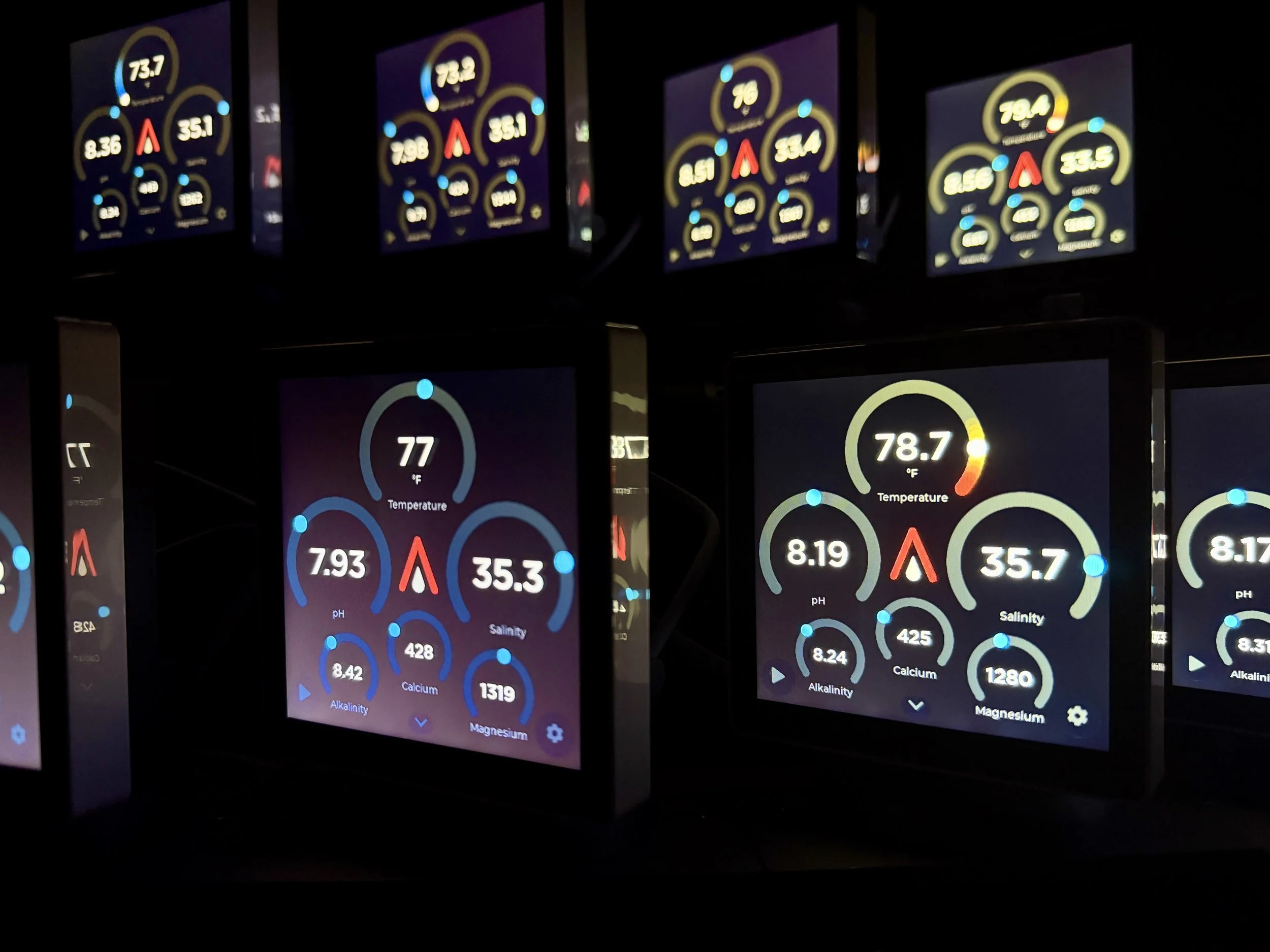
AvidAqua Insight
What data and sensors can we expect to see on the display?
By default Insight auto-curates a sensible front page for most Apex setups: water temperature, pH, salinity, alkalinity, calcium and magnesium are typical choices. On the pro model, Insight adds room environmental sensors: room temperature, humidity, CO2, and a TVOC sensor (total volatile organic compounds). You can customize which Apex inputs and probes appear on each screen using the Insight phone app.
Why do room sensors like CO2 and TVOC matter for an aquarium?
Room CO2 affects aquarium pH. When CO2 in the room rises — crowded parties, closed-up houses, or poor ventilation — that CO2 can transfer into the water and create carbonic acid, driving pH down. We have seen real-world examples where crowds or building conditions caused pH crashes. Humidity tells us about leaks or poor ventilation in fish rooms. TVOC acts as an electronic nose: it can detect unusual off-gassing from plastics, electronics, reagents, or smoldering components before they become bigger problems. These environmental sensors add context that your water probes alone cannot provide.
Can Insight trigger feed modes, toggle outlets, or control equipment?
Insight includes feed mode activation. You can tap into feed mode from the device to pause pumps and put your system into a temporary state for feeding or water changes. At launch it will not toggle outlets directly, but AvidAqua plans to add curated outlet control: you will be able to pick a handful of outlets to appear on the device for quick toggling instead of showing every outlet and creating clutter.
What kind of alarms and notifications does Insight provide?
Insight supports visual alarms on the device and notifications to your phone. The device also offers graded visual states: for example, a yellow warning when a reading is approaching an alarm threshold, red when the configured alarm level is reached, and audible alerts when conditions pass critical values. The graded approach helps us notice problems early without constant interruptions.
Does Insight work anywhere or only in the same room as the Apex?
Insight needs to be on the same local Wi‑Fi network as the Apex because it talks to the Apex via local access. That means you can place multiple Insight units around your home — at the tank, on a counter, or on a nightstand — as long as they connect to the same local network as the Apex. Remote offsite monitoring via the Insight device itself is not part of the offering.
How easy is setup and customization?
Setup is designed to be straightforward. You open the Insight app, pair it over Bluetooth, provide your Wi‑Fi credentials, and Insight will try to find your Apex on the local network. It auto-detects common Apex configurations and precurates a front page for you. Customization lets you select which probes and inputs appear on the front screens and arrange what matters most to you.
How do we mount Insight?
There are several mounting options. Insight is panel-mount friendly and ships with a clip mechanism so it can sit inside an opening in a stand door or panel with no screws. It works as a freestanding device with small legs for placing on a shelf or counter. There is also a magnetic mount option so you can attach the device outside a glass or tank wall while keeping environmental sensors inside the sump area. The unit uses USB-C power; a right-angle connector is supplied for tidy installs.
What about predictive features or AI? You mentioned predictive AI — what does that mean?
AvidAqua plans to use aggregated Apex and Insight data to look for patterns and surface helpful predictions. The idea is to present timely advice like “this pattern often leads to X” or “take action Y.” The exact capabilities will evolve as the company gathers more anonymized data and trains the models. The aim is to go beyond raw numbers and help users take preventive action earlier.
Which controllers does Insight support? Only Apex?
Insight is designed for Apex systems at launch. There are no announced plans to support other controllers like GHL or Hydros at this time. The current focus is on expanding features within the Apex ecosystem and serving hobbyists who use Apex hardware.
When will Insight be available and how can someone get into the open beta?
AvidAqua planned an open beta has been rilled out, with both base and pro models available for purchase at a discount during the beta.
Quick feature summary
Wireless connection to Apex over local network
Curated, large at-a-glance readouts for temperature, pH, salinity and more
Pro model adds room sensors: room temperature, humidity, CO2, and TVOC
On-device feed mode activation and planned curated outlet control
Visual graded alarms plus notifications to phone and SMS
Multiple mounting options: panel, freestanding, and magnetic
Insight is a focused attempt to make monitoring simpler and more proactive. By combining clear, large-format aquarium numbers with room context and graded alarms, it reduces the friction of staying informed. For hobbyists who want less phone fiddling and more reliable, easily digestible feedback from their aquaria, Insight is engineered to be a useful addition to the Apex ecosystem.
How we think about using Insight
Insight is best when used as a low-friction, always-available window into both the aquarium and the room that houses it. The biggest wins come from context: knowing that room CO2 is trending up gives a plausible explanation for a pH drift that might otherwise be confusing. Potential TVOC and humidity sensors offer early warning signs for leaks, overheating electronics, or spilled chemicals. In short, Insight is meant to reduce anxious phone-checking and give a clearer, earlier cue to act.
FAQ
Does Insight require an Aquabus connection to the Apex?
No. Insight connects wirelessly to the local Wi‑Fi network and communicates with the Apex through local access. It does not use the Aquabus cable.
Can Insight show custom Apex inputs like a Trident or third-party probes?
Yes. Insight auto-curates for common Apex setups but allows customization through the app so you can choose which Apex inputs and probes appear on the device.
Will Insight notify us remotely if something goes wrong?
Insight supports local visual and audible alarms on the device and will send notifications to your phone and via SMS. The device itself requires the same local Wi‑Fi as the Apex; remote access is handled through notifications rather than direct offsite control.
Is CO2 measurement accurate and why should we care?
The pro model uses a factory-calibrated CO2 sensor and is designed to provide accurate room CO2 readings. CO2 in the room can drive aquarium pH down through carbonic acid exchange. Tracking CO2 helps diagnose pH swings that originate from the room rather than from dosing or tank chemistry.
What is TVOC and how useful is it for aquariums?
TVOC is total volatile organic compounds, essentially an electronic nose that detects off-gassing. In an aquarium context, TVOC can alert to unusual smells from smoldering electronics, spilled reagents, or other abnormal off-gassing. It is not a certified smoke detector but can give early warning of abnormal conditions.
Can Insight toggle outlets or control equipment directly?
At launch feed modes are available on-device. Curated outlet toggling is planned for the official retail release so users can pick important outlets to show on the device for quick control.
Will Insight support controllers other than Apex?
Not initially. Insight is focused on Apex systems at launch. Future support for other controllers would depend on demand and development priorities.
What’s Next on SR Cast?
Acknowledgments
Thank you to Than Thien for sharing his knowledge with the SR community. Thank you to Ryan Thompson for summarizing the video and making it available to everyone.
Thank you to the Serious Reefs community. Your membership funds the creation of articles and videos like this one.
Support Serious Reefs
Patreon is the best option If you…
Want to discuss with the SR community and ask questions.
Want immediate notifications of every release.
Listen with phone screen off. Patreon app works with phone closed
Want 25% off via annual discounts.
YouTube members is the best option If you…
Watch SR videos on a TV via youtube App
Want to watch videos natively here on seriousreefs.com - (You must use chrome browser and be logged into google account with youtube membership)
Are a YouTube power user.
Tell a friend. Best option if want more (and faster).
If you like what we’re doing, give SR a quick shout-out on your favorite forum, YouTube, Facebook, TikTok, or Instagram. Let your local fish store know SR is helping you explore the hobby and keep it fun. Thanks for the support!
Disclaimer
Full Disclaimer HERE. This is the gist of it.
Content is based on personal experience, not professional advice. Do your research and reef responsibly. Serious Reefs should not be your sole source of information on any topic.
By watching, you agree that Serious Reefs and its creators aren’t liable for how you use this info. Please don’t utilize our information if you are not ok with this.
Serious Reefs has no sponsors, doesn’t accept product or payment for reviews. We do use affiliate links in articles that earn a small commission to support our work. Shop wherever you like, we won’t be offended.

We are about to explore one of the most interesting and most taboo experiments in the reefing hobby. Many people will debate the conclusions, but far fewer have taken the time to produce compelling evidence of their own.