Pt 2 - Reef Salt Mix Testing Confirmed? When Two Labs Agree, Everything Changes
Why review a second set of salt mix tests?
We reviewed test results from the same salt mixes years apart and through different labs to see whether ICP anomalies were a fluke or a pattern. The short answer: many results repeat. When independent tests align, it forces us to rethink assumptions about salt sources, manufacturing, and what we accept as "normal" for reef water chemistry.
Salt mixes for reef aquariums have always been sold on packaging, personal recommendations, and promises. We compared independent ICP results from different labs and different years to see whether those promises stand up to scrutiny. What surprised us most was not the presence of outliers but the consistency: many salts produced nearly identical elemental fingerprints three years apart and across separate testing programs. When two labs agree, should we pay attention? Should we attempt to replicate these results today?
If you haven’t yet it may be helpful to review part one of this series here.
Note: Paid YouTube SR Members Using A Chrome Browser can watch videos natively above on Seriousreefs.com. Sign up HERE
SR videos are a community funded member only resource. Serious Reefs buys everything we review, accepts no sponsorships, and your memberships make it possible to keep every review truly unfiltered.
How we compared results
We evaluated lab ICP results from two publicly available tests, Ryan Thompson’s Ultimate Salt Test on Reef2Reef, other performed by BRStv in the stratification tests years earlier for a range of popular commercial reef salt mixes and dry salt systems. The data sources span different testing companies and a multi-year window, giving us a chance to spot repeatable formulation traits rather than single-batch quirks. For a complete picture you can review both data sets for yourself.
How to read these kinds of tests
ICP (inductively coupled plasma) analysis measures trace and major elements at parts-per-billion or parts-per-million levels. A single ICP result is useful, but repeated results across labs and years are much more compelling. If multiple independent labs report similar deviations from "natural seawater" for the same product, the signal is likely consistent and tied to the source materials or formulation choices. It is possible the results would be different today. Something the SR team is considering exploring.
Calcium
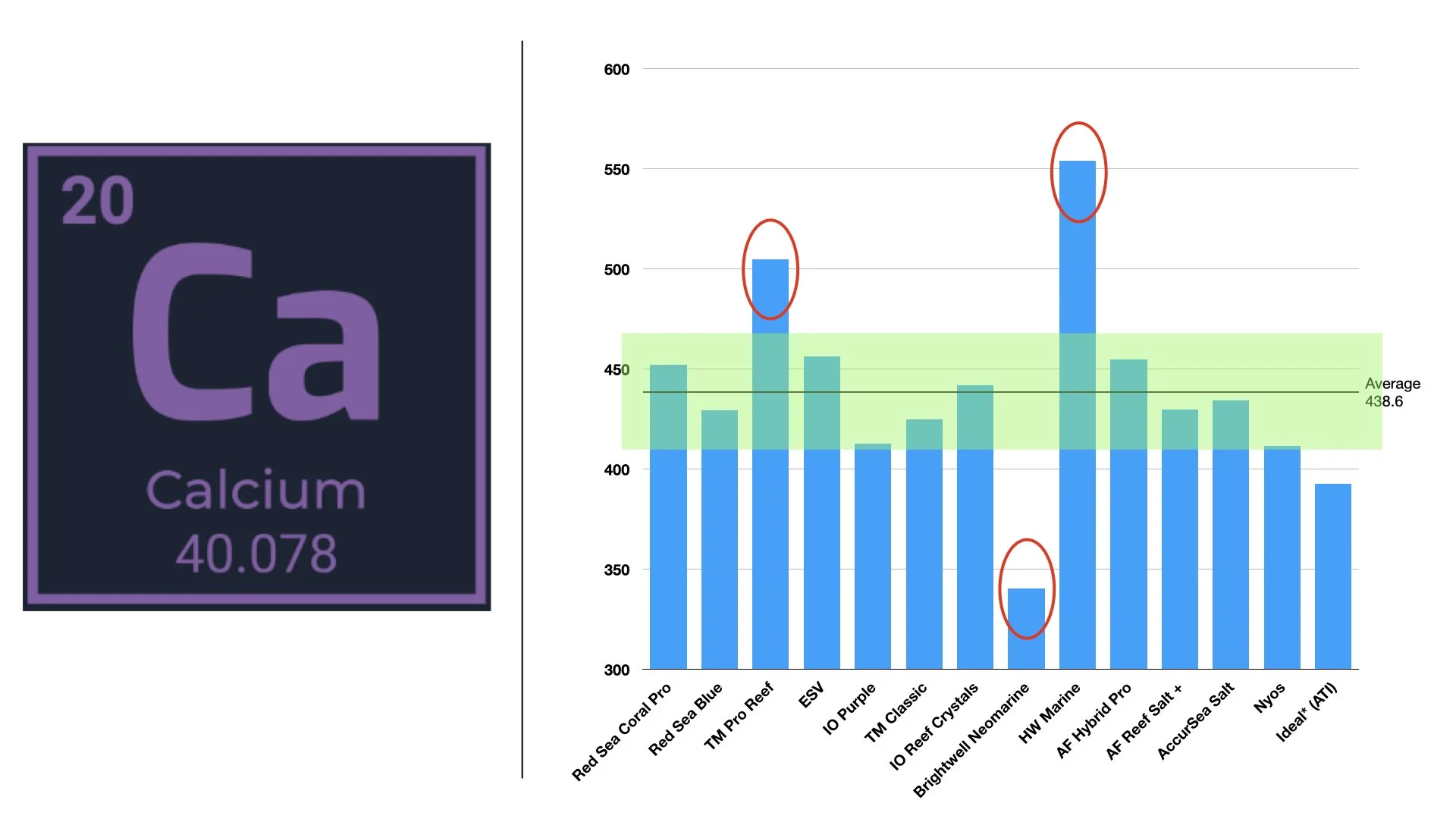
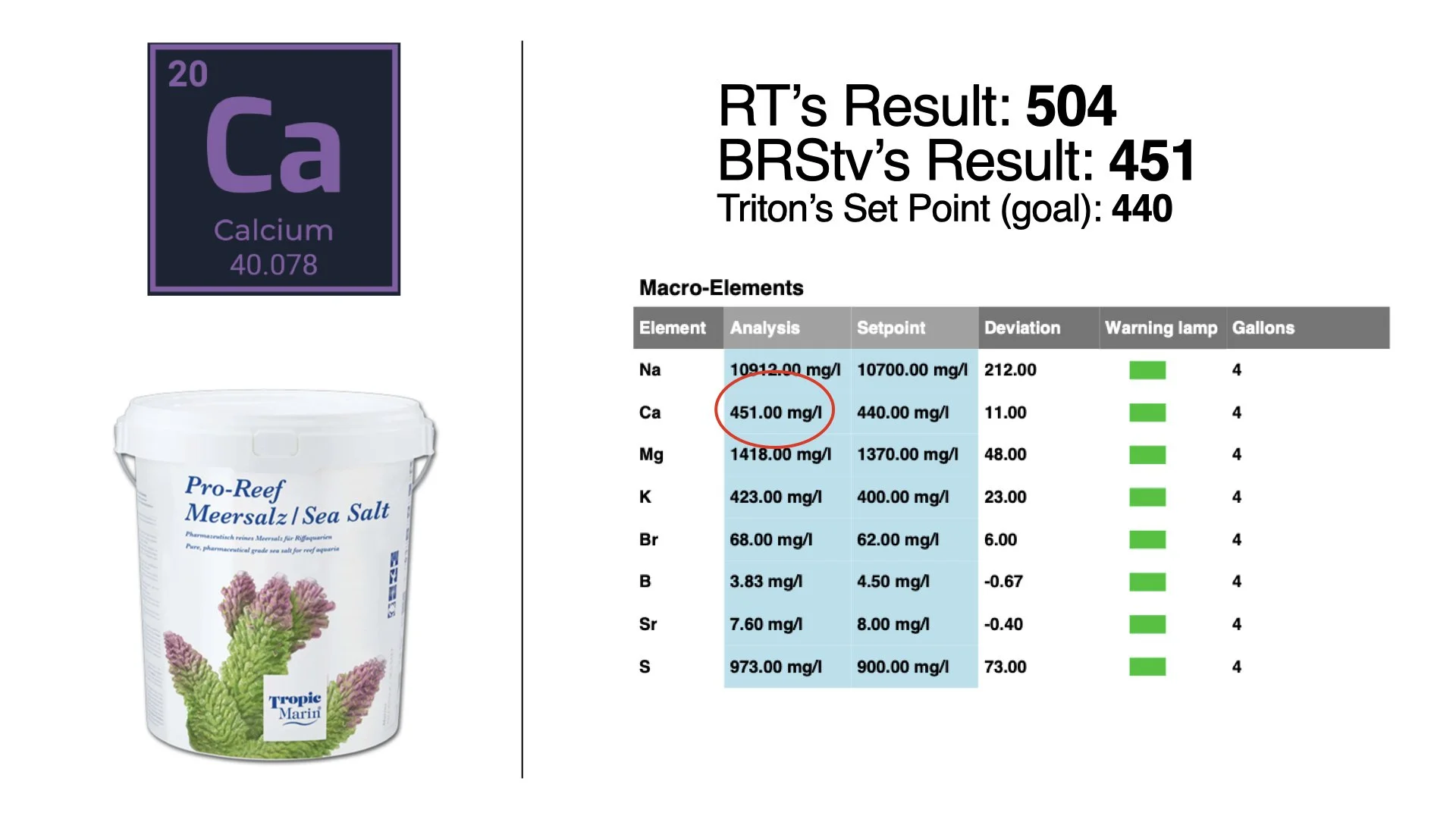
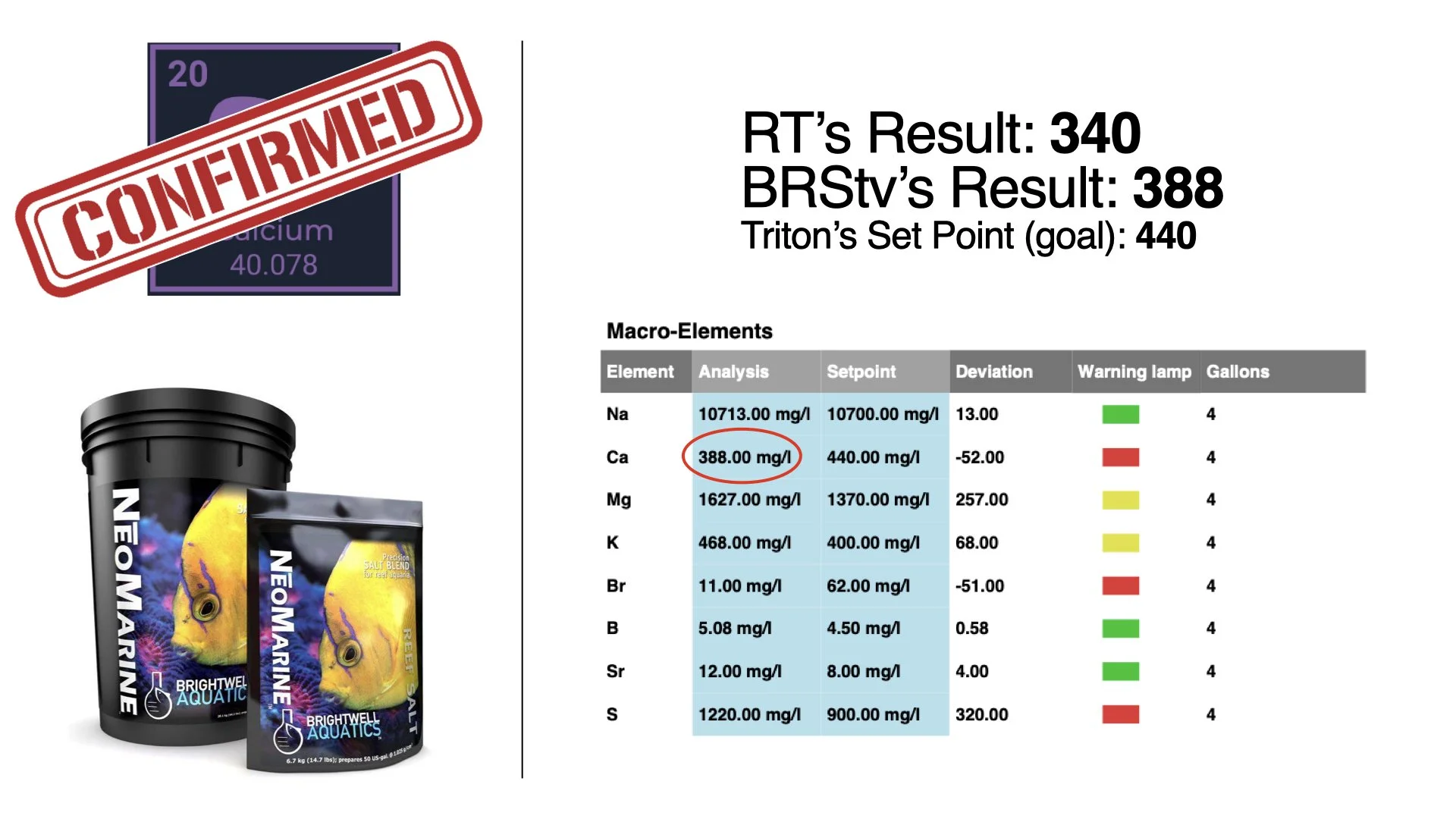
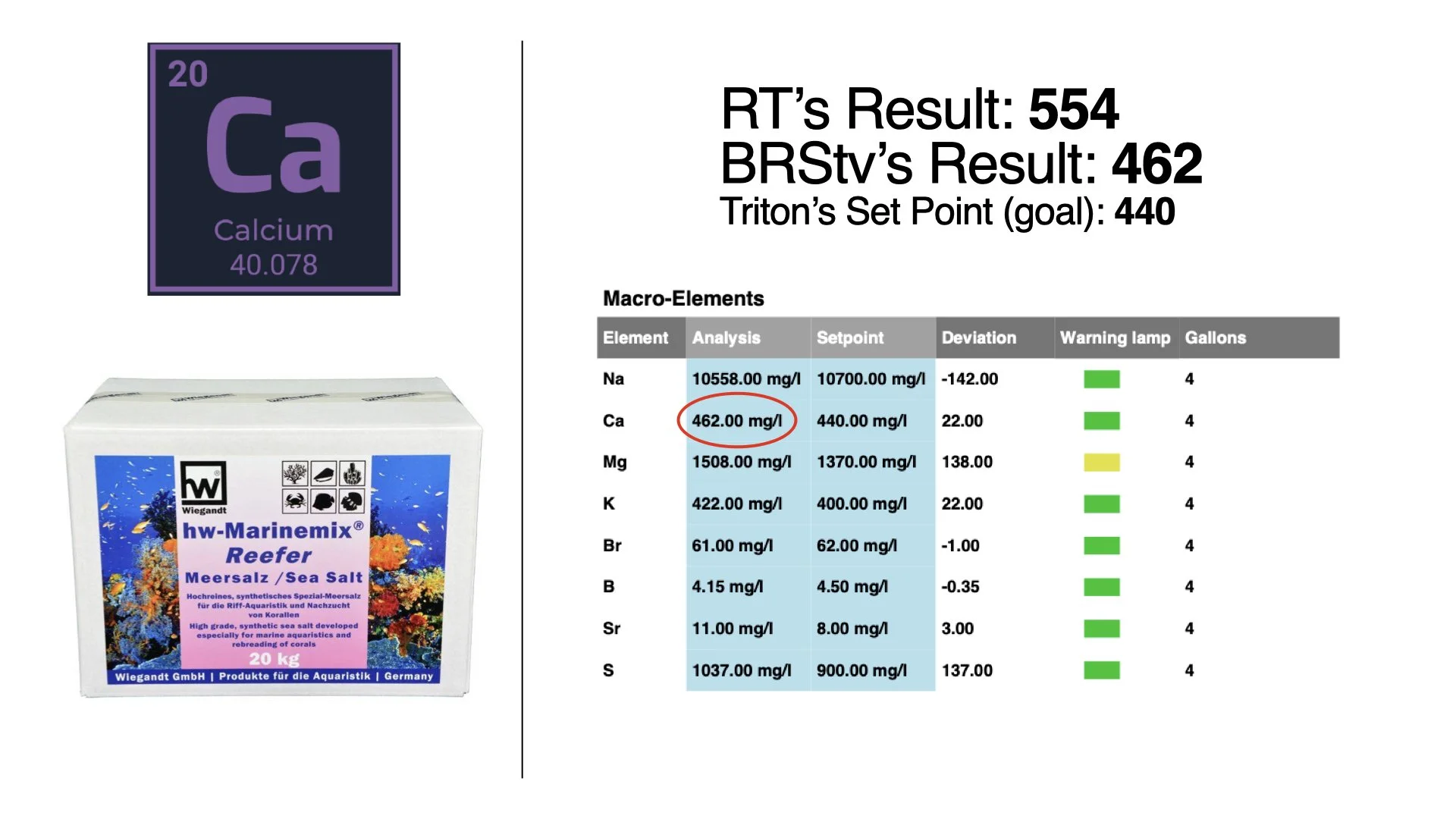
Some salts, like Tropic Marin Pro Reef and HW Marine, tested fairly high in one set of results but not the other, suggesting either a testing error or a possible manufacturing anomaly. Brightwell NeoMarine tested low in both tests. Where both sets agreed, the findings felt compelling and we considered those results confirmed for the time period tested.
Lithium
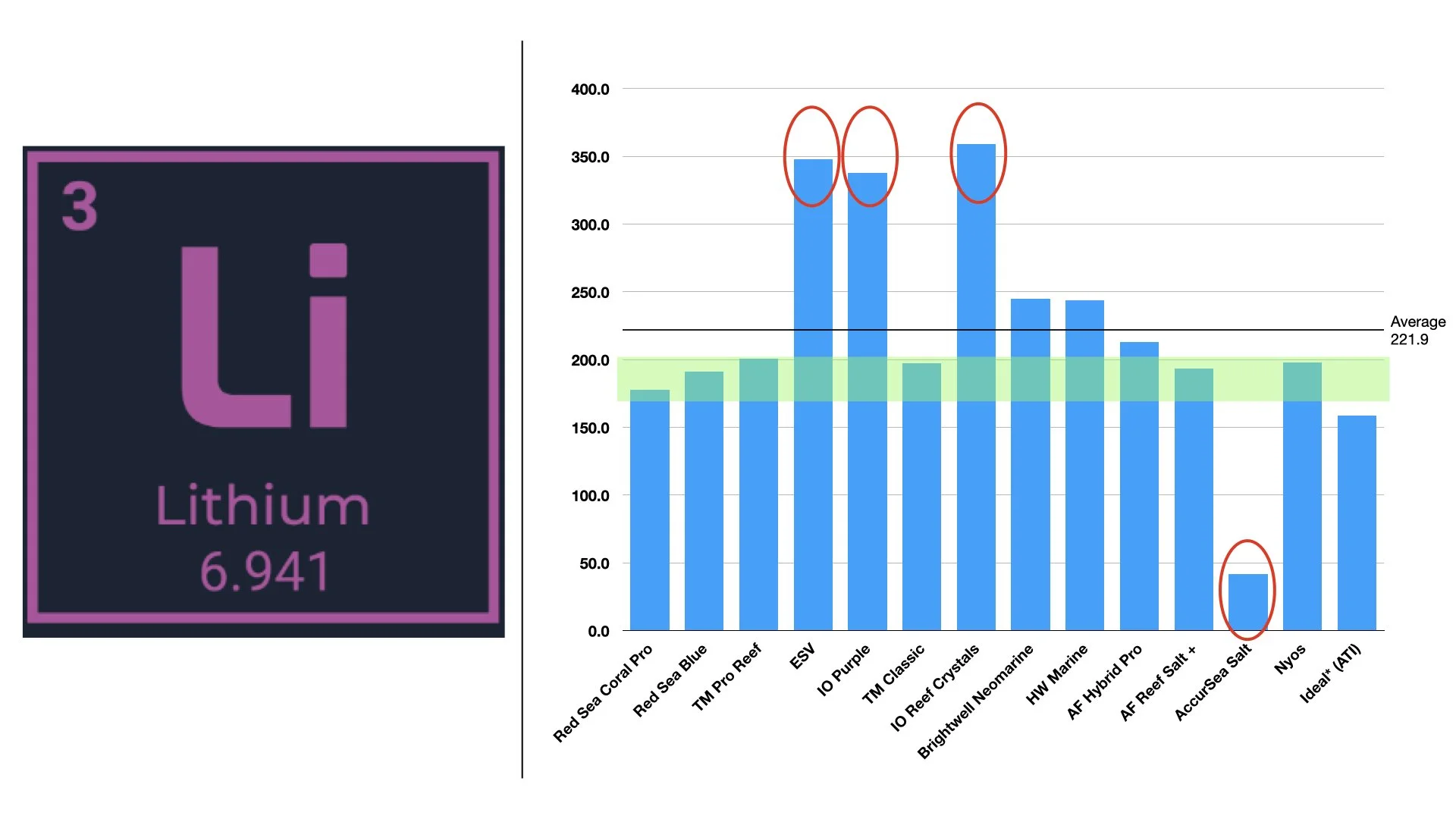
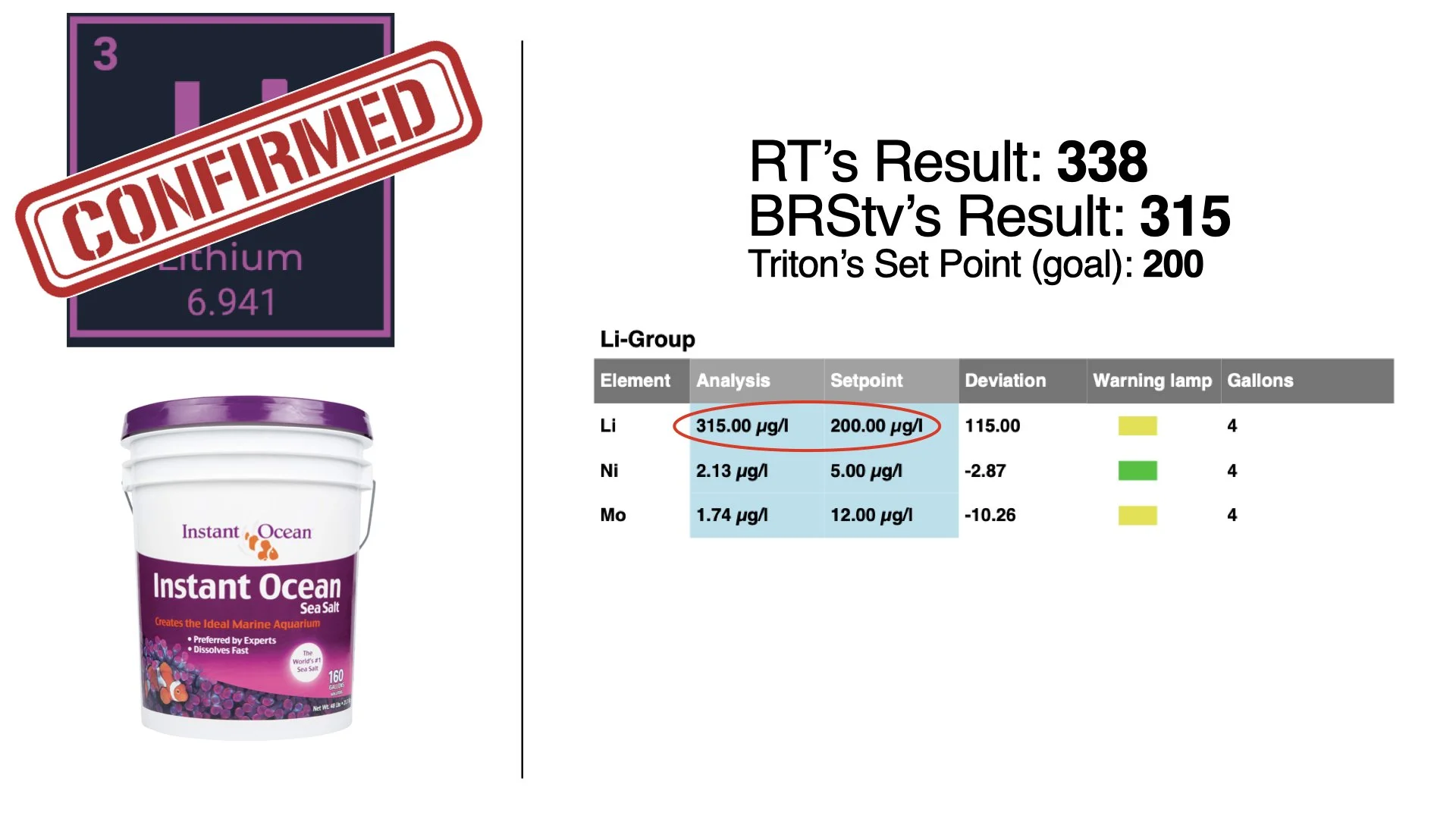
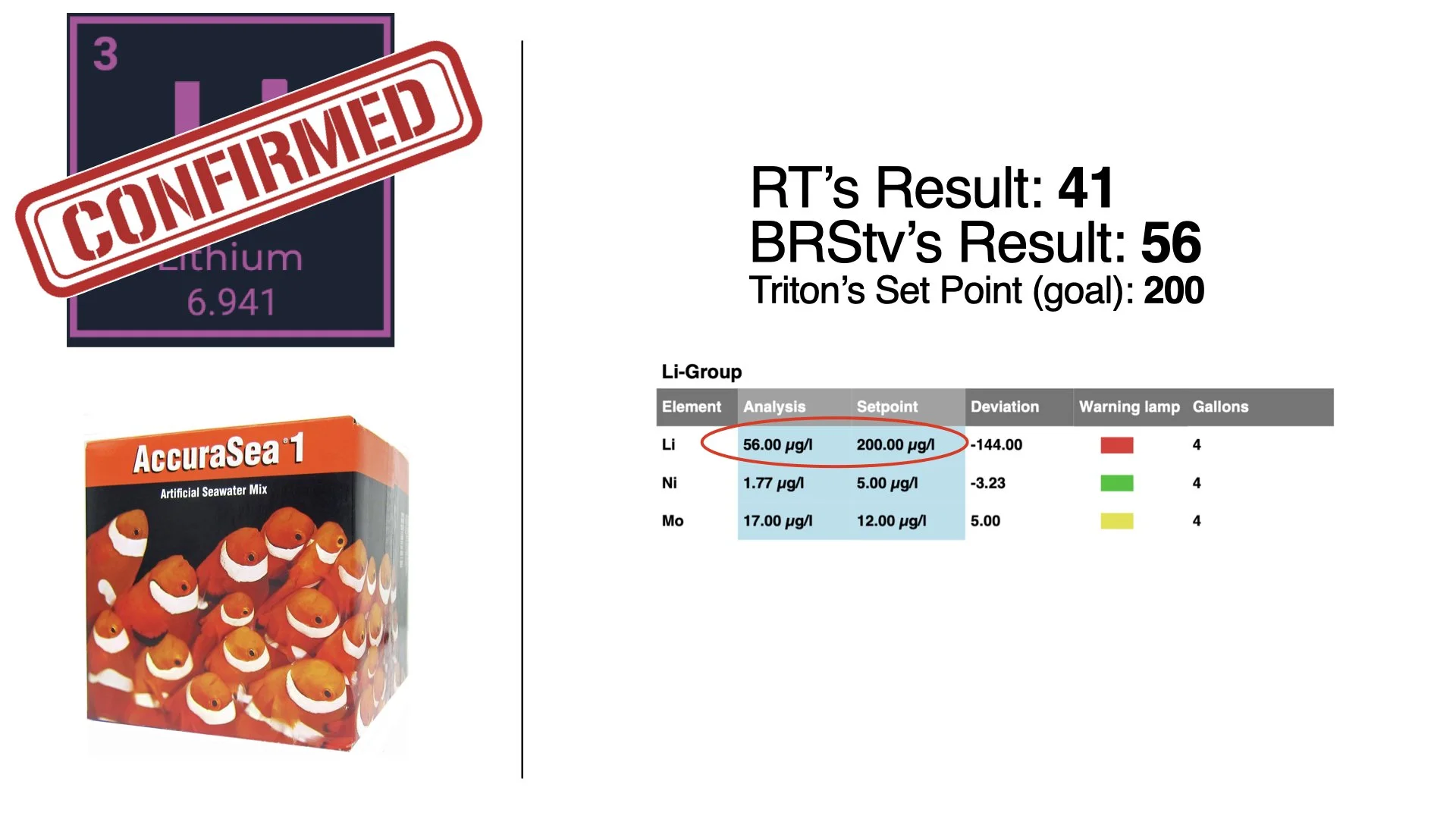
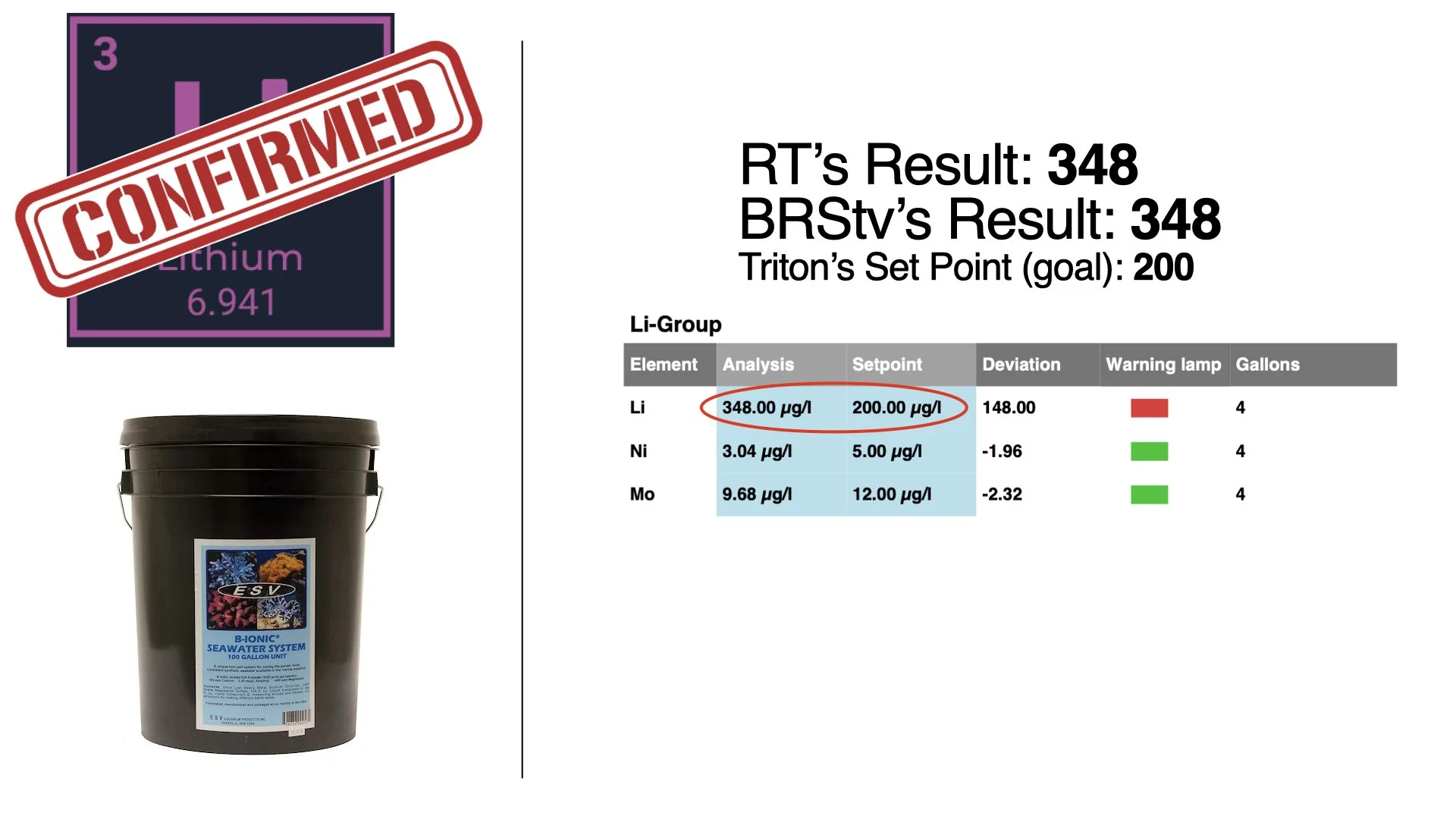
nstant Ocean, Reef Crystals, and several American-sourced salts showed significantly higher lithium than natural seawater. The same brands showed the pattern in different years and labs, which points to raw material or formulation choices rather than single-batch anomalies.

Iodine
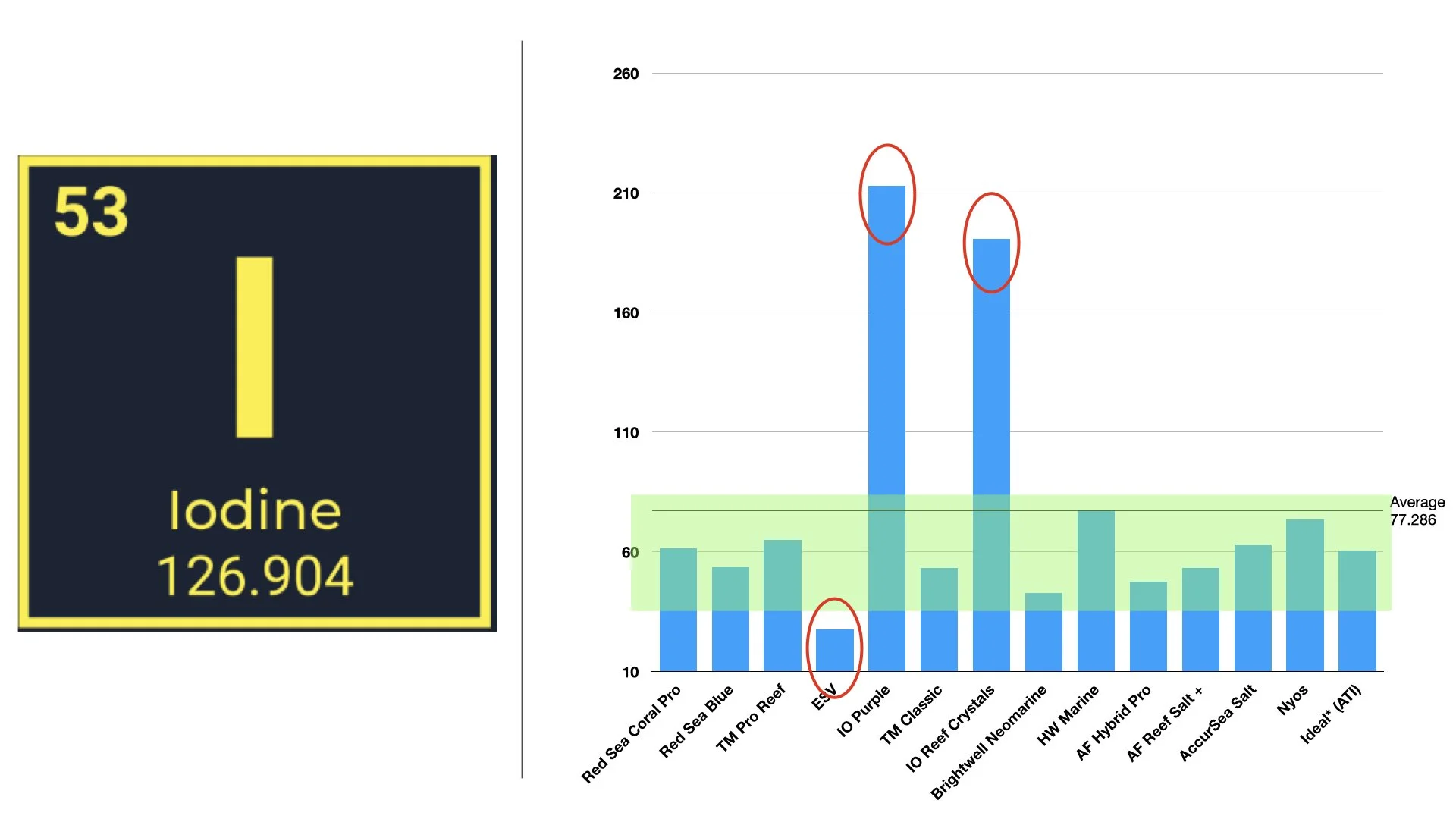
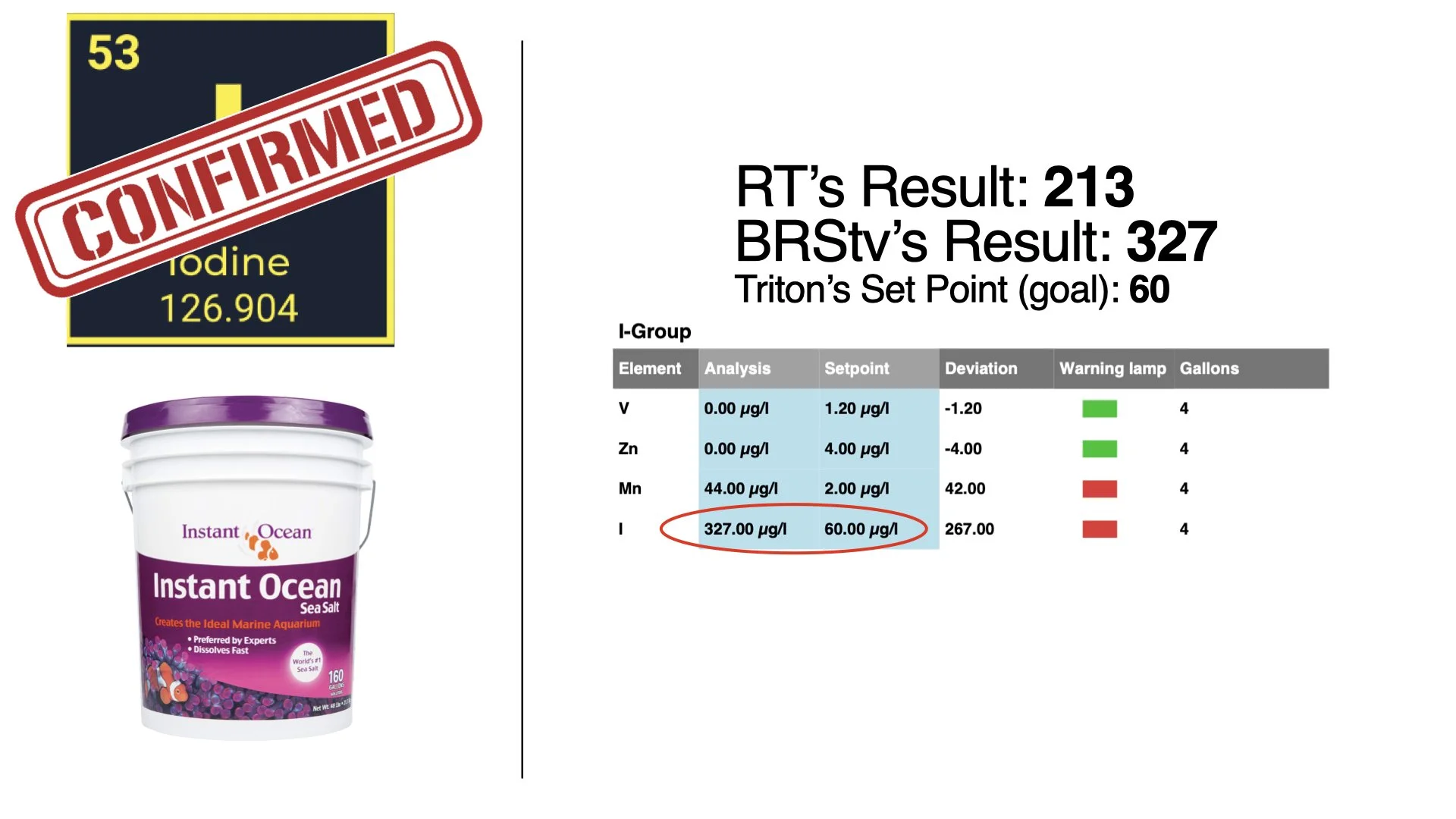
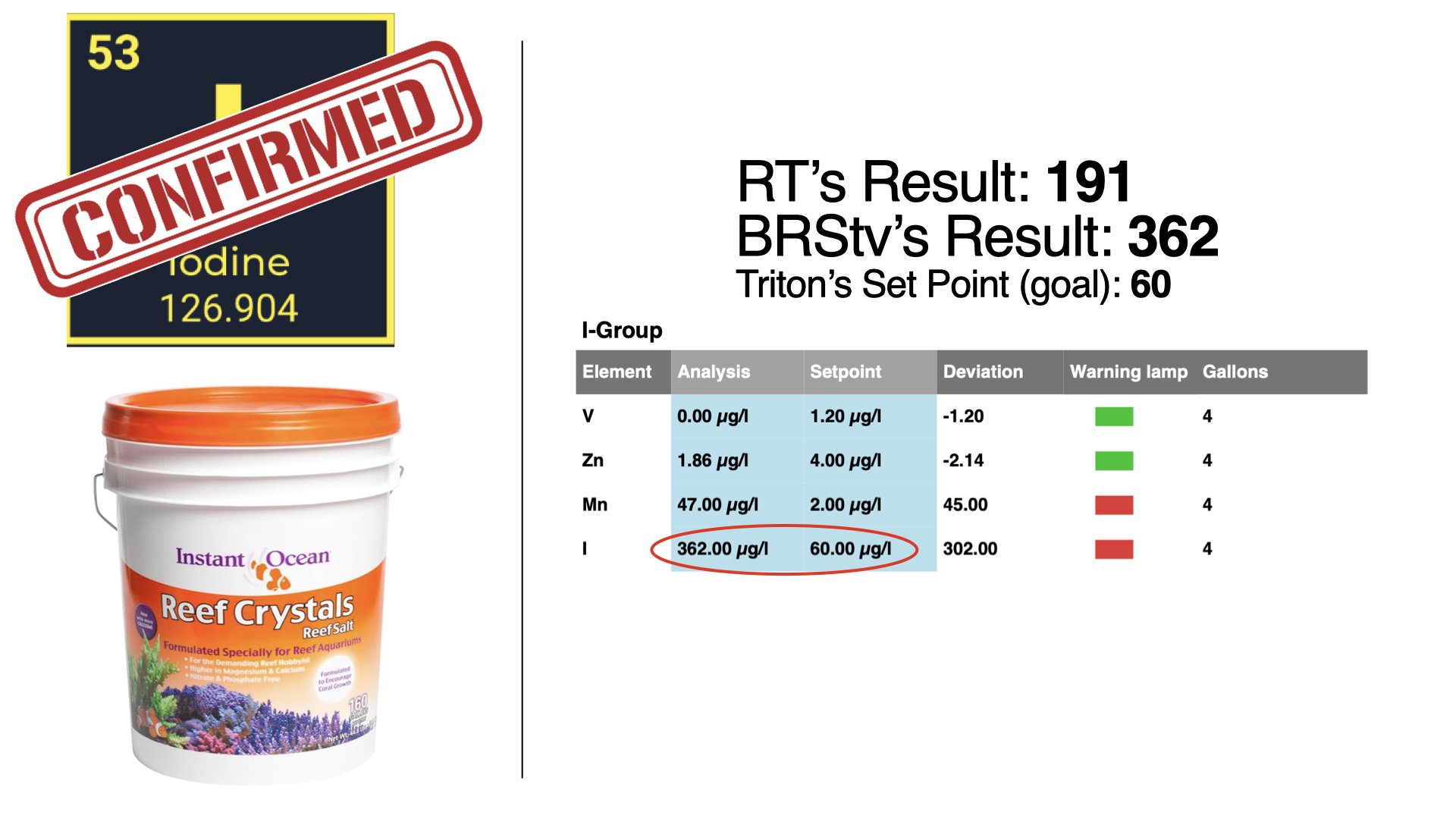
Iodine showed notable variability. Some Instant Ocean and Reef Crystals buckets had much higher iodine than the set goal, while other brands moved closer to target levels over time.
Bromine
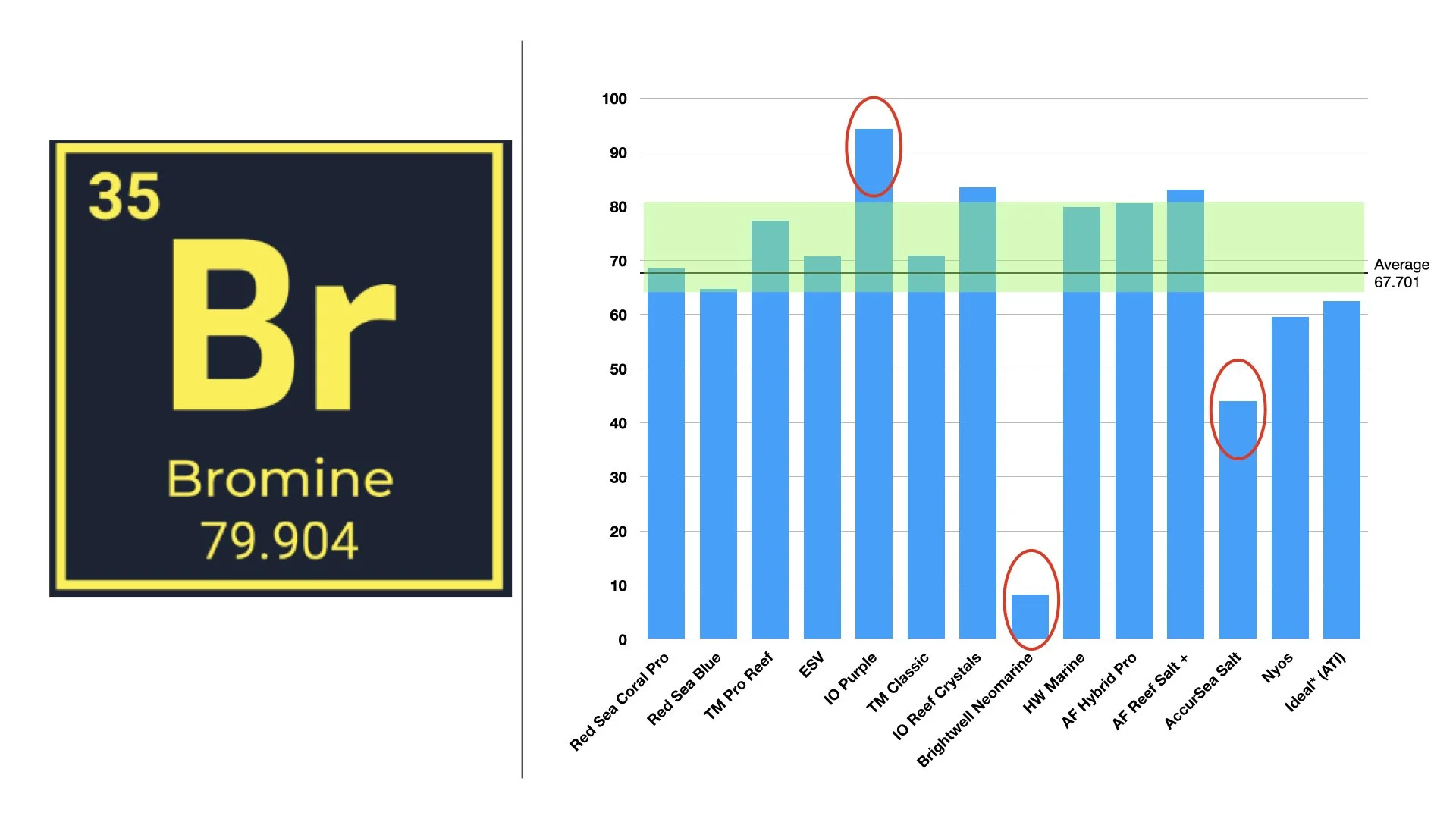
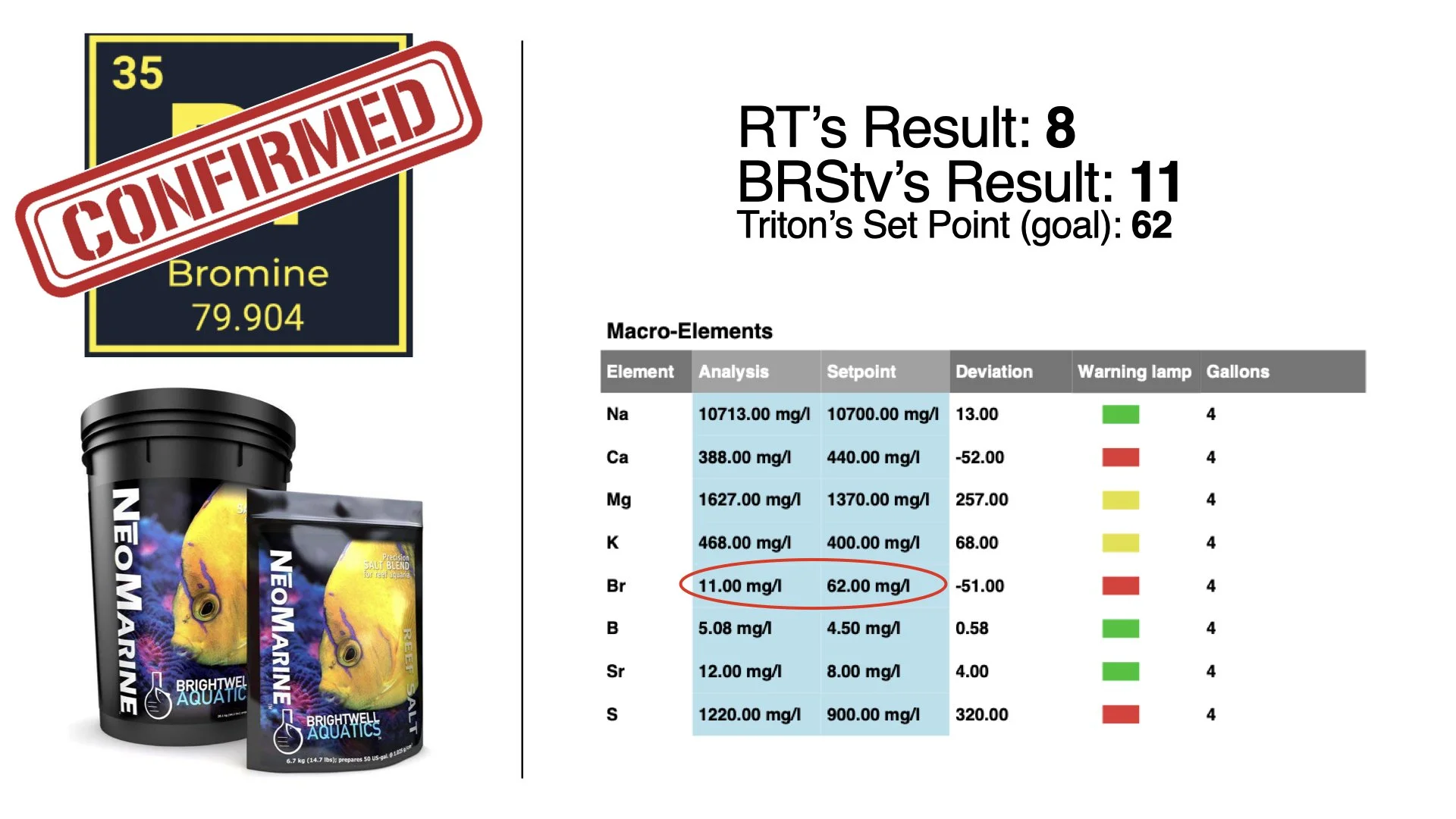
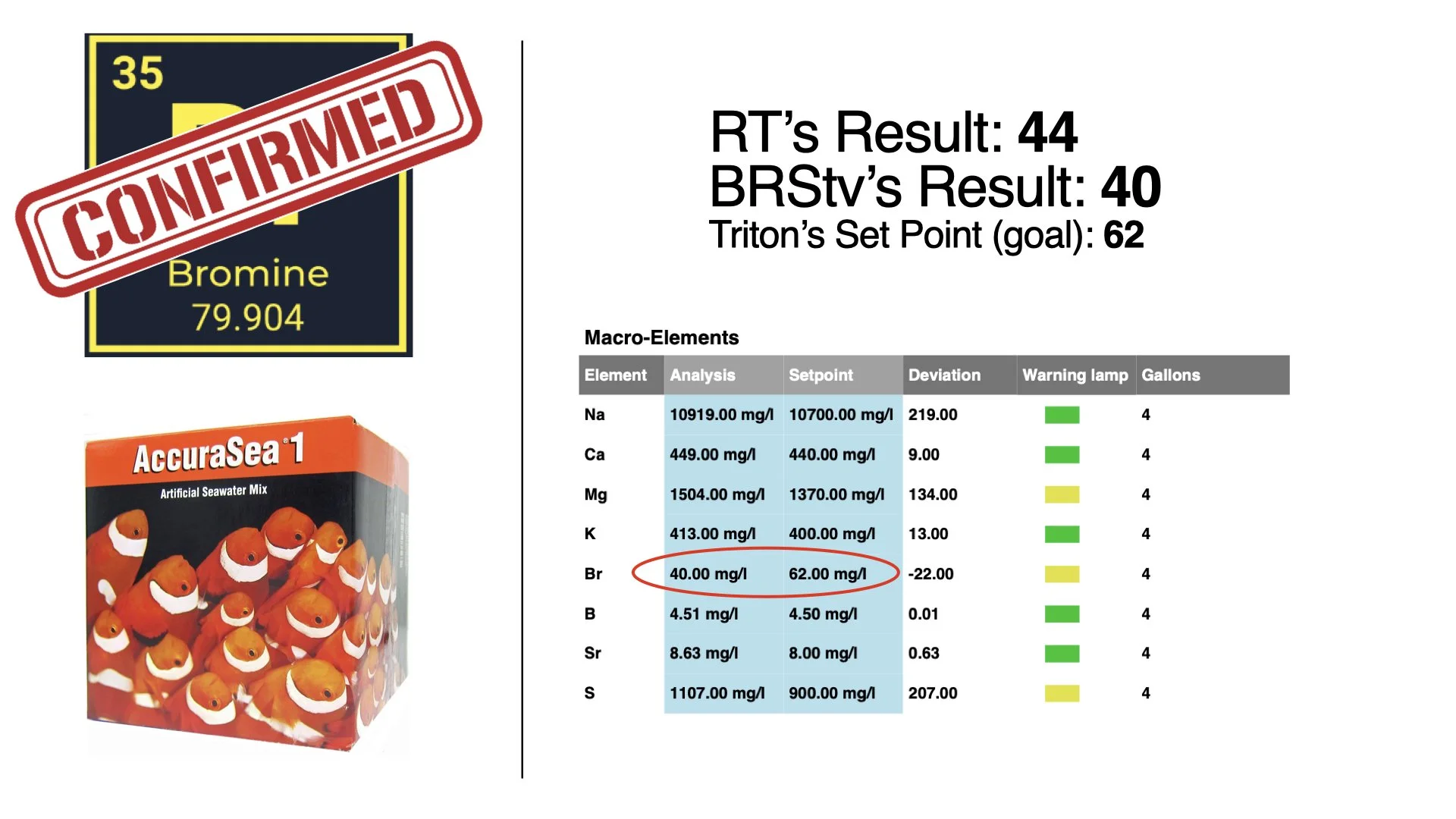
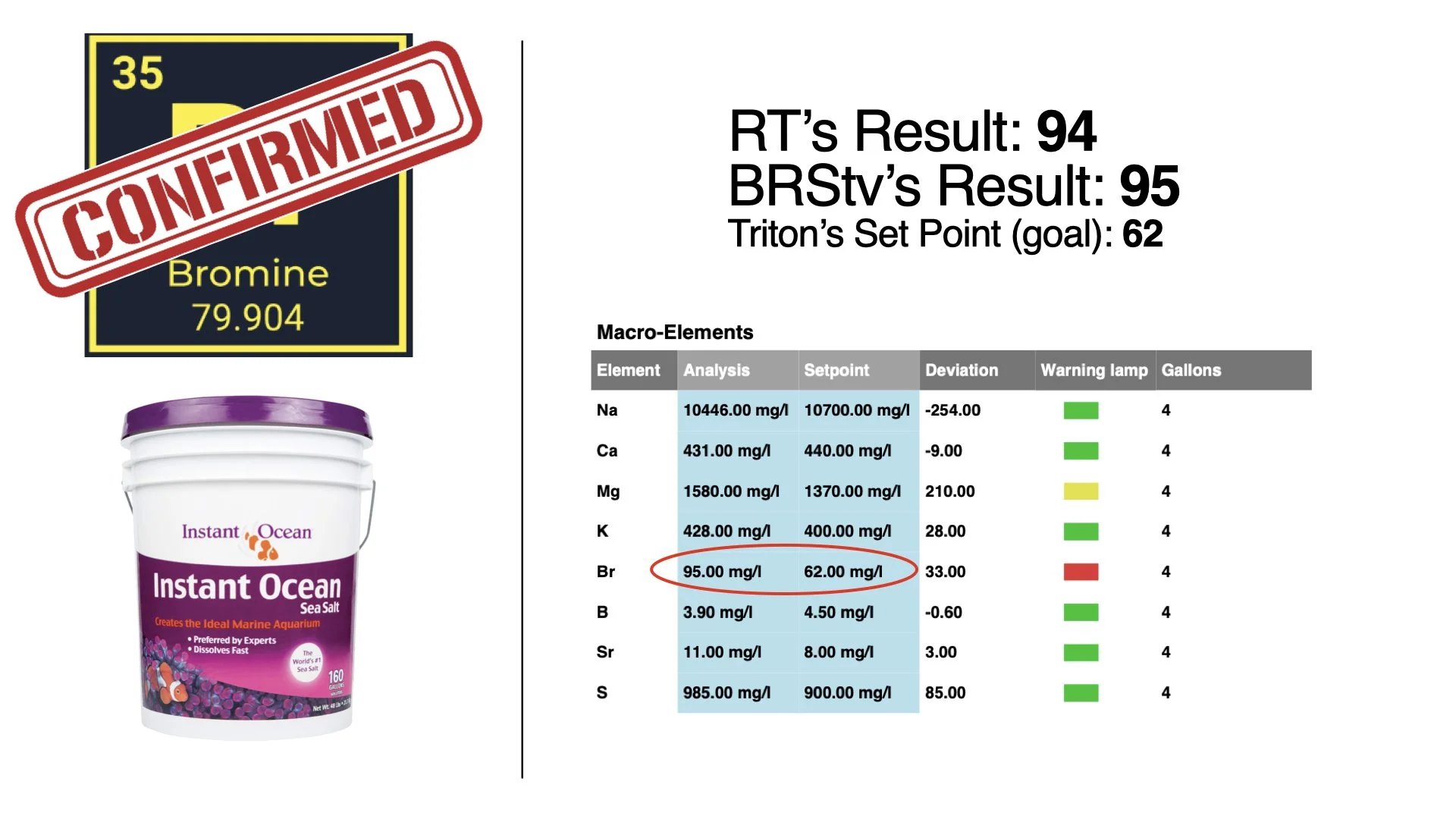
A few brands came in high or significantly low on bromine. Results were constant between both tests.
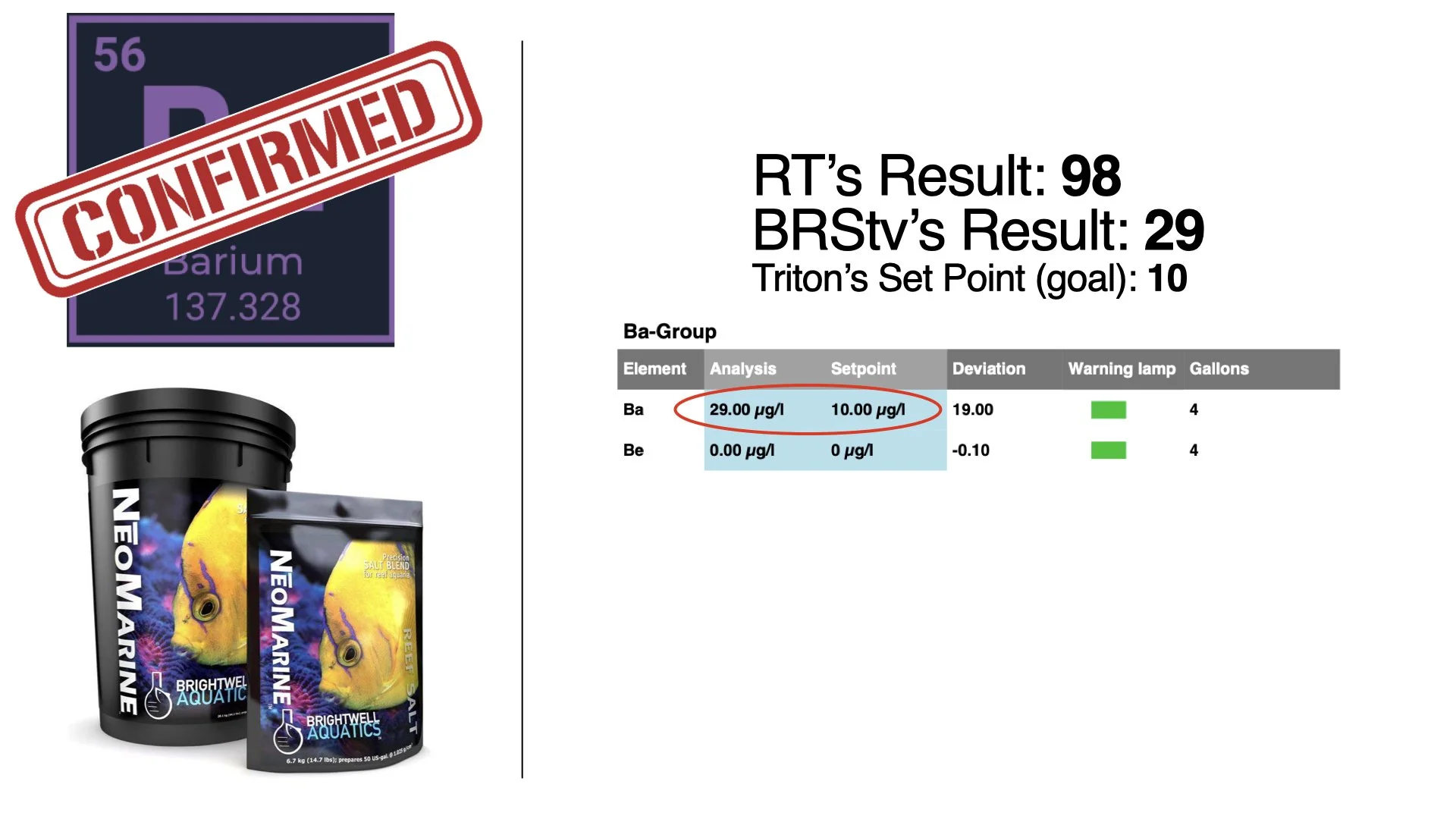
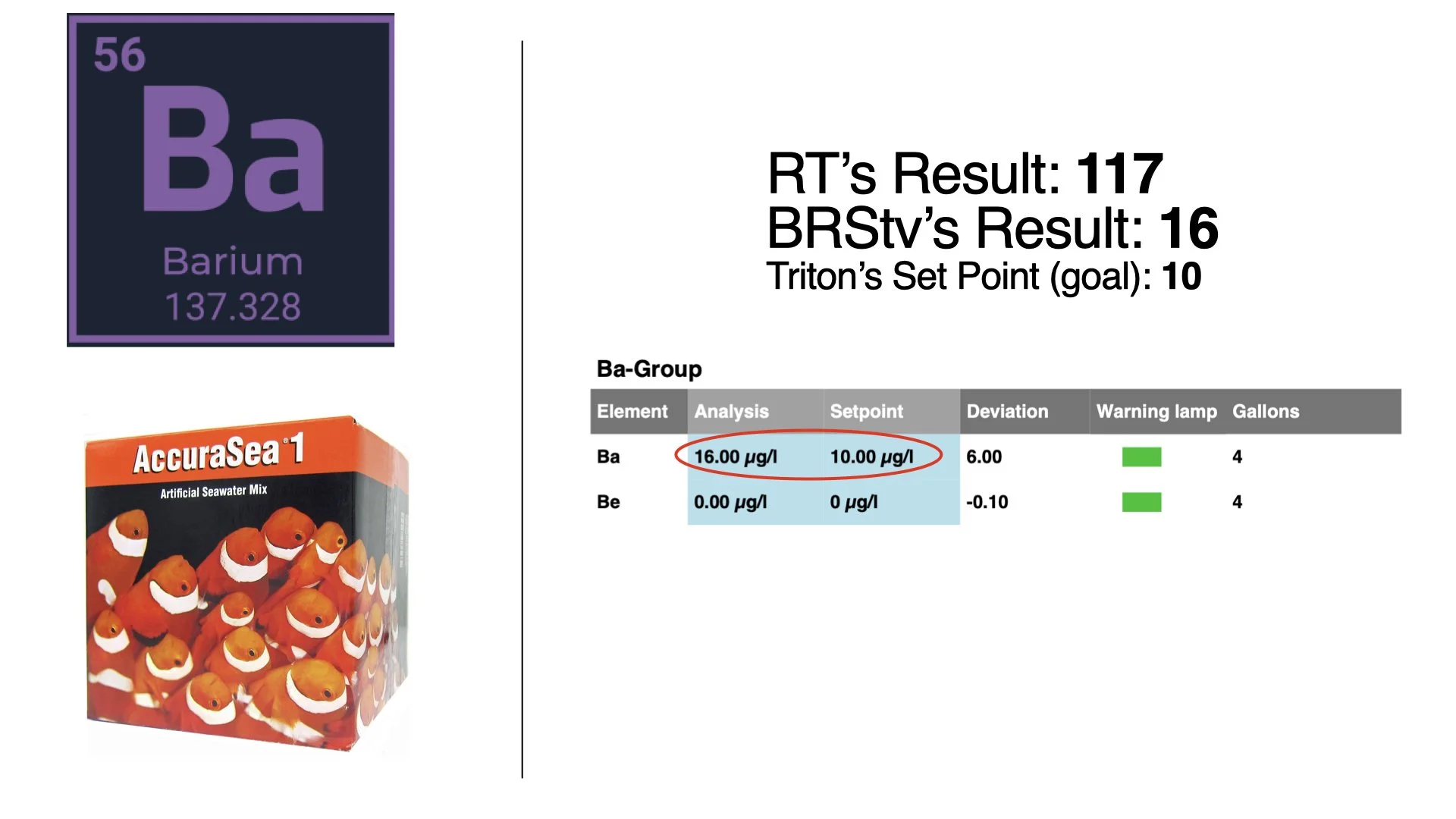
Barium
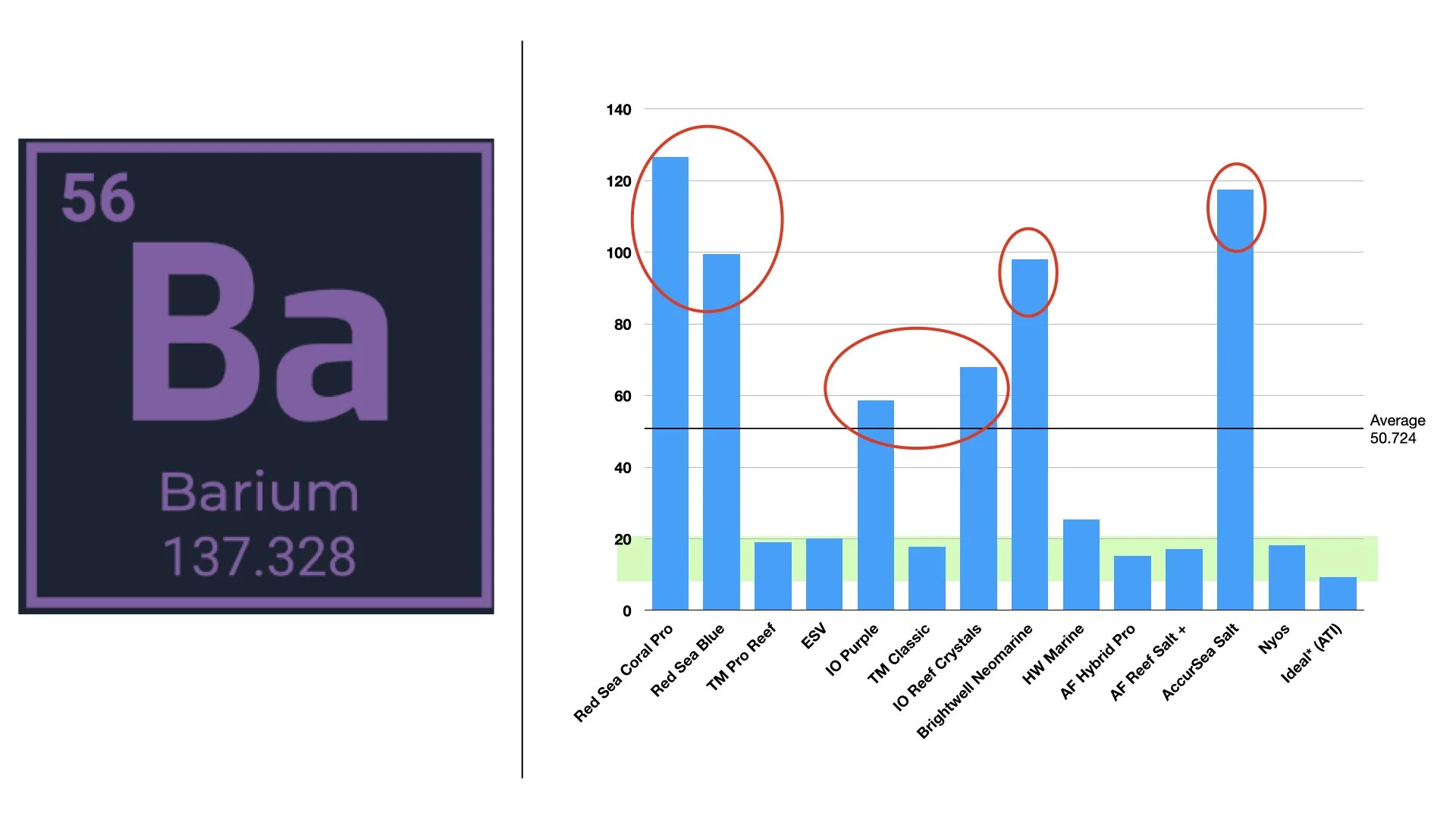
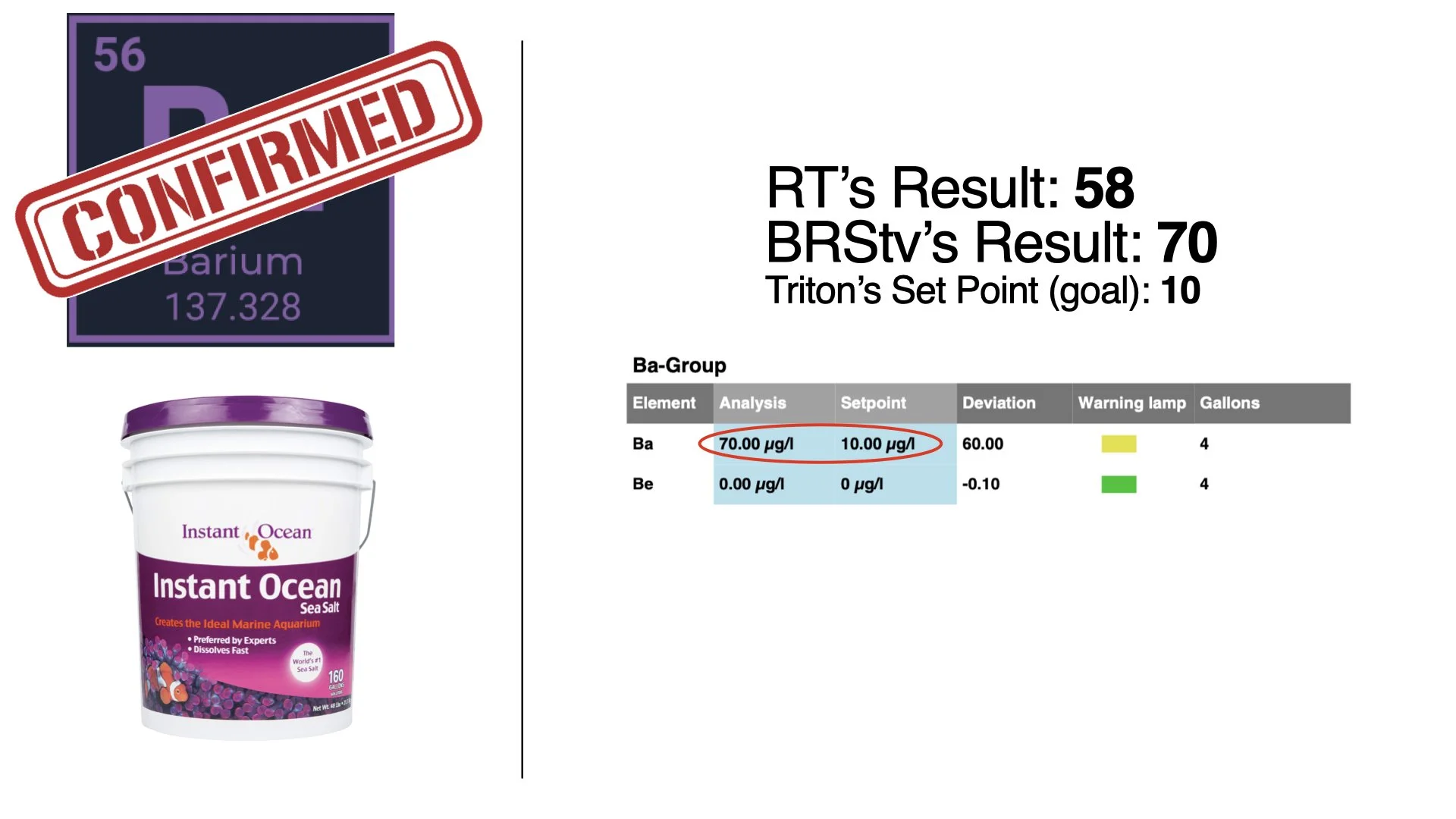
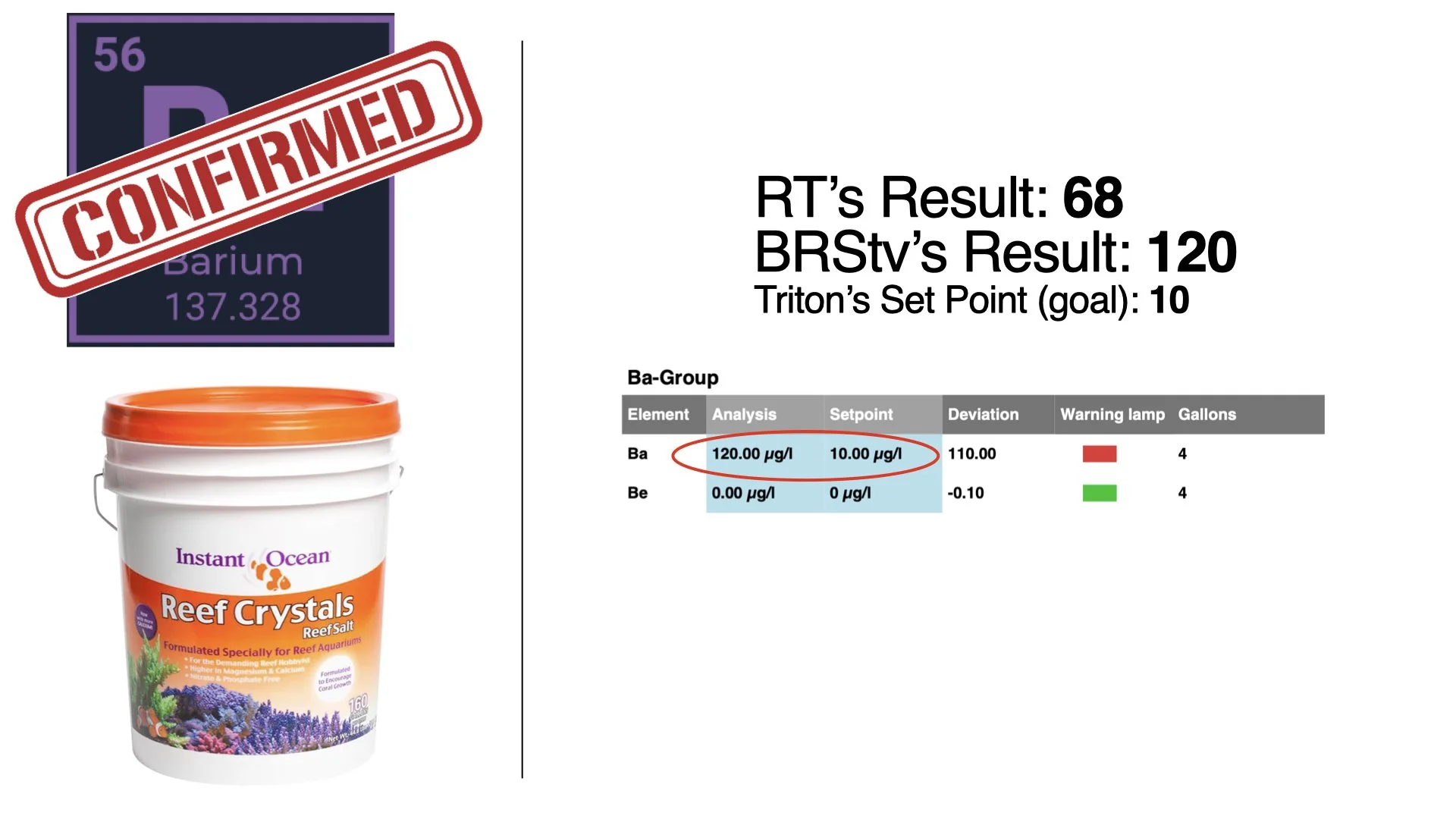
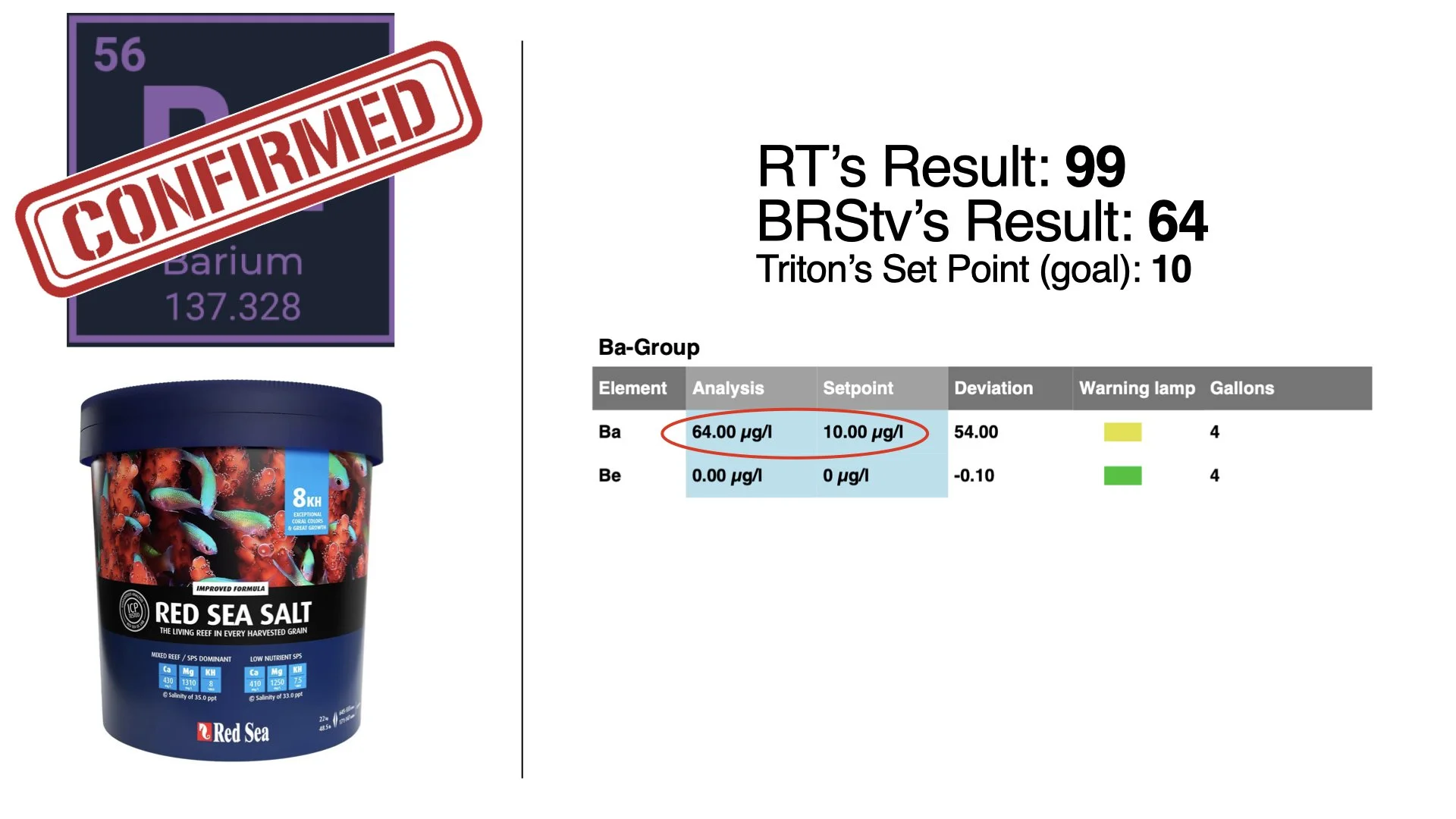
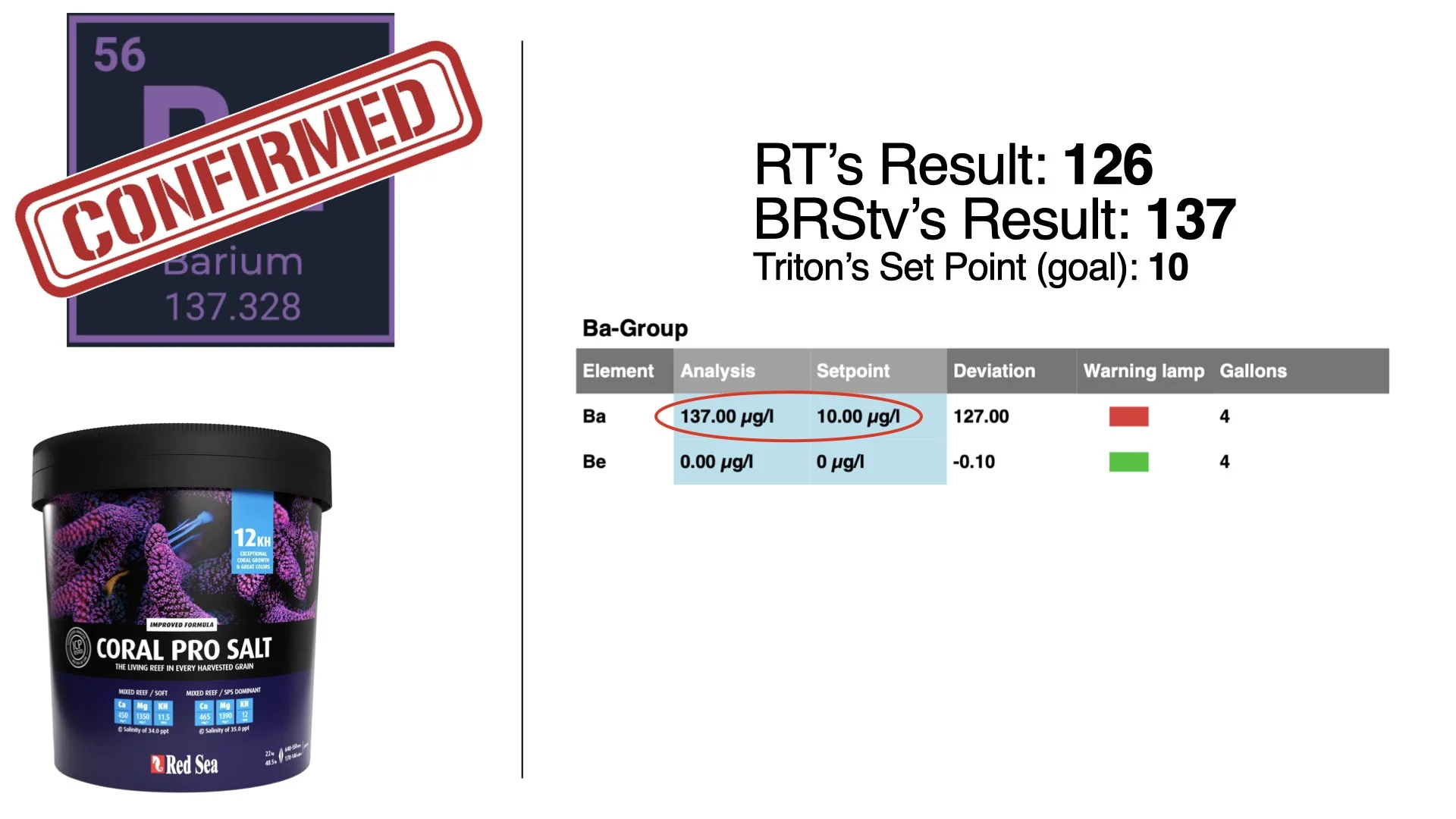
Barium was consistently elevated in multiple salts across years. This points to either source contamination or unexplained deliberate inclusion. One notable is the AccuraSea was not a replicable result.
Iron
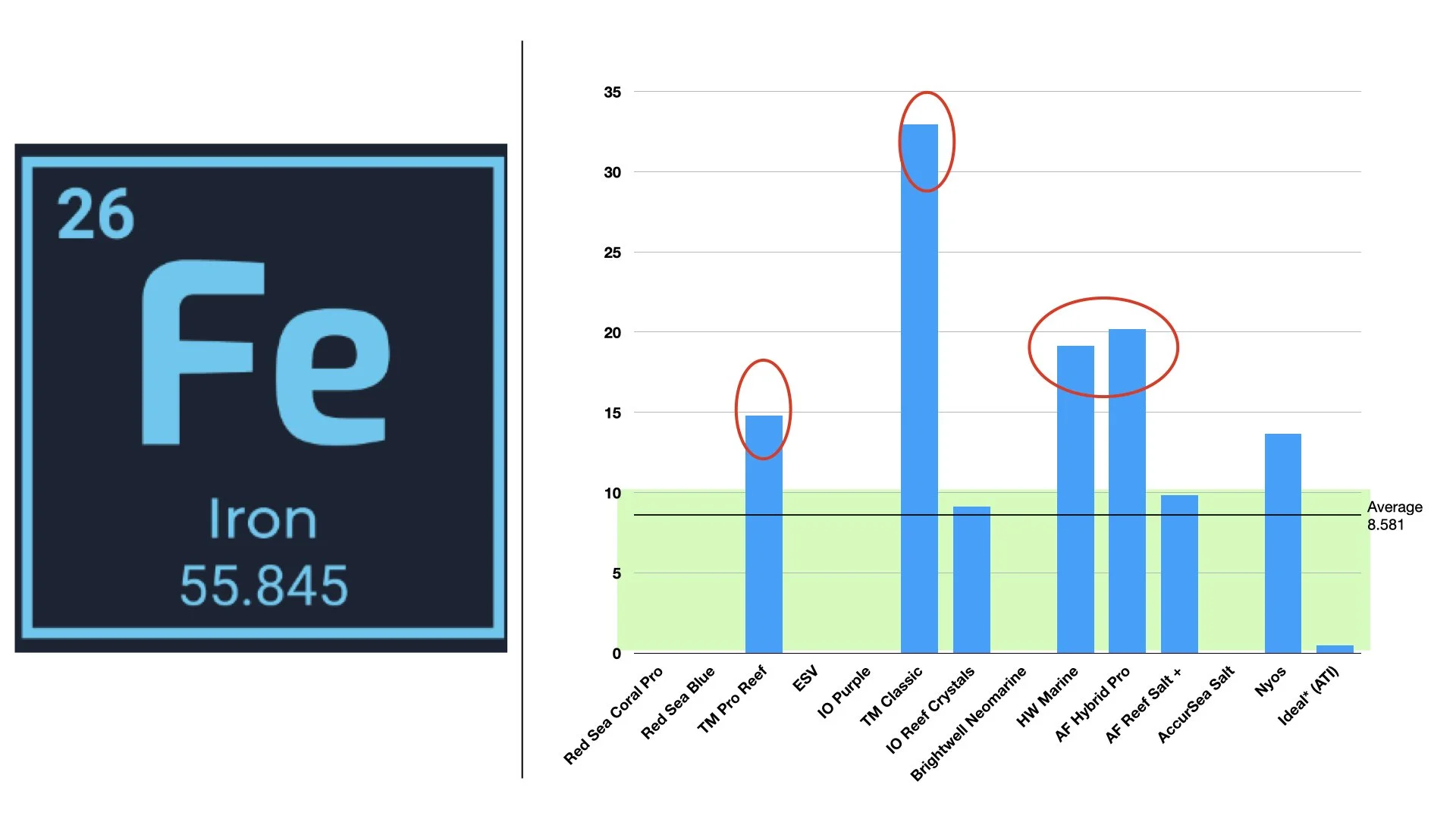
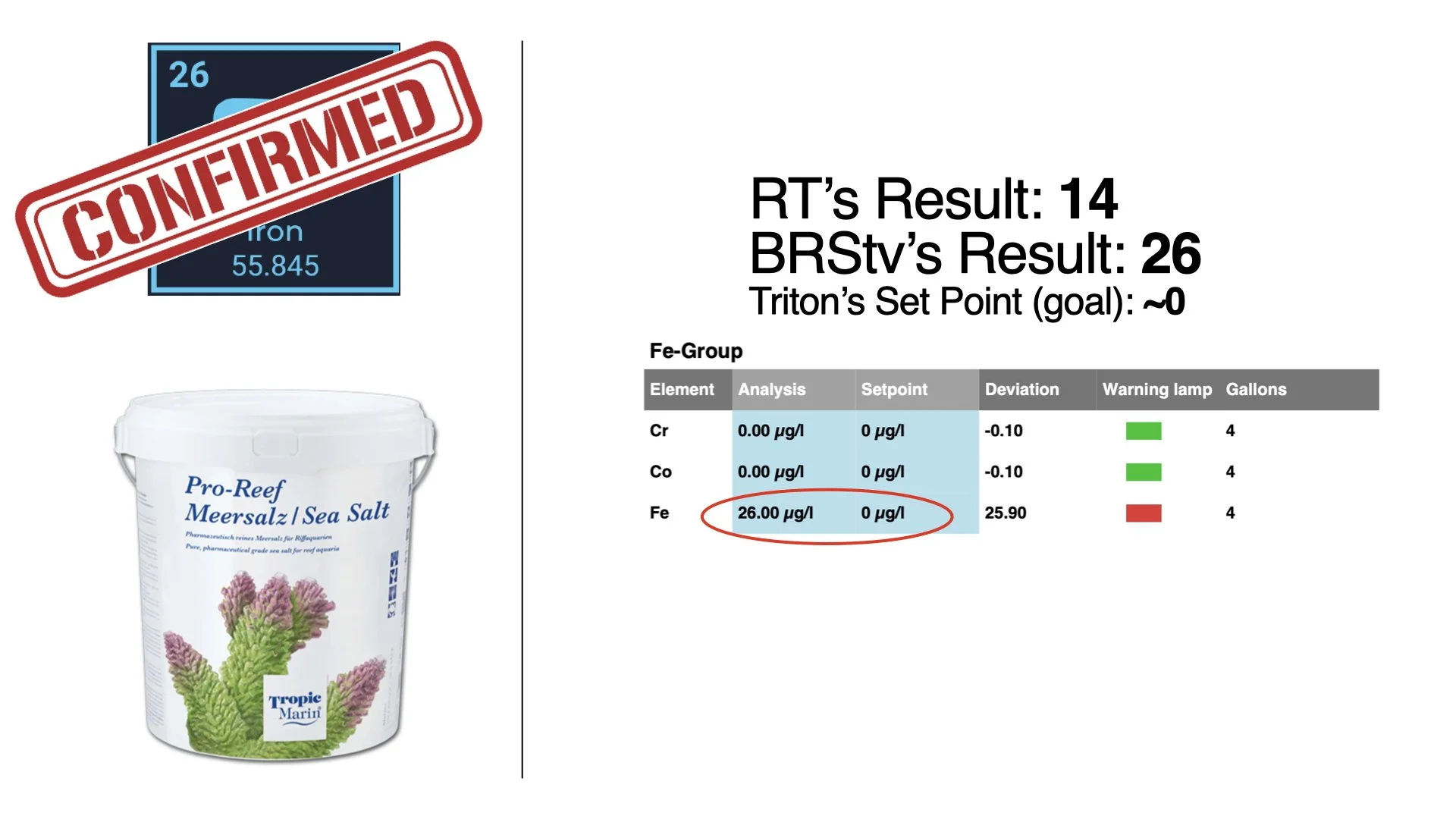
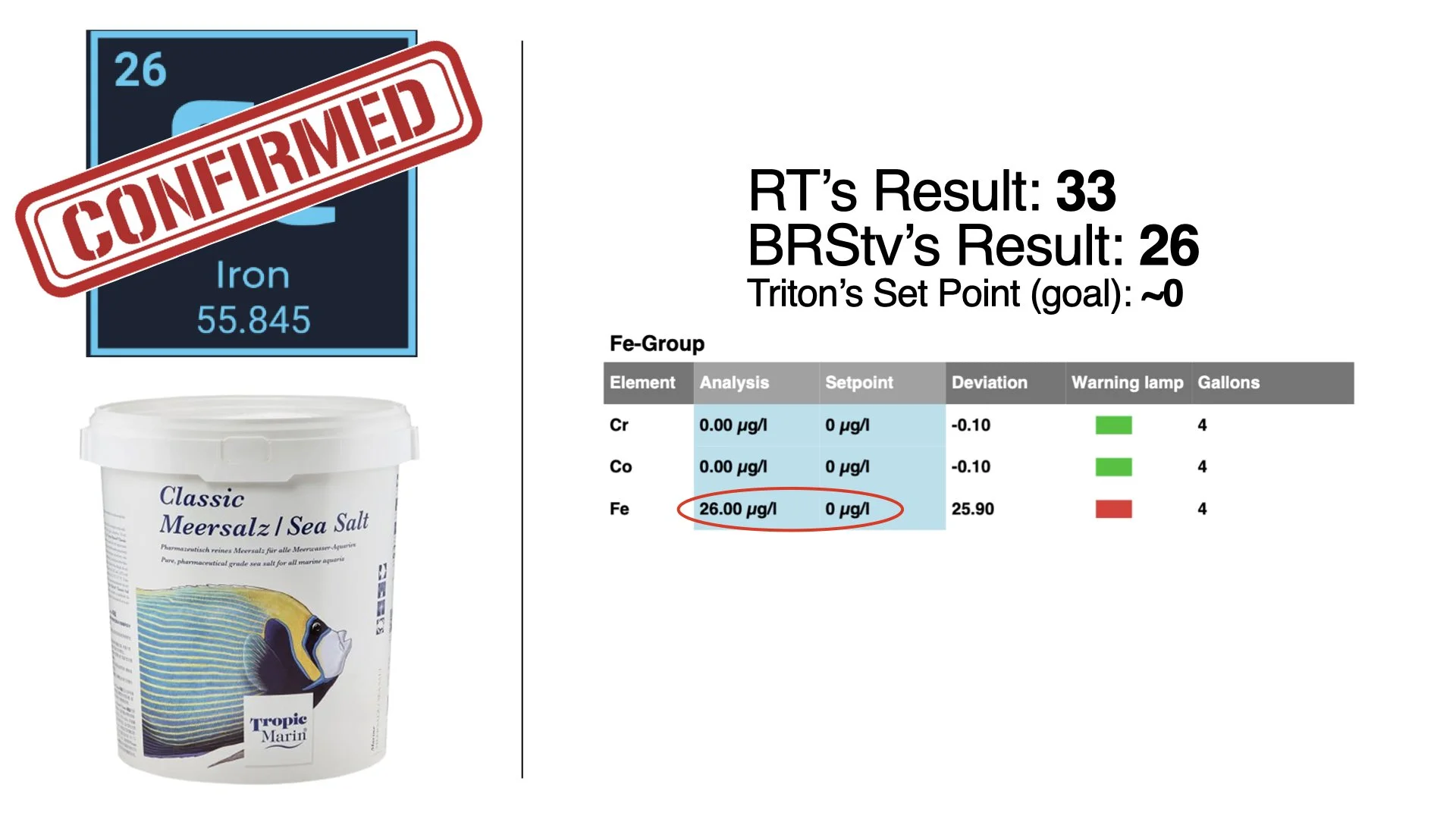
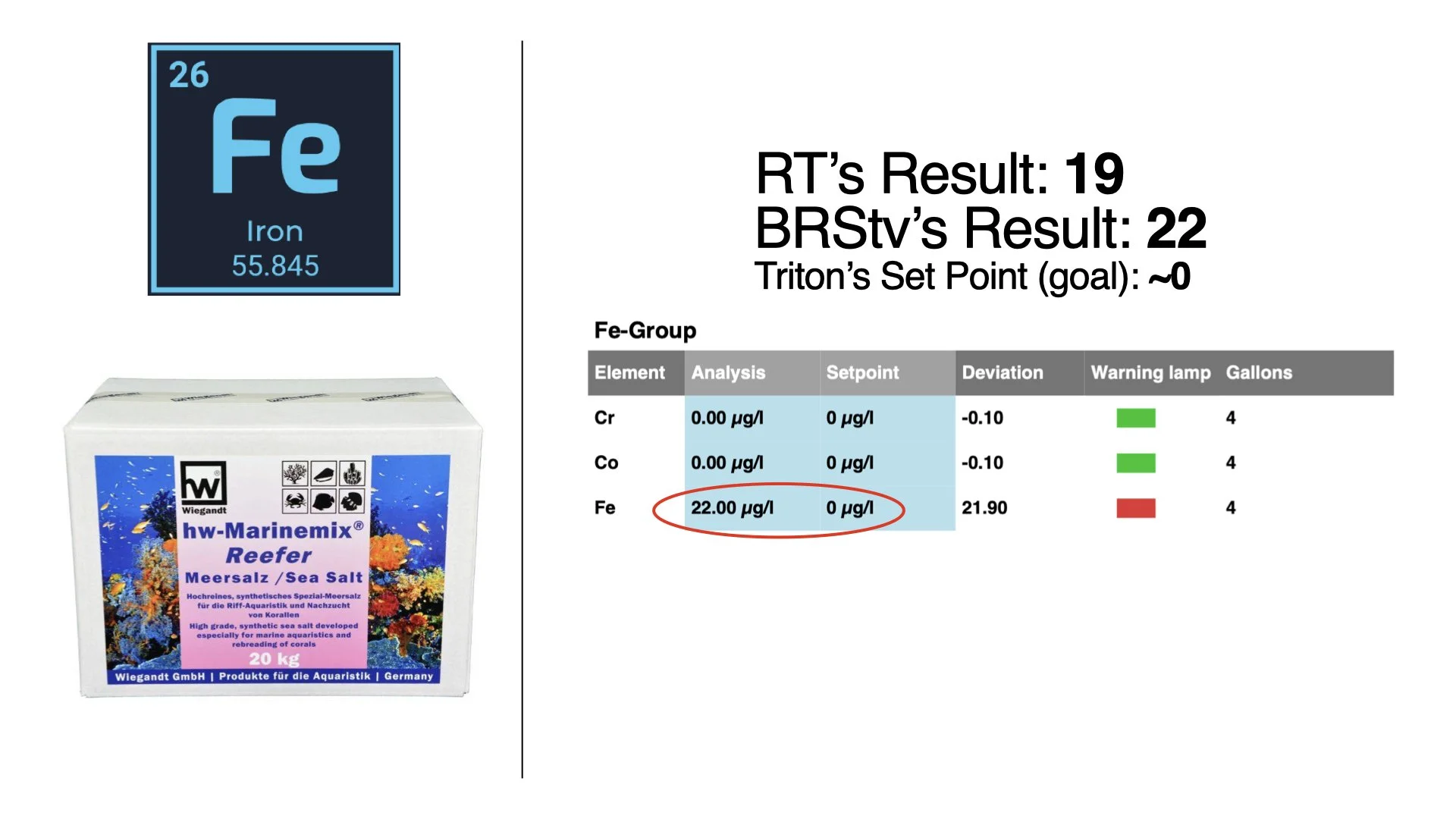
Iron appeared intentionally elevated in a few formulations, again showing repeatable behavior across tests. With some salt mixes the Iron comes from the anti-caking agent, Hexacyanoferrate. Many brands believe this to be a superior alliterative to other anti-caking agents.
Copper
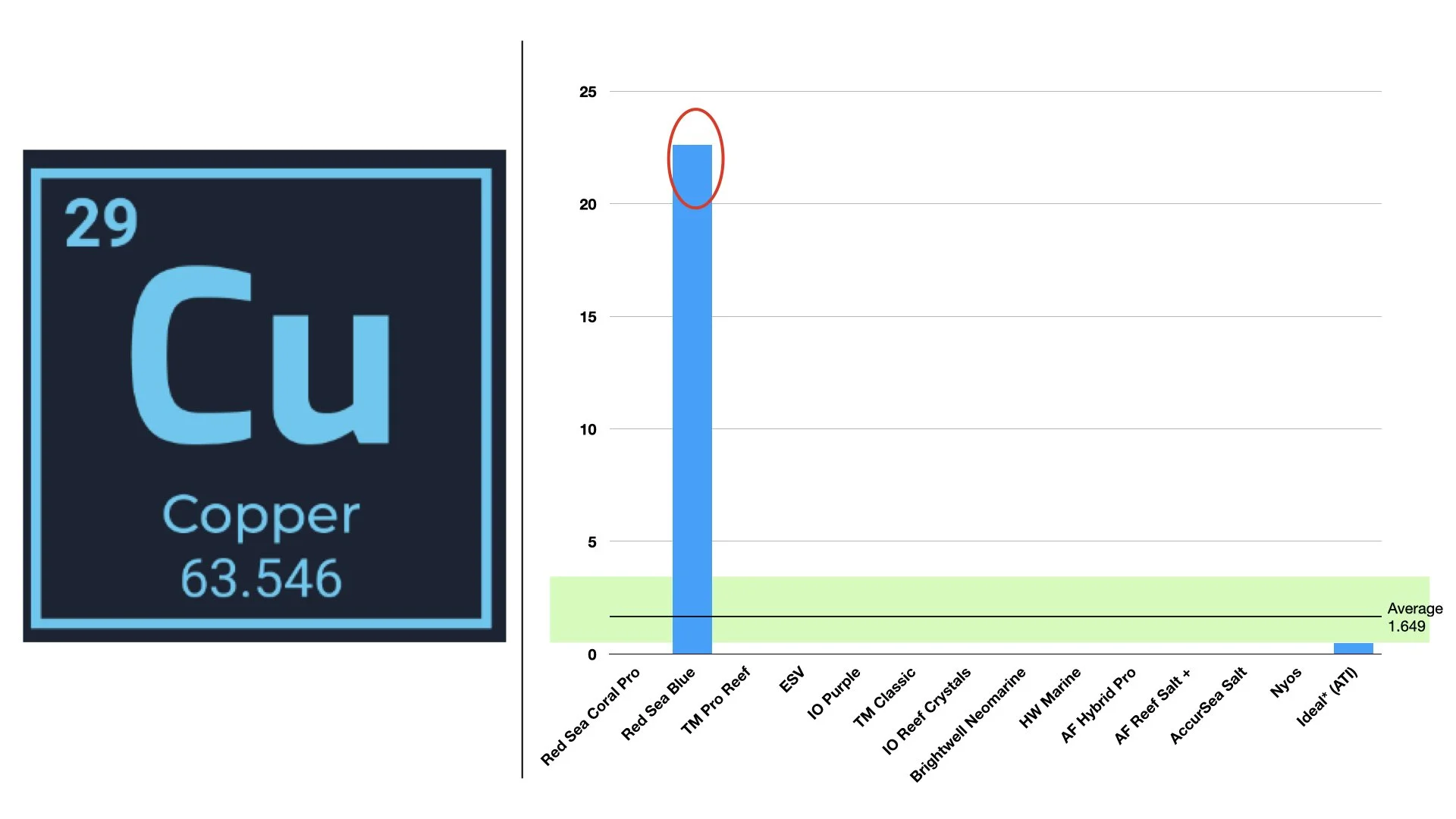
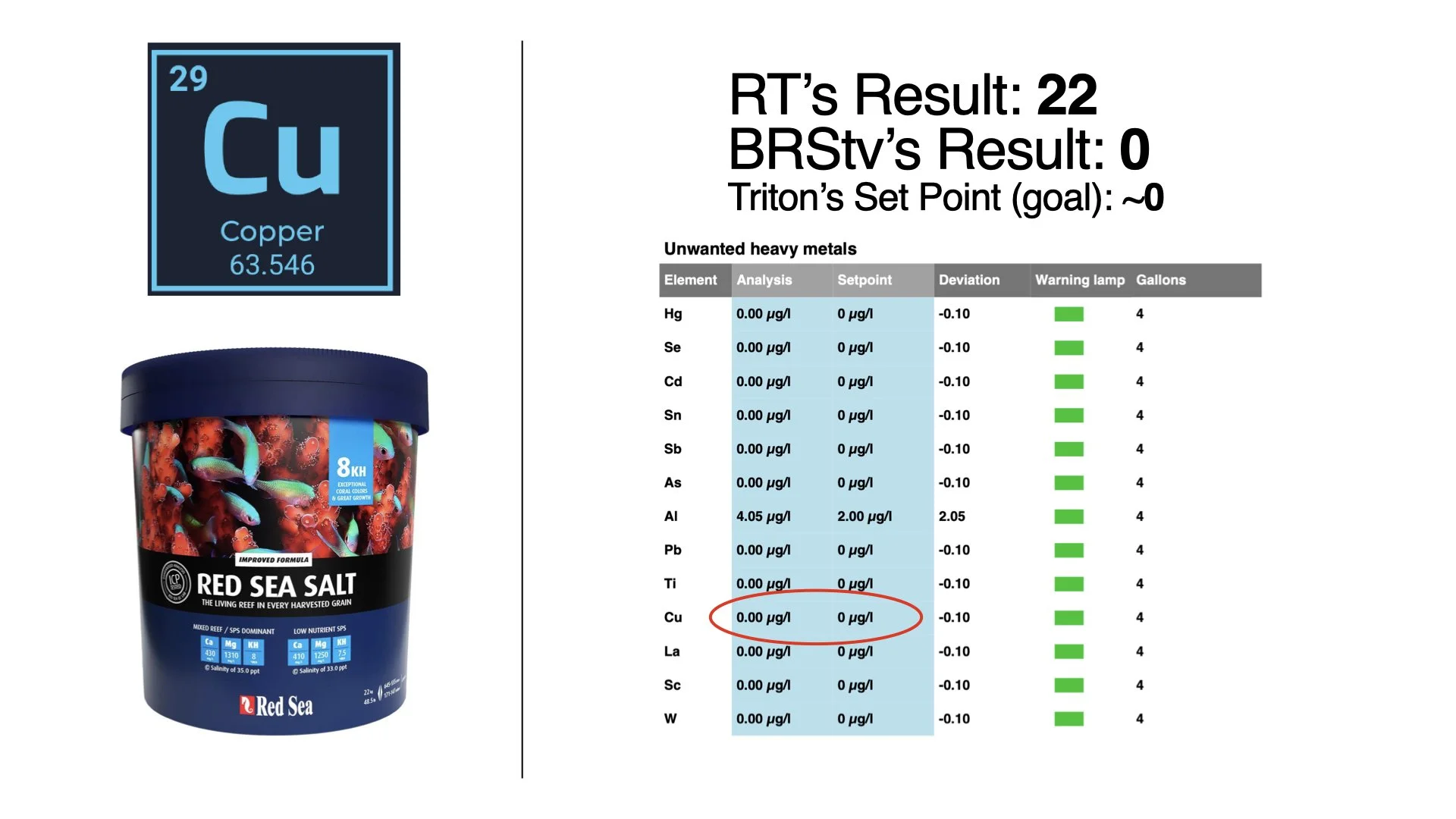
Copper produced a notable anomaly in one bucket that other labs did not replicate, which highlights the difference between a one-off contamination or testing error and a systemic formulation choice.
Several consistent patterns emerged:
Calcium — Some salts (Tropic Marin Pro Reef) consistently tested high and matched set-point goals. Others (Brightwell NeoMarine) consistently tested low compared to targets. Where both sets agreed, it was a clear signal that the formulation or source was responsible.
Lithium — Instant Ocean, Reef Crystals, and several American-sourced salts showed significantly higher lithium than natural seawater. The same brands showed the pattern in different years and labs, which points to raw material or formulation choices rather than single-batch anomalies.
Bromine and Barium — Several brands came in low on bromine and high on barium relative to expected levels. Again, multiple independent tests confirmed these trends.
Elemental additions — Some salts appear to intentionally include trace metals such as iron. Tropic Marin and HW Marine showed consistent iron readings above detection limits, suggesting either purposeful addition or a shared raw source that contains that element.
Anomalies do happen — Not every discrepancy repeated. For example, a Red Sea bucket once tested with elevated copper while later samples showed zero. That’s a reminder that single anomalous readings still occur and merit caution before forming strong conclusions.
What drives these differences?
Several plausible reasons explain repeated patterns:
Raw material sources — There are only a handful of suppliers for basic ingredients like soda ash, bicarbonate, or mined salts. Different veins and processing introduce different impurities and trace element signatures.
Manufacturing choices — Some manufacturers aim for lower lithium or different trace profiles. Others use dehydrated sea salt sources that carry the regional chemistry of their origin.
Product formulation — Multi-part systems that keep sodium chloride separate (for example, ESV’s approach) tend to produce very consistent and repeatable chemistry because components are added in a controlled sequence and not subject to stratification or homogeneous mix of dry materials.
Quality control limits — Small shifts in supplier lots or processing can persist across years if a company sticks with a chosen source.
Attention to detail — A product will only be as good as the person who made it and their desire to make a clean homogeneous mix .
Does any of this actually matter for our tanks?
Yes and no. A salt that "doesn't kill everything" or “seems to be ok” is not the same as a salt that supports optimal growth or long-term stability. Some elements or compounds at elevated levels may not cause obvious mortality but can stress corals, reduce calcification, or alter long-term growth in ways that is challenging for most reefers to see.
A practical example where a tank contaminant can affect coral health but not noticed visually: Dosing a product that removes or suppresses algae like fluconazole may visually clean up nuisance algae and visually have no negative impact on the tank. However, the corals' calcification rates often immediately fall. In our records, corals that seemed visually fine after such treatment stopped consuming calcium and alkalinity the same way. Growth slowed because metabolism had been affected even if visually we could not identify this.
If the hobby does want to find the “best salts” we will have to go beyond just visual observations on a single tank with no comparative results.
Limitations and caveats
ICP tests are powerful but imperfect tools. Hobby-grade or lab-to-lab differences exist. Detectable limits, sample handling, and whether the testing looked at top or bottom of a bucket can change numbers. For instance, top-versus-bottom stratification can show differences but often within about 20 percent for most elements.
Some elements, like magnesium, are tricky to rely on via standard ICP hobby workflows. Others show repeatable signatures that we can reasonably act on.
Practical steps for reef keepers
Get baseline ICPs for your system periodically and track trends rather than one-off numbers.
Compare salts by looking for independent ICPs from different labs and different times. If two or more labs show the same pattern, treat it as likely consistent.
Switch salts as a tool if you need to lower an impurity like lithium—we can use salts known for lower lithium to bring levels down deliberately.
Don’t dismiss subtle effects just because corals aren’t dying. Growth rates, coloration, feeding behavior, and alkalinity consumption tell a deeper story.
Salt Mix FAQ
Are ICP results from different labs trustworthy enough to act on?
Multiple independent ICPs that show consistent results across time are reliable indicators of a salt’s elemental profile. Single readings can be anomalies, but repeat agreement between labs is actionable.
Should we change salt if lithium or another element is high?
If repeated testing shows undesired levels and you suspect those levels are affecting coral growth or tank chemistry, switching to a salt with a known lower level of that element is a valid strategy.
Do elevated trace elements always kill corals?
Not always. Elevated traces can stress corals or reduce calcification long before visible mortality. Declines in growth, changes in alkalinity consumption, or subtle tissue reactions are signs to investigate.
How often do salt formulations change?
Formulations can remain stable for years if manufacturers stick with the same raw suppliers. Changes happen with new suppliers, geographic sourcing shifts, or intentional reformulation; that is why periodic retesting matters.
What’s Next on SR Cast?

Acknowledgments
Thank you to the Serious Reefs community. Your membership funds the creation of articles and videos like this one.
Support Serious Reefs
Patreon is the best option If you…
Want to discuss with the SR community and ask questions.
Want immediate notifications of every release.
Listen with phone screen off. Patreon app works with phone closed
Want 25% off via annual discounts.
YouTube members is the best option If you…
Watch SR videos on a TV via youtube App
Want to watch videos natively here on seriousreefs.com - (You must use chrome browser and be logged into google account with youtube membership)
Are a YouTube power user.
Tell a friend. Best option if want more (and faster).
If you like what we’re doing, give SR a quick shout-out on your favorite forum, YouTube, Facebook, TikTok, or Instagram. Let your local fish store know SR is helping you explore the hobby and keep it fun. Thanks for the support!
Disclaimer
Full Disclaimer HERE. This is the gist of it.
Content is based on personal experience, not professional advice. Do your research and reef responsibly. Serious Reefs should not be your sole source of information on any topic.
By watching, you agree that Serious Reefs and its creators aren’t liable for how you use this info. Please don’t utilize our information if you are not ok with this.
Serious Reefs has no sponsors, doesn’t accept product or payment for reviews. We do use affiliate links in articles that earn a small commission to support our work. Shop wherever you like, we won’t be offended.

We are about to explore one of the most interesting and most taboo experiments in the reefing hobby. Many people will debate the conclusions, but far fewer have taken the time to produce compelling evidence of their own.