
Hair Algae in a Reef Tank: How to Get Rid of It and Keep It Under Control
Hair Algae: The Quick Answer
If you are trying to get rid of hair algae in a reef tank, this is the order we would approach it:
Manually remove as much established hair algae as possible.
Increase grazing pressure with fish, snails, crabs, or other appropriate herbivores.
Evaluate nutrient input and export, even if nitrate and phosphate currently test low or zero.
Make sure the algae is actually hair algae and not bryopsis, which takes more aggressive approaches.
Use targeted treatments only when necessary, including hydrogen peroxide, fluconazole for bryopsis, or an algaecide.
Remove dying algae and monitor the aquarium after treatment so all of that decomposing biomass does not become the next problem.
For most reef tanks, the real objective is not zero algae growth.
The objective is zero visible algae accumulation because something eats it first.
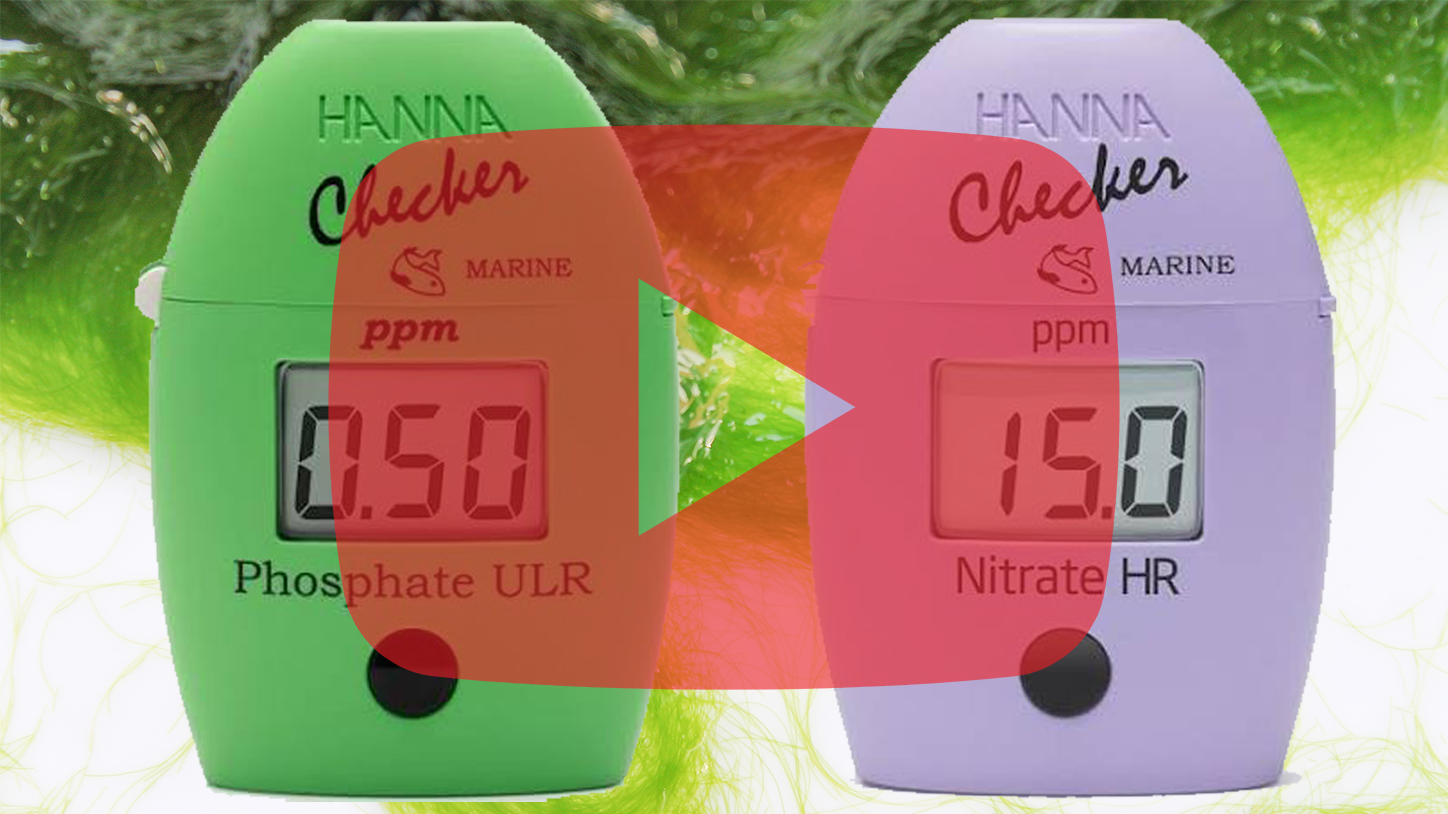
Why Do We Have Hair Algae With Zero Nitrate and Phosphate?
Getting a zero reading for nitrate and phosphate while hair algae is growing all over the tank feels backwards. If the nutrients are supposedly zero, what is the algae living on?
The quick answer is simple: if we have fish in the aquarium and we feed them, we are adding nitrogen and phosphorus every day. Those nutrients are in the system, even when our test kits cannot detect them. So what are we supposed to do
If a reef tank is incapable of supporting even basic algae growth, that may indicate conditions are being pushed too far in the other directionWhat Is Hair Algae?
Green hair algae is a photosynthetic algae that typically grows in green strands or tufts across rockwork and other illuminated surfaces in a reef aquarium.
Like the photosynthetic organisms we actually want in the aquarium, hair algae needs a few basic resources:
Light
Carbon dioxide
Nitrogen
Phosphorus
Take away enough of any one of those resources and we can slow or stop algae growth.
The problem is that corals and their symbiotic algae depend on many of the same resources.
That is why simply trying to starve every last bit of hair algae out of the aquarium can become counterproductive to the underlying goal of a healthy reef tank.
Hair algae is not automatically evidence that the reef is failing.
Natural coral reefs produce algae too. The difference is that healthy reefs contain an enormous population of herbivores constantly grazing it down. If a reef tank is incapable of supporting even basic algae growth, that may indicate conditions are being pushed too far in the other direction.
Algae grows.
Something eats it.
We want to reproduce that relationship in the aquarium.
Learn more about what causes hair algae in a reef tank.
Why Do I Have Hair Algae With Zero Nitrate and Phosphate?
This is one of the most confusing parts of a major hair algae outbreak.
We test the aquarium and get:
Nitrate: 0
Phosphate: 0
Then we look at the rocks and see a giant green lawn.
If nutrients are zero, what is feeding all of that algae?
The answer is that a water test measures what is currently left in the water, not necessarily how much nitrogen and phosphorus are entering and moving through the aquarium every day.
Every time we feed our fish, we add nitrogen and phosphorus.
Fish eat the food.
Fish produce waste.
Organic material breaks down.
Those nutrients become available to the organisms in the aquarium.
If there is enough established hair algae, it can capture those nutrients very rapidly.
So instead of nitrate and phosphate accumulating in the water where we can measure them, some portion of those nutrients becomes an algae biomass nutrient battery.
That can create a second problem. Hair algae may become so effective at capturing available nitrogen and phosphorus that corals and their symbiotic algae are deprived of them. Extremely low available nutrients can also create conditions where opportunistic organisms, including some dinoflagellates, can gain an advantage. This is why driving nitrate and phosphate even lower is not automatically the solution to a hair algae outbreak.
Why do we have hair algae with zero nitrate and phosphate? Read the full explanation.
What Causes Hair Algae in a Reef Tank?
At the most basic level, hair algae grows because it has access to the resources required for photosynthesis and growth.
But there is an important distinction between algae growing and algae taking over.
Some algae growth is normal. In fact if the simplest lifeforms such as green hair algae are unable to grow in our tanks then we’ve got bigger issues.
The problem begins when:
Hair algae grows faster than the aquarium consumes or removes it.
That can happen because there is a lot of nutrient input, inadequate nutrient export, excessive available surface area, strong lighting, but in most cases it is simply not enough herbivores constantly removing new growth.
In many reef tanks, grazing pressure is the missing piece.
A rock covered with short, fresh algae may be very attractive to an herbivorous fish.
Allow that same algae to become a long, dense mat and some grazers become much less effective.
That is why prevention is so much easier than recovering from a mature outbreak.
Read the full guide to what causes hair algae in a reef tank.
What Eats Hair Algae in a Reef Tank?
For long term hair algae control, herbivores are usually our favorite solution.
Rather than trying to create water where algae physically cannot grow, we can create an aquarium where something is constantly eating new growth.
That is essentially how healthy natural reefs work.
Tangs
For moderate and larger reef tanks, tangs are often the backbone of the algae-control crew.
They spend much of the day moving across the rockwork and picking at algae before it has an opportunity to become established.
Useful options include fish such as:
Yellow tangs
Purple tangs
Convict tangs
Bristletooth tangs
Bristletooth tangs are particularly interesting because their mouth structure allows them to scrape material very close to the surface of the rock.
The important consideration is not simply a traditional minimum-gallon recommendation.
Tangs are active lateral swimmers, so tank length and usable swimming space matter.
Rabbitfish and Foxfaces
When we need serious grazing power, rabbitfish can be remarkable algae eaters.
That includes:
Foxfaces
Bicolor rabbitfish
Majestic rabbitfish
Many rabbitfish eventually become large fish, so the aquarium needs to provide suitable long-term swimming space.
The goal is to choose an herbivore that fits the aquarium rather than purchasing a fish solely to solve today's algae problem.
See our complete guide to what eats hair algae in a reef tank.
What Eats Hair Algae in a Nano Reef Tank?
Nano reef tanks present a different challenge.
Most tangs and rabbitfish simply are not appropriate for these aquariums, so we need smaller grazers.
Potential options include:
Lawnmower blennies
Tailspot blennies
Rainford's gobies
Mollies
Astrea snails
Trochus snails
Appropriate grazing crabs
The Molly Trick
Mollies are particularly interesting because freshwater mollies can be acclimated to saltwater and can become surprisingly aggressive algae grazers.
Some marine fish suppliers even sell mollies that have already been acclimated to full-strength seawater.
In the right aquarium, a molly can make a surprisingly large dent in a hair algae outbreak.
Help the Cleanup Crew Find the Algae
There is another simple trick that often gets overlooked.
Snails absolutely will eat the algae but we are simply waiting for it to randomly find the patch we want removed.
Pick the snail up.
Put it directly on the algae.
That little bit of manual intervention can make a meaningful difference in a nano reef where every grazer counts.
See the best hair algae eaters for nano reef tanks.
Manually Remove Hair Algae First
When hair algae has already grown into a thick mat, the first step is often the least glamorous:
Remove as much of it as possible while implementing the longer-term solutions
Pull it.
Scrape it.
Brush accessible rockwork.
Export the algae from the aquarium rather than allowing large quantities of loosened algae to decay inside the system.
Manual removal accomplishes two things.
First, it immediately exports the nitrogen, phosphorus, and other material locked inside that algae biomass.
Second, it turns a mature algae lawn into short fresh growth that herbivores may be much better at controlling.
This becomes even more important if we are considering a chemical or oxidative treatment.
If a treatment kills a large quantity of algae at once, all of that dead material can rapidly break down inside the aquarium.
Remove as much algae as possible before treatment.
That can dramatically reduce the amount of pollution the aquarium needs to process afterward.
Make Sure Your Hair Algae Is Not Bryopsis
Before escalating treatment, take a close look at what is actually growing.
Bryopsis is commonly confused with ordinary green hair algae.
Hair algae generally looks like green strands or tufts.
Bryopsis tends to develop a more recognizable fern-like or feather-like structure.
That distinction matters because bryopsis can be considerably more difficult for normal cleanup crews to control.
If your "hair algae" continues to come back despite aggressive grazing and manual removal, identification is worth revisiting before changing the entire aquarium around it.
Fluconazole is one treatment commonly used when the actual problem is bryopsis.
Hair Algae Treatments: When Grazers Are Not Enough
Fish, snails, and crabs are the ounce of prevention.
Sometimes we still need the pound of cure.
If hair algae or bryopsis has completely overwhelmed the aquarium and manual removal plus grazing is not gaining ground, there are stronger options.
These are not where we start.
They are tools we can escalate to when the algae itself has become the larger threat.
Hydrogen Peroxide for Hair Algae
Hydrogen peroxide is an oxidizer and can be useful when we want to target a specific area rather than treat the entire aquarium.
Accessible algae-covered rockwork can sometimes be treated outside the water or while portions of the aquarium are temporarily exposed.
The primary advantage is control: we can target the algae directly while limiting unnecessary exposure elsewhere in the aquarium.
The same rule applies here:
Physically remove as much algae as possible before killing what remains.
How to eliminate hair algae with hydrogen peroxide.
Fluconazole and Reef Flux for Bryopsis
If what appears to be hair algae is actually bryopsis, fluconazole can be a much more effective escalation option.
Reef Flux is one commonly used fluconazole treatment.
A successful treatment can kill a substantial amount of algae relatively quickly, which makes pre-treatment manual removal particularly important.
Less algae going into the treatment means less dead algae decomposing afterward.
During and after treatment, pay attention to:
Nutrient levels
Decaying algae
Water quality
Changes in coral health
Water changes when necessary
How to eliminate bryopsis and hair algae with Reef Flux and fluconazole.
Algaefix and Vibrant
Another escalation option is an algaecide such as Algaefix or Vibrant.
These products are designed to directly impact algae and can be useful when nuisance algae has reached a point where physical removal and herbivores cannot keep up.
But this is exactly why we do not treat them casually.
A product powerful enough to kill large amounts of algae can create major changes inside an aquarium as that biomass dies and decomposes.
Corals that are already stressed also deserve additional attention during any aggressive algae treatment.
Again:
Remove as much algae as possible first.
Do not ask the treatment to kill pounds of material inside the aquarium if we can physically remove most of that material ourselves.
How to eliminate hair algae with API Algaefix and Vibrant.
The Best Hair Algae Strategy
If we had to turn everything on this page into a simple order of operations, it would look like this:
1. Confirm what you are looking at.
Make sure it is ordinary green hair algae rather than bryopsis or another nuisance organism.
2. Remove the bulk of the algae manually.
Do not expect a cleanup crew to consume an entire mature algae forest.
Give them a fighting chance.
3. Add enough appropriate grazing pressure.
For larger tanks, that often means tangs or rabbitfish.
For smaller systems, consider blennies, gobies, mollies, snails, and crabs.
4. Evaluate nutrient throughput—not just today's test result.
If fish are eating, nitrogen and phosphorus are entering the aquarium.
Zero on the test kit does not automatically mean zero nutrient availability.
5. Give the biological solution time to work.
The objective is to make new algae disappear as quickly as it grows.
6. Escalate only when necessary.
For persistent problems, targeted hydrogen peroxide, fluconazole for bryopsis, or an algaecide may be appropriate tools.
7. Remove the dead algae.
Killing algae is only half of the job.
We still need to deal with the organic material and nutrients contained inside it.
How to Keep Hair Algae From Coming Back
Long-term hair algae control is much easier than repeatedly treating outbreaks.
Our goal is to maintain enough grazing pressure that new algae gets eaten while it is still short and easy to consume.
At the same time, we want nutrient input and nutrient export to remain in reasonable balance.
That does not mean chasing sterile water.
It means controlling nutrient pollution without trying to make the aquarium biologically empty.
A successful reef contains nutrient input, nutrient consumption, algae growth, microbial activity, coral growth, grazing, and decomposition simultaneously.
The objective is balance.
A reef tank does not need to be incapable of growing hair algae.
It needs to be capable of eating hair algae faster than we can see it.
That is a much more achievable—and much more natural—goal.
Hair Algae FAQ
Why do I have hair algae with zero nitrate and phosphate?
Hair algae can consume available nitrogen and phosphorus rapidly enough that very little remains in the water when we perform a nitrate or phosphate test. If fish are being fed, nutrients are still entering the aquarium.
Read the complete explanation.
What causes hair algae in a reef tank?
Hair algae requires light, carbon dioxide, nitrogen, and phosphorus. An outbreak occurs when algae growth outpaces grazing and removal.
Learn more about what causes hair algae.
What eats hair algae?
Tangs and rabbitfish can be excellent hair algae grazers in appropriately sized reef tanks. Smaller aquariums can use blennies, gobies, mollies, snails, and crabs.
See our complete hair algae eater guide.
What eats hair algae in a nano reef tank?
Nano tanks usually rely on smaller fish such as blennies, gobies, or mollies along with snails and crabs because tangs and rabbitfish require substantially more swimming space.
See the best hair algae eaters for nano reefs.
Does hydrogen peroxide kill hair algae?
Hydrogen peroxide can kill hair algae through oxidation and can be particularly useful as a targeted treatment when affected rockwork can be isolated or exposed.
Learn how hydrogen peroxide is used against hair algae.
Does fluconazole kill hair algae?
Fluconazole is particularly useful when what appears to be hair algae is actually bryopsis. Correctly identifying the algae before treatment is important.
Learn about Reef Flux and fluconazole for bryopsis.
Do Algaefix and Vibrant kill hair algae?
Algaecides can be an escalation option when manual removal and grazing are not controlling the outbreak. Remove as much algae as possible before treatment so large amounts of dead algae do not rapidly decompose inside the aquarium.
Learn more about Algaefix and Vibrant for nuisance algae.
Hair Algae Guides
Dig deeper into the specific problem you are trying to solve: